- Vancouver 360-369-3586
- Portland 503-925-3504

Diagnosing Low Water Pressure: Common Causes in SW Washington and Oregon Homes
by writer | Apr 07, 2026
Table of Contents
- How Water Pressure Works in Your Home (And What’s “Normal”)
- Is Your PRV to Blame? How These Critical Valves Fail Over Time
- Why Portland & Vancouver Homes Struggle with Pipe Corrosion
- The Silent Pressure Killer: Undetected Leaks in Your Service Line
- Why Your Hot Water Pressure Is Worse Than Cold (And How to Fix It)
- How to Diagnose Low Water Pressure Yourself (Step-by-Step)
- Is It Time to Repipe? Comparing Repair vs. Replacement for Aging Homes
- Key Takeaways
You turn on the shower, and instead of a strong, satisfying stream, you get a weak trickle that barely rinses the shampoo out of your hair. The dishwasher takes forever to fill. The washing machine struggles through its cycle. Low water pressure isn’t just an inconvenience—it’s often your home’s way of signaling an underlying plumbing issue that, if ignored, could lead to costly repairs or even health hazards. Here’s a sobering statistic: 10% of homes waste 90 or more gallons of water daily due to leaks, many of which first show up as mysterious drops in water pressure. In the Pacific Northwest—particularly in Portland and Vancouver—low water pressure has unique regional causes tied to local water chemistry and aging infrastructure. Portland’s naturally soft, acidic Bull Run water corrodes pipes differently than Vancouver’s hard groundwater, which causes mineral scale buildup over time. In this guide, we’ll walk you through the most common causes of low water pressure in SW Washington and Oregon homes, show you how to diagnose issues yourself, and help you understand when it’s time to call in the professionals at Sarkinen Plumbing.
How Water Pressure Works in Your Home (And What’s “Normal”)
Before you can fix low water pressure, it helps to understand how your home’s water system is designed to work. Municipal water supplies pump water at pressures as high as 150 PSI to serve everything from fire hydrants to multi-story commercial buildings. But that much pressure would destroy your home’s plumbing fixtures, burst pipes, and damage appliances like your washing machine and dishwasher. That’s where the Pressure Reducing Valve (PRV) comes in. This bell-shaped device sits on your main water line—typically just after the water meter where the city supply enters your home—and steps down that high municipal pressure to a safe residential range of 40 to 80 PSI, as mandated by the Uniform Plumbing Code.
What’s Considered “Normal” Water Pressure?
For most homes, 50 to 60 PSI is ideal. Anything below 40 PSI will disrupt showers, slow down appliances, and make everyday tasks frustrating. Above 80 PSI, you risk damaging pipes and fixtures.
💡 Simple DIY Test
You can check your home’s water pressure yourself. Pick up an inexpensive pressure gauge at any hardware store, screw it onto an outdoor hose bib (the faucet on the outside of your house), and turn the water on fully. If the gauge reads below 40 PSI, you’ve confirmed a problem that needs investigation.
One Fixture or the Whole House?
It’s also important to determine whether your low pressure is isolated to a single sink or showerhead (which usually indicates a clogged aerator) or affecting your entire house (which points to a PRV failure, corroded pipes, or a hidden leak in your main water line).
Is Your PRV to Blame? How These Critical Valves Fail Over Time
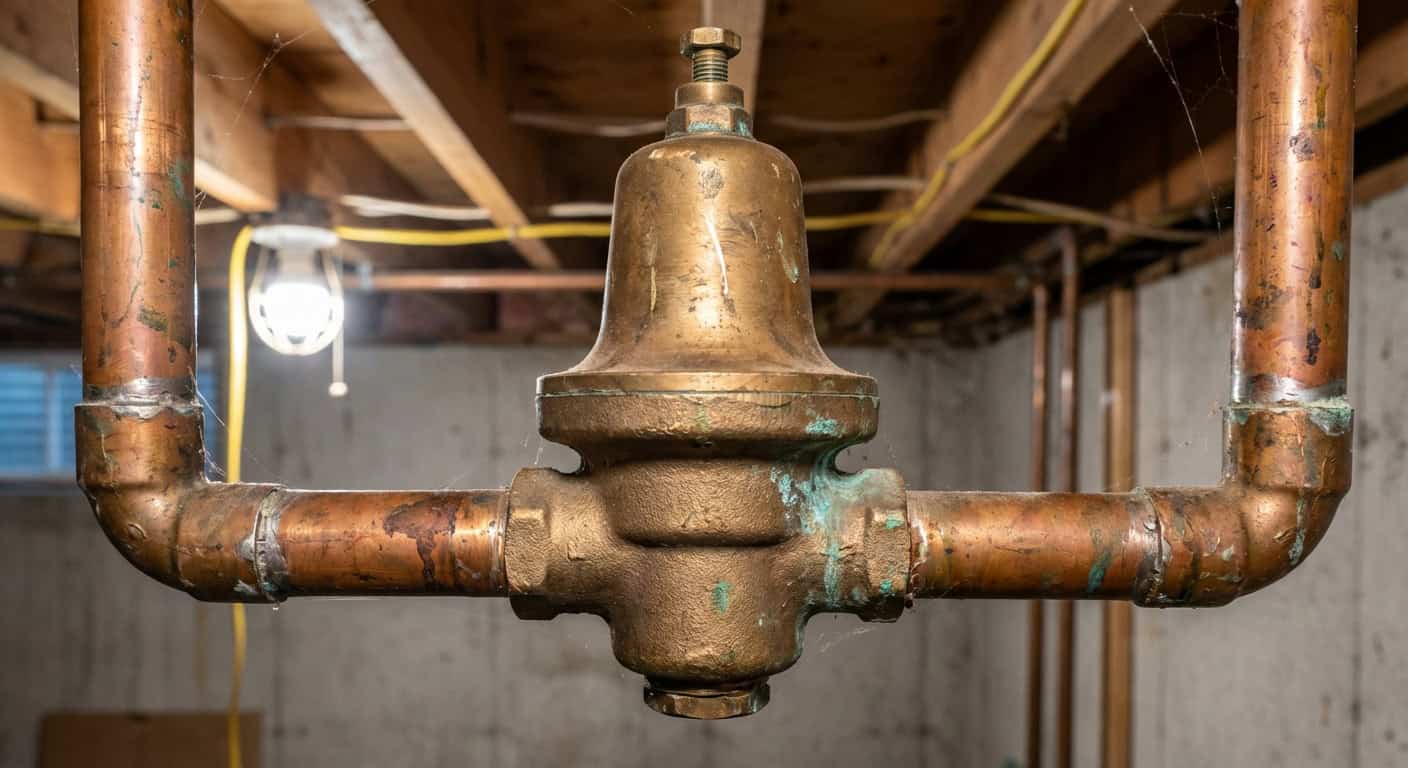
The single most common cause of sudden, whole-house water pressure loss in newer homes is a failing Pressure Reducing Valve. These devices are mechanical workhorses—but like any mechanical component, they don’t last forever.
How a PRV Works
Inside the valve is a rubber diaphragm and a heavy-duty spring. When high-pressure water from the city enters the valve, the spring compresses and the diaphragm adjusts to regulate the flow, ensuring only 40 to 80 PSI reaches your fixtures.
The Lifespan Problem
Most PRVs are designed to last 10 to 15 years. Over time, the rubber diaphragm can tear, crack, or become brittle. The spring can lose its tension or succumb to metal fatigue. When this happens, the valve often defaults to a restricted position, drastically cutting water pressure throughout your entire home.
Symptoms of PRV Failure
- Sudden drop in water pressure at all fixtures—both hot and cold water
- Pressure that fluctuates unpredictably throughout the day
- Loud banging or “water hammer” sounds when you turn taps on or off (indicating unregulated pressure surges)
- Pressure gauge readings consistently below 40 PSI
✅ The Good News
PRV replacement is typically a straightforward, cost-effective repair if caught early. A qualified plumber can swap out the failing valve and restore normal pressure throughout your home in a matter of hours. However, in older homes with corroded pipes, replacing the PRV may only temporarily mask underlying issues—pressure problems may return as internal pipe degradation continues.
In homes built after 1990, a failed PRV is almost always the first suspect when pressure drops suddenly. But in homes built before 1980, the problem is more likely hidden inside your walls.
Why Portland & Vancouver Homes Struggle with Pipe Corrosion (And What It Means for Your Water Pressure)
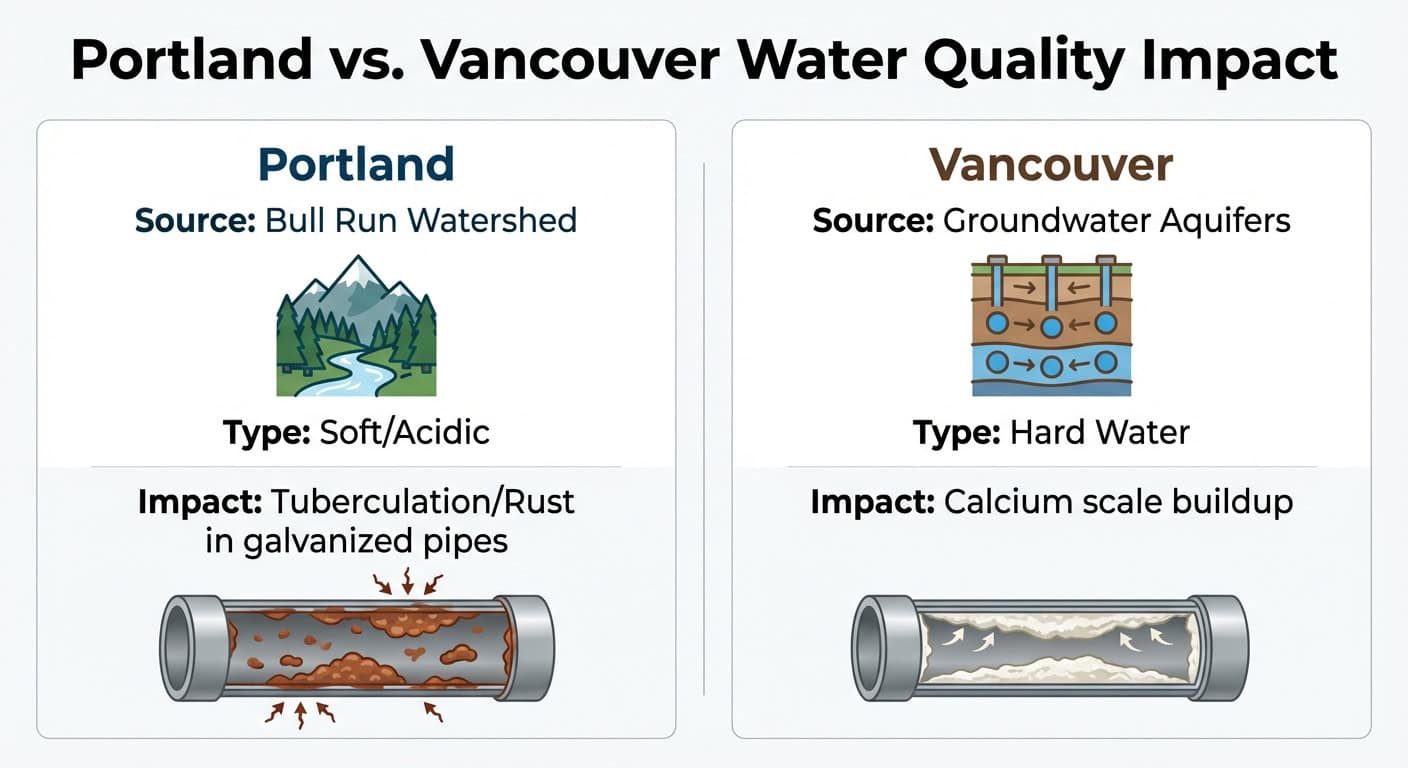
One of the most overlooked causes of chronic low water pressure in the Pacific Northwest is the chemical interaction between your municipal water supply and your home’s aging pipes. Portland and Vancouver draw water from completely different sources—and those differences create distinct plumbing challenges.
Portland’s Bull Run Water Challenge
Portland’s tap water comes from the pristine Bull Run Watershed, a protected reservoir fed by snowmelt from Mount Hood. While this water is exceptionally clean and delicious to drink, it has a hidden downside: it’s naturally soft and slightly acidic. Soft water contains very few dissolved minerals, which sounds like a good thing—but it also means the water is chemically “aggressive.” Over time, acidic water corrodes metal pipes from the inside out, especially galvanized steel and copper. The result is a process called tuberculation, where rust and mineral deposits build up inside the pipes like plaque in an artery, gradually narrowing the internal diameter and restricting water flow. In 2022, the Portland Water Bureau implemented the Improved Corrosion Control Treatment (ICCT) facility to raise the water’s pH and add protective alkalinity. But for homes built before 1980—particularly in historic neighborhoods like Hawthorne, Irvington, and Sellwood—the damage may already be irreversible.
Vancouver’s Hard Water Problem
Cross the Columbia River into Vancouver, Washington, and the water story changes completely. Vancouver’s municipal water comes from underground aquifers tapped by deep wells. This groundwater is naturally “hard,” meaning it contains high levels of calcium and magnesium. Hard water has its own set of problems. As it flows through your pipes, it deposits mineral scale on every surface it touches—inside pipes, inside water heaters, and inside fixture aerators and showerheads. Over years and decades, this calcification builds up like layers of sediment, shrinking the effective pipe diameter and causing systemic pressure drops throughout the house.
The Galvanized Steel Pipe Time Bomb
If your home was built before 1960, there’s a high likelihood it still has original galvanized steel plumbing. The EPA estimates that galvanized pipes have a functional lifespan of 40 to 50 years before severe corrosion begins. Homes in East Portland, historic Vancouver, and older suburban neighborhoods are at extreme risk. Here’s what makes this so insidious: galvanized pipes corrode from the inside out. The outer pipe looks fine, but inside, rust nodules are forming, narrowing the passage, and contaminating your water. Corroded pipes don’t just cause low pressure—they also leach lead, copper, and iron into your drinking water, posing serious health risks.
⚠️ Warning Signs of Corroded Pipes
- Rust-colored or brownish water when you first turn on a tap (especially in the morning)
- Inconsistent pressure—strong flow in the morning, weak by evening as sediment shifts inside the pipes
- Frequent clogs in faucet aerators and showerheads, even after cleaning
- Metallic taste in your drinking water
The Silent Pressure Killer: Undetected Leaks in Your Service Line
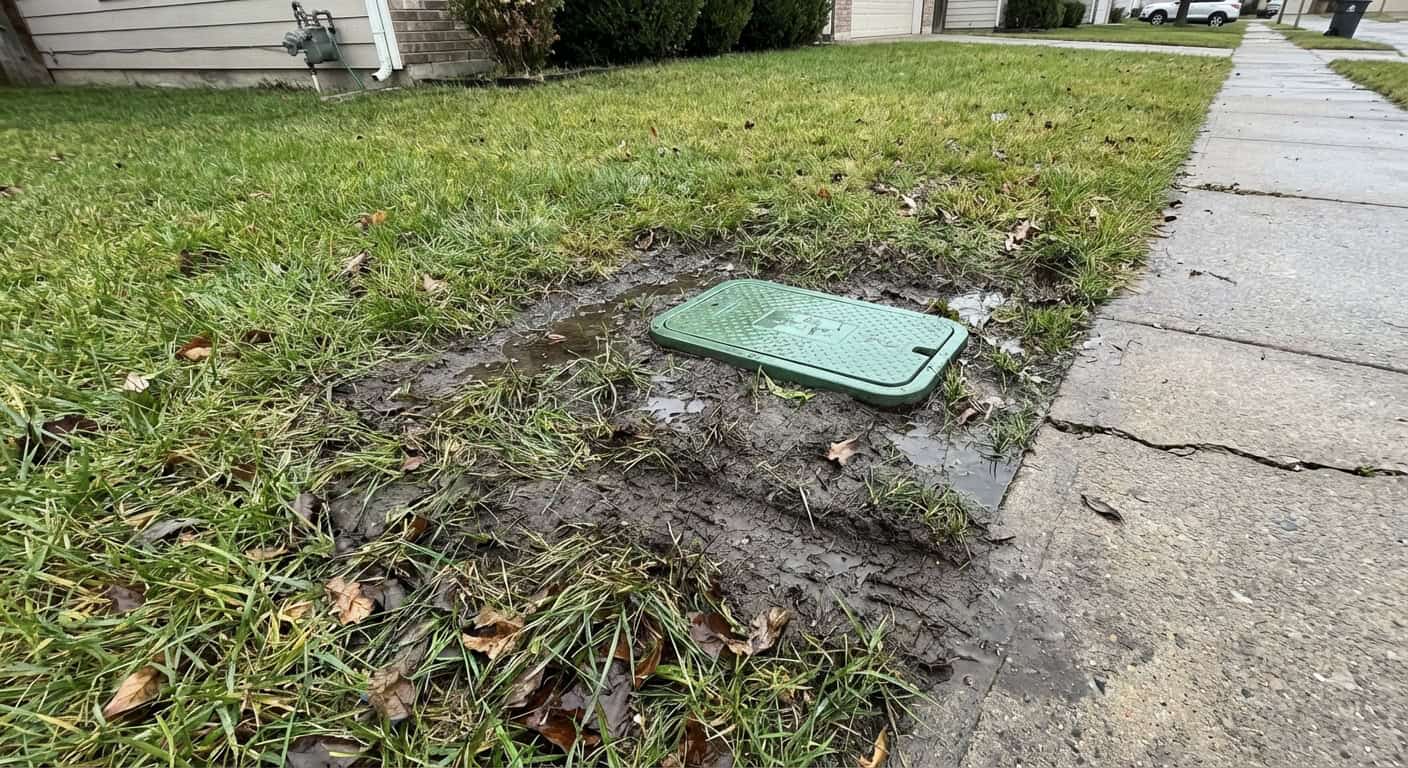
Low water pressure doesn’t always mean something is wrong inside your house. Sometimes, the problem is outside—buried underground in your main service line, the pipe that connects your home to the city water main. A major leak in this buried supply line diverts water away from your home before it ever reaches your fixtures. You’ll experience low pressure at every faucet, but you may not see any obvious signs of water damage inside your house. Instead, look for these outdoor clues:
- Unexplained soggy patches in your yard, even during dry weather
- Unusually lush, green grass in one area of the lawn
- A water bill that’s suddenly much higher than normal
- Your water meter spinning even when all fixtures are turned off
The EPA estimates that the average household loses 10,000 gallons of water per year to leaks. But 10% of homes have leaks that waste 90 gallons or more every single day—more than enough to cause noticeable drops in water pressure throughout the house.
Why Hidden Leaks Are So Difficult to Detect
Service line leaks are particularly insidious because they occur underground or within concrete foundation slabs, making them invisible until severe damage has occurred. In older homes, corroded joints and the Pacific Northwest’s freeze-thaw cycles can cause pinhole leaks that gradually worsen over months or years.
Professional Leak Detection Available
Professional leak detection services use specialized equipment—acoustic listening devices, thermal imaging cameras, and pressure testing—to locate leaks without destructive digging. Catching these leaks early can save thousands of dollars in water bills and prevent costly foundation damage.
Why Your Hot Water Pressure Is Worse Than Cold (And How to Fix It)
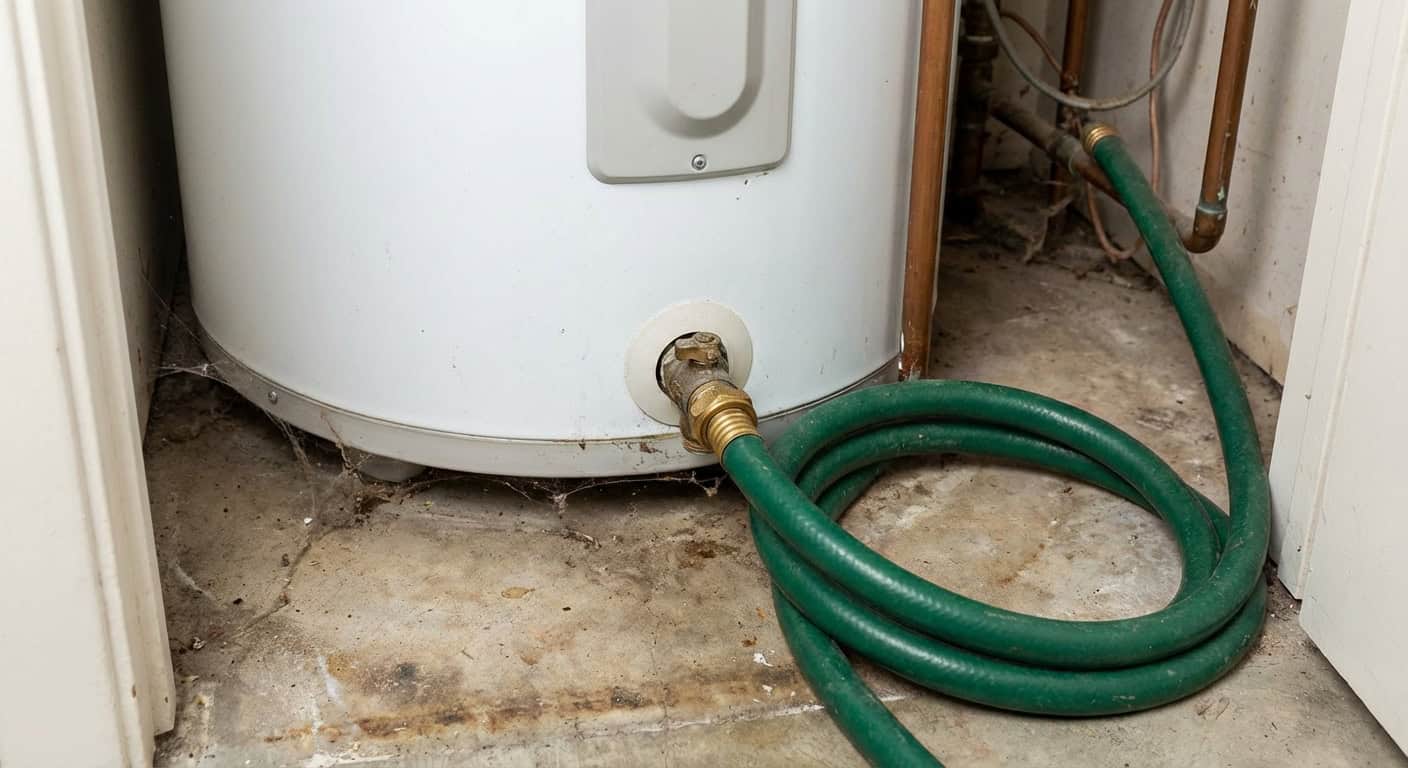
If your cold water pressure is fine but your hot water comes out as a weak trickle, your water heater is likely the culprit. Over time, mineral sediment—particularly in Vancouver’s hard water—settles at the bottom of the tank, hardening into a crusty layer that restricts flow and reduces heating efficiency. For every half-inch of sediment buildup, your water heater uses up to 70% more energy to heat the same amount of water. But the energy waste is only part of the problem—that sediment also blocks the hot water outlet valve, reducing pressure at every hot water fixture in your house.
Symptoms of Water Heater Sediment Buildup
- Strong cold water pressure, but weak hot water pressure
- Rumbling, popping, or banging sounds coming from the water heater (caused by water boiling beneath the sediment layer)
- Running out of hot water faster than you used to
- Rust-colored hot water
🔧 The Fix
Annual water heater flushing can restore up to 20% of lost hot water pressure in hard water regions. The process involves draining the tank through the drain valve at the bottom, flushing out the sediment, and refilling the tank with fresh water.
If sediment has been accumulating for years and has hardened into a solid mass, flushing may no longer be effective. In those cases, water heater replacement becomes the most cost-effective solution.
How to Diagnose Low Water Pressure Yourself (Step-by-Step)
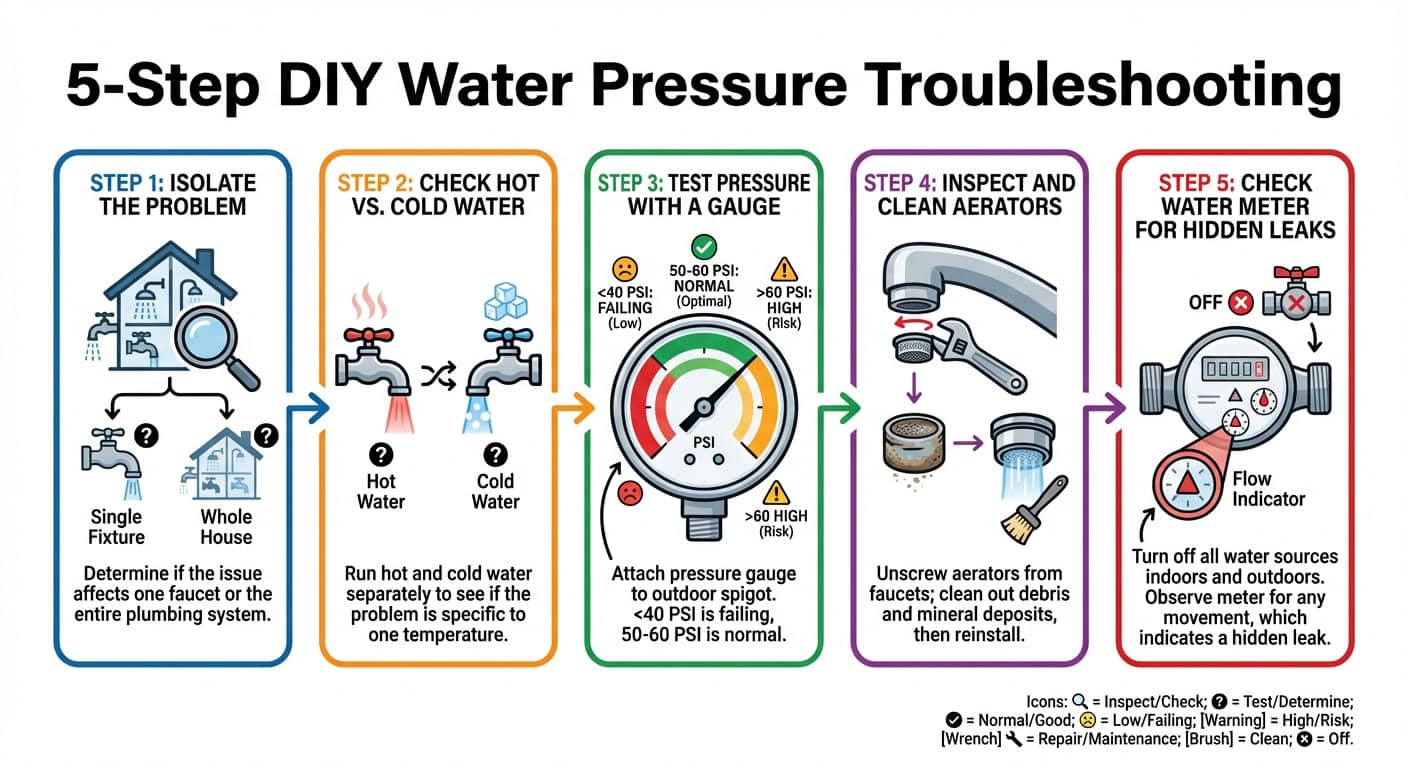
Before calling a plumber, there are several safe, straightforward troubleshooting steps you can take to diagnose the source of your low water pressure.
Step 1: Isolate the Problem
Turn on faucets throughout your house—bathroom sinks, kitchen sink, showers, outdoor hose bibs. Is the low pressure isolated to one fixture, or does it affect the entire house?
- One fixture only: Likely a clogged aerator, showerhead, or fixture cartridge
- Whole house: Points to a PRV failure, main line leak, or corroded pipes
Step 2: Check Hot vs. Cold
Turn on the hot water at a sink, then the cold water. Is the pressure equally low for both, or is only the hot water affected?
- Hot water only: Suspect sediment buildup in your water heater
- Both hot and cold: The problem is upstream—PRV, main leak, or pipe corrosion
Step 3: Test Your Water Pressure
Purchase a basic water pressure gauge from any hardware store (typically $10 to $15). Screw it onto an outdoor hose bib and turn the water on fully. Check the reading:
- 50 to 60 PSI: Normal pressure
- Below 40 PSI: Confirmed low pressure—investigate PRV, leaks, or pipe corrosion
Step 4: Inspect Aerators & Showerheads
Unscrew the aerators from your faucets and the face of your showerhead. Look for mineral deposits, rust flakes, or debris. In hard water areas like Vancouver, soaking fixtures in white vinegar overnight can dissolve stubborn scale buildup.
Step 5: Check Your Water Meter
Turn off every water-using fixture and appliance in your home—faucets, toilets, washing machine, dishwasher, irrigation system. Go outside and observe your water meter. If the meter is still spinning or the dial is moving, you have an active leak somewhere in your system.
When to Call Sarkinen Plumbing
If your pressure gauge reads below 40 PSI, if you’re seeing rust-colored water, or if your water meter indicates a hidden leak, it’s time to bring in professional help. These are signs of systemic issues that require expert diagnosis and repair.
Is It Time to Repipe? Comparing Repair vs. Replacement for Aging Homes
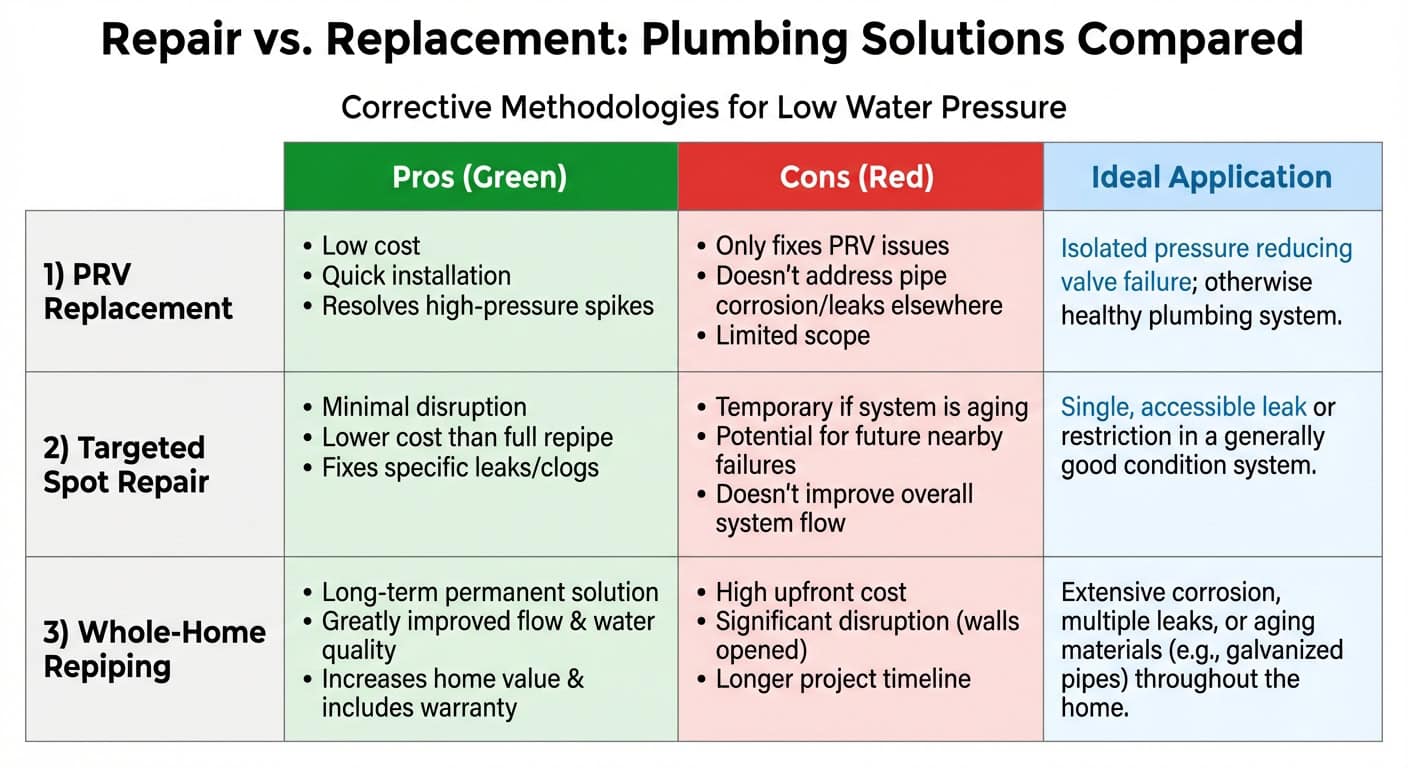
For homes built before 1970 with original galvanized steel pipes, low water pressure is often a recurring nightmare. You fix one section of pipe, only to have another section fail six months later. At a certain point, spot repairs stop being cost-effective—and whole-home repiping becomes the smarter long-term investment.
When Spot Repairs Aren’t Enough
If your home has chronic low pressure, rust-colored water, and frequent leaks, the problem isn’t isolated to one pipe—it’s systemic. Fixing one corroded section doesn’t stop corrosion from continuing elsewhere. The problems will simply migrate to the next weakest point.
The Case for Whole-Home Repiping
Modern repiping uses PEX (cross-linked polyethylene) tubing, which is completely immune to both tuberculation and mineral scale buildup. PEX is flexible, durable, and ideal for both Portland’s acidic water and Vancouver’s hard water. A full repipe:
- Permanently eliminates low pressure caused by corroded pipes
- Improves water quality by removing contaminated galvanized steel
- Reduces health risks by eliminating lead and copper leaching
- Increases property value—updated plumbing is a major selling point
- Provides peace of mind—no more emergency leaks or pressure drops
| Solution | Best For | Long-Term Value |
|---|---|---|
| Spot Repairs | Isolated leaks in newer homes (built after 1980) | Limited—problems will likely recur |
| Whole-Home Repiping | Homes with chronic issues, built before 1970, galvanized pipes | Excellent—eliminates recurring problems permanently |
💰 The Investment
While whole-home repiping has a higher upfront cost than spot repairs, it pays for itself over time by eliminating recurring repair costs, reducing water waste, and preventing expensive emergency plumbing calls. For more information about whether repiping is right for your home, visit our repiping services page.
Key Takeaways
Low water pressure in SW Washington and Oregon isn’t random—it’s almost always tied to predictable mechanical failures or the chemical interaction between your local water supply and aging pipes. Portland’s soft, corrosive Bull Run water creates tuberculation in older pipes, while Vancouver’s hard groundwater causes mineral scale buildup. Add in failing PRVs, hidden leaks, and sediment-filled water heaters, and you have a recipe for chronic pressure problems. The good news? Most of these issues are diagnosable and fixable. Homeowners can perform basic troubleshooting—testing water pressure, checking for hot vs. cold water issues, and inspecting fixtures—but systemic problems require professional assessment. Low water pressure doesn’t just inconvenience you—it’s often your plumbing system’s way of signaling a deeper issue. Whether it’s a simple PRV replacement, a targeted repair, or a full home repipe, addressing the root cause now prevents costly emergency repairs down the road and protects your home’s long-term value.
Experiencing Low Water Pressure?
Sarkinen Plumbing offers free diagnostic consultations and transparent pricing for Portland and Vancouver homeowners.
References:
- Portland Water Bureau. (2024). Drinking Water Treatment and Corrosion Control. City of Portland, Oregon. https://www.portland.gov/water/water-quality/corrosion-control
- Portland Water Bureau. (2022). Improved Corrosion Control Treatment Project. City of Portland, Oregon. https://www.portland.gov/water/bullruntreatment/corrosion-control/icct-project
- City of Vancouver Public Works. (2023). Water Source and Quality. City of Vancouver, Washington. https://www.cityofvancouver.us/publicworks/page/water-source-and-quality
- International Association of Plumbing and Mechanical Officials (IAPMO). (2024). Uniform Plumbing Code. https://www.iapmo.org/publications
- United States Environmental Protection Agency (EPA). (2023). Ground Water and Drinking Water: Galvanized Pipes. https://www.epa.gov/ground-water-and-drinking-water
- United States Environmental Protection Agency (EPA). (2024). Fix a Leak Week – WaterSense. https://www.epa.gov/watersense/fix-leak-week
- U.S. Department of Housing and Urban Development (HUD). (2019). Design Guide for Residential PEX Water Supply Plumbing Systems. https://www.huduser.gov/portal/publications/PEX_Design_Guide.pdf
- U.S. Department of Energy. (2023). Water Heating Systems. Energy Saver Guide. https://www.energy.gov/energysaver/water-heating
- United States Environmental Protection Agency (EPA). (2023). Lead and Copper Rule Overview. https://www.epa.gov/dwreginfo/lead-and-copper-rule
- Vancouver 360-369-3586
- Portland 503-925-3504




Vancouver Location
Proudly Serving
Portland and Vancouver
from Wilsonville to Longview &
Hillsboro to Gresham
UBI # 602-521-027
OR Contractor Lic# 170052 (CCB)
WA Contractor Lic# SARKIPI946MF
OR Plumber Lic# PB115
Customer Satisfaction
4.6 stars - Based on 227 Reviews







Quick Links
Plumbing Services
SW Washington Service Areas
Oregon Service Areas
Contact Information
Sarkinen PlumbingVancouver
9502 NE 72nd Ave
Vancouver, WA 98665
Phone: 360-369-3586
Portland
Phone: 503-925-3504
Hours of Operation
Monday - Sunday 24-hours