- Vancouver 360-369-3586
- Portland 503-925-3504
Why Is My Toilet Constantly Running? A Step-by-Step Diagnostic Guide
by writer | Apr 21, 2026
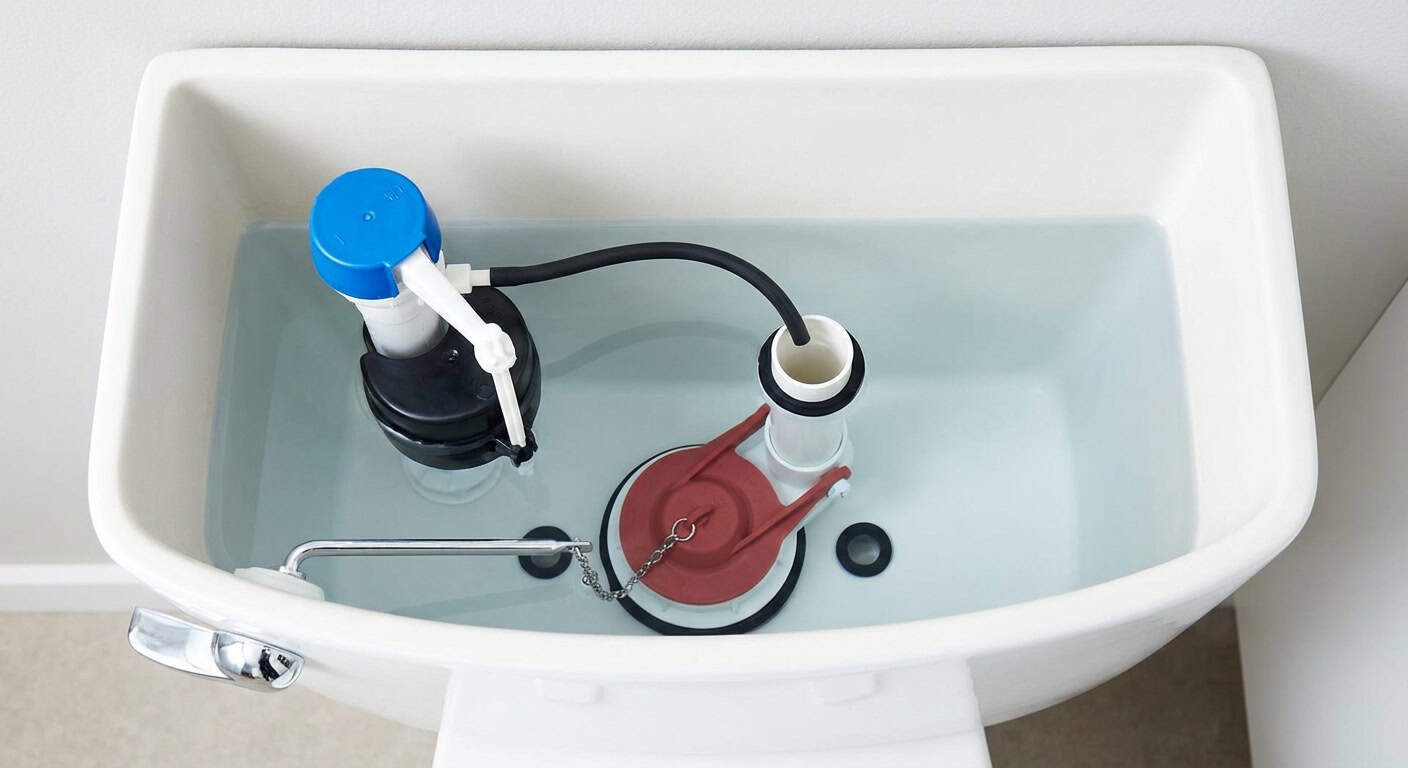
Table of Contents
- What a Running Toilet Really Costs You (And Why Pacific Northwest Homeowners Pay More)
- Why Your Toilet Parts Break Down Faster in Portland & Vancouver (It’s the Water)
- Step 1: The 10-Minute Dye Test—Confirm You Have a Leak
- Step 2: Identifying the Problem—Flapper, Fill Valve, or Float Adjustment
- When to Stop Diagnosing and Call Sarkinen Plumbing
- Why Fixing Your Running Toilet Matters Beyond Your Water Bill
- Key Takeaways
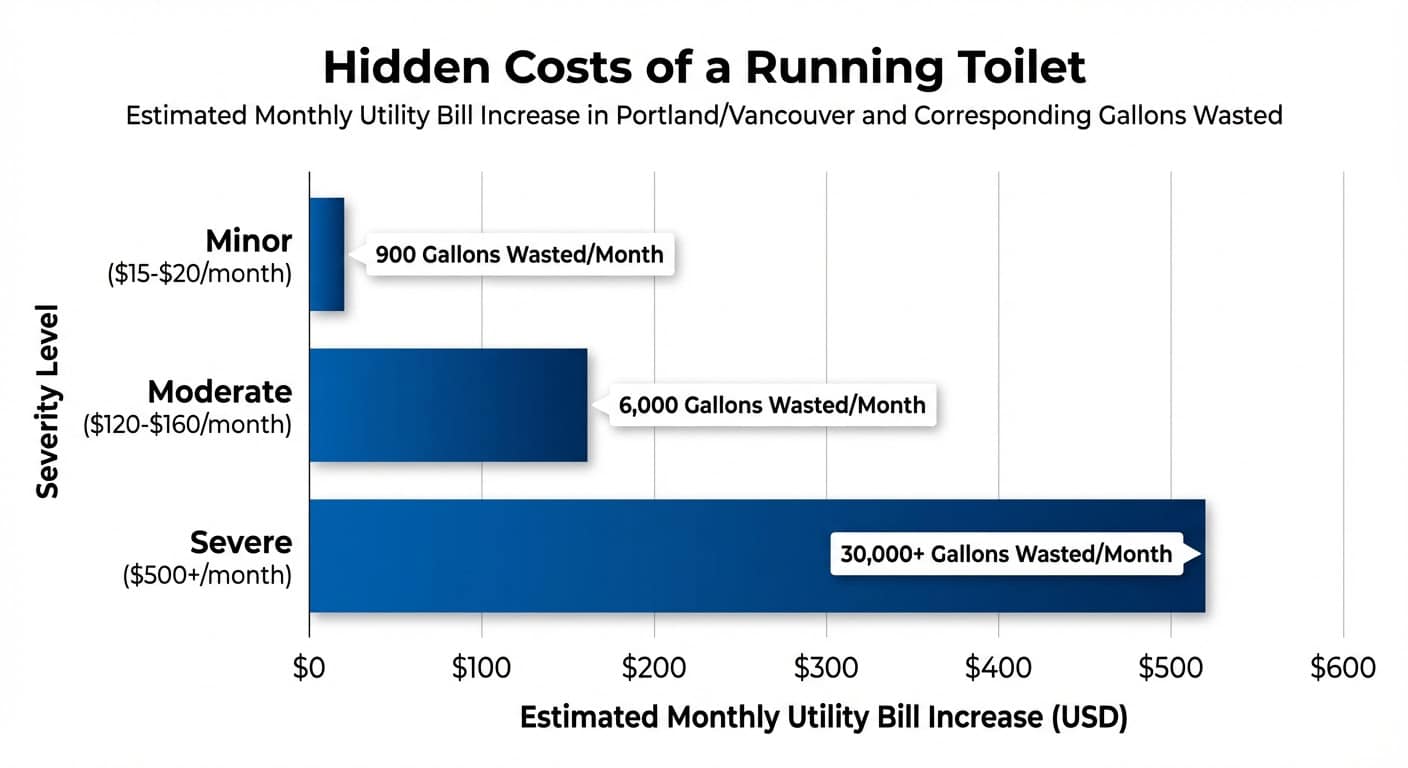
A continuously running toilet is the most commonly ignored plumbing problem in homes across the Pacific Northwest, yet it can waste up to 200 gallons of water per day. For Portland and Vancouver homeowners, this translates to an extra $120-$160 per month on combined water and sewer bills due to local utility rate structures. Unlike visible leaks that damage floors or walls, running toilets drain directly into the sewer system, making the problem financially devastating but visually invisible. This guide will walk you through a professional-grade diagnostic process to identify the exact cause—from degraded flappers to misadjusted float valves—and determine whether it’s a DIY fix or time to call Sarkinen Plumbing. This isn’t just about saving money; it’s about water conservation in the Pacific Northwest, where responsible resource management matters to our community.
What a Running Toilet Really Costs You (And Why Pacific Northwest Homeowners Pay More)
The financial impact of a running toilet extends far beyond what most homeowners realize. The EPA estimates that household leaks account for nearly 10,000 gallons of wasted water per year, with running toilets being the primary culprit. But here in the Portland and Vancouver metro areas, the impact is amplified because of how our local utilities structure their billing. Portland and Vancouver charge for both water delivery and sewer treatment. A running toilet effectively doubles the cost because wasted water still goes through the sewer system. This means you’re paying twice for water that provides zero benefit to your household. Let’s break down the math: A moderate leak wastes approximately 6,000 gallons per month, which is roughly 8 CCF (hundred cubic feet). At Portland Water Bureau rates, this equals approximately $120-$160 in additional monthly charges. Over a year, a homeowner could waste $1,440-$1,920 on a problem that typically costs $10-$50 in parts to fix.
Beyond your personal finances, there’s an environmental angle that resonates deeply in our region. In a community committed to sustainability, fixing a running toilet is a simple yet impactful conservation action. Every gallon saved contributes to the Pacific Northwest’s water security, especially during increasingly dry summer months.
Why Your Toilet Parts Break Down Faster in Portland & Vancouver (It’s the Water)
If you’ve noticed that your toilet components seem to wear out faster than expected, there’s a scientific reason behind it. Both Portland Water Bureau and Vancouver Public Works use chloramine—a combination of chlorine and ammonia—as a secondary disinfectant to maintain water quality as it travels through miles of pipes. While chloramine is completely safe for drinking, it’s highly corrosive to standard rubber and elastomer materials commonly used in toilet flappers. This regional factor significantly impacts how long your toilet components last.
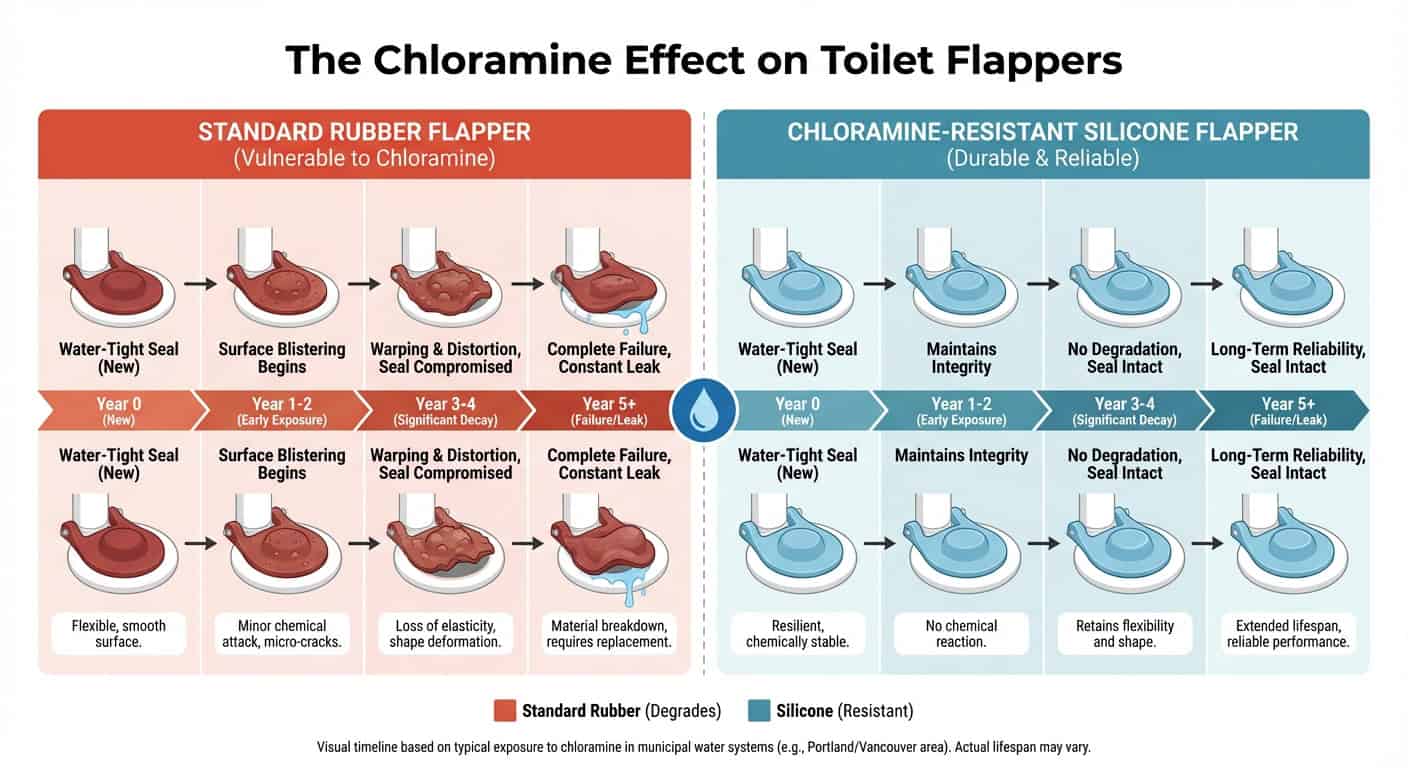
Prolonged exposure to chloramines causes rubber flappers to:
- Blister and warp, preventing a watertight seal
- Become brittle and crack over time
- Develop mineral buildup that compounds sealing issues
This explains why Pacific Northwest homeowners may need to replace flappers every 3-5 years compared to 5-7 years in non-chloramine regions. The good news? When you replace parts, you can specify chloramine-resistant silicone rubber flappers designed specifically for treated municipal water. These are available at local hardware stores, and Sarkinen Plumbing exclusively uses professional-grade chloramine-resistant components. Understanding the evolution of toilet components also helps explain why different problems occur. Legacy systems from before the 1990s used brass ballcock valves with floating balls. These are prone to mechanical bending that raises water levels over time. Modern systems use vertical float cup designs, such as the popular Fluidmaster 400 series. While mechanically superior, they’re vulnerable to debris blockages in the internal diaphragm seal—another common failure point we’ll help you diagnose.
Step 1: The 10-Minute Dye Test—Confirm You Have a Leak
Before diving into diagnostics and repairs, you need to confirm that you actually have a leak. Many homeowners assume a running toilet based on sounds or increased water bills, but the EPA’s official dye test provides visual, definitive proof.
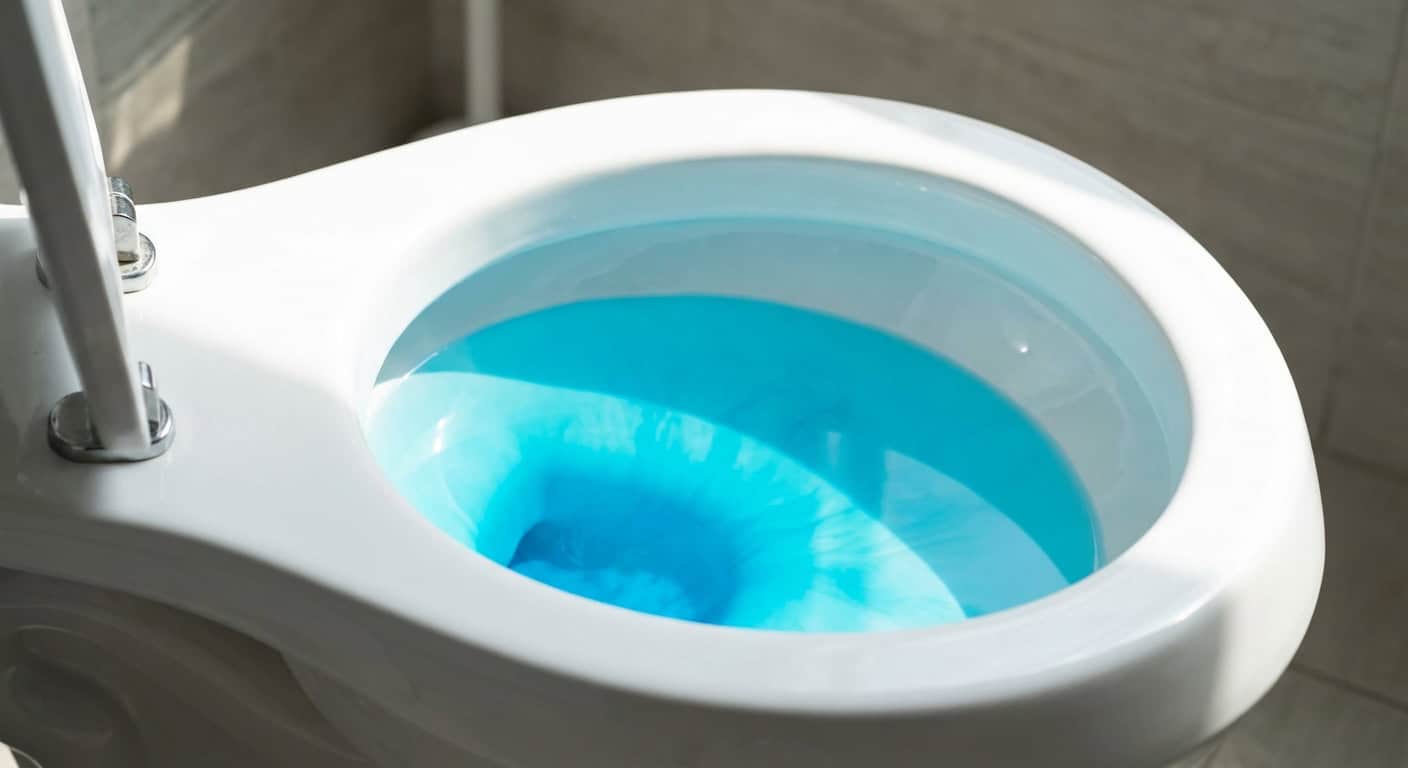
Here’s the official EPA method:
- Remove the toilet tank lid and set it aside safely
- Add 3-5 drops of food coloring or a dye tablet into the tank water
- Wait 10-15 minutes without flushing
- Check the toilet bowl for any color
If color appears in the bowl, water is leaking from the tank into the bowl. A positive result confirms a leak and means you should proceed to flapper and flush valve diagnostics. A negative result suggests the issue may be with the fill valve constantly refilling or an external factor.
Step 2: Identifying the Problem—Flapper, Fill Valve, or Float Adjustment
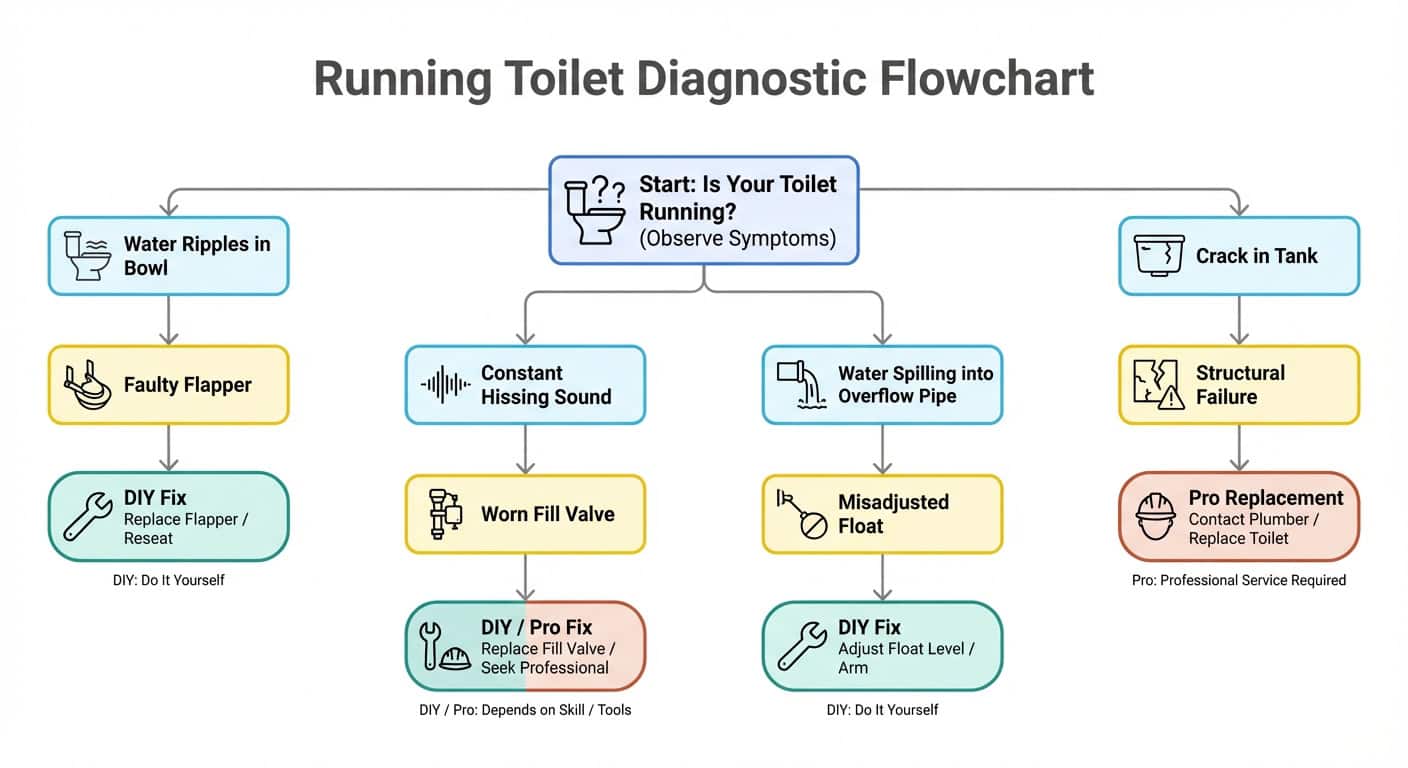
Once you’ve confirmed a leak exists, it’s time to identify the culprit. Three components cause the vast majority of running toilet problems. Let’s walk through each one with clear diagnostic criteria.
The Flapper (Most Common Cause)
The flapper is a rubber seal at the bottom of the tank that lifts during flushing and reseals to hold water. It’s the most common failure point in toilet systems.
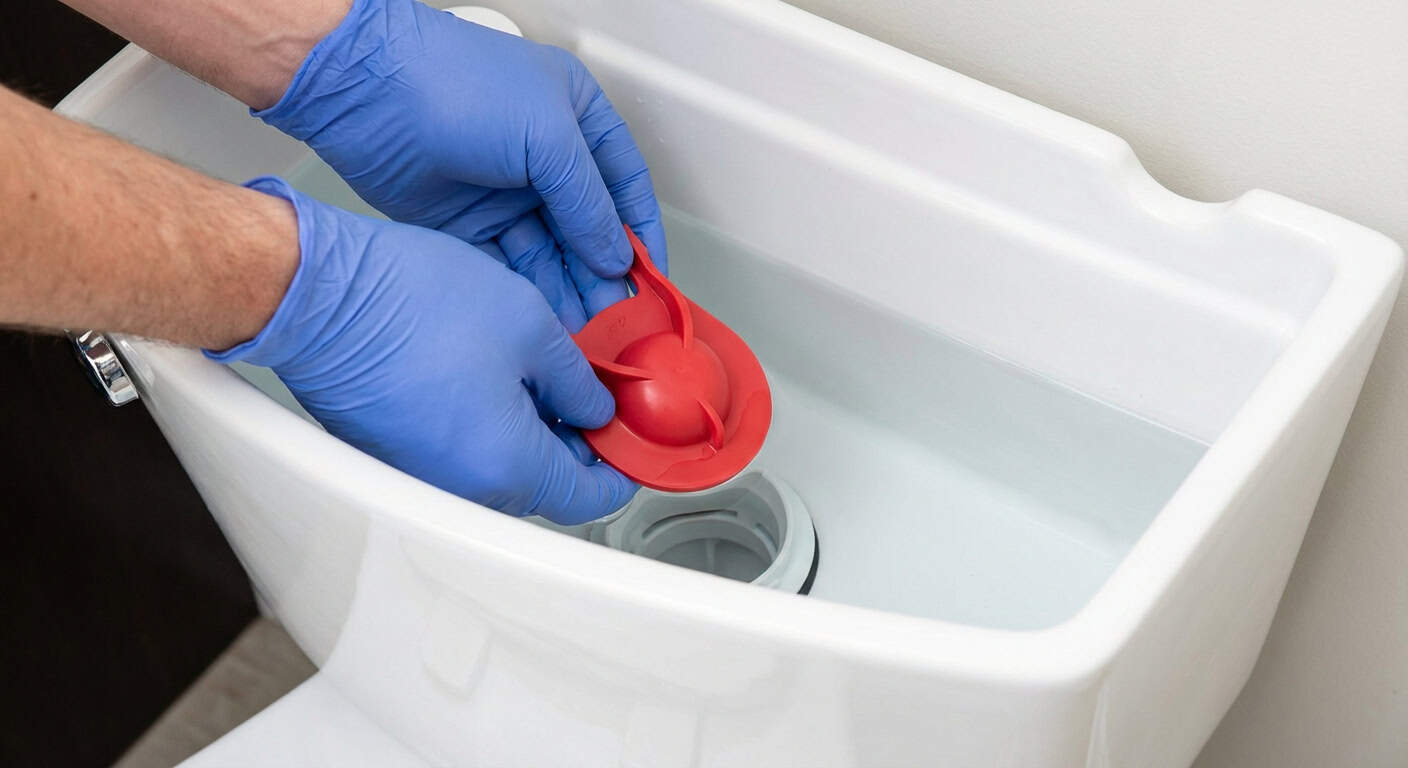
Diagnostic signs of a faulty flapper:
- “Ghost flushing”—the toilet randomly refills without being flushed
- Visible warping, cracks, or mineral buildup on the flapper surface
- The flapper feels slimy, brittle, or has lost its elasticity when touched
Quick fix process:
- Turn off the water supply valve behind the toilet
- Flush to empty the tank
- Remove the old flapper (typically clips onto the overflow tube or chain)
- Clean the flush valve seat with a ScotchBrite pad to remove mineral deposits
- Install a chloramine-resistant silicone flapper
The Fill Valve (Constant Hissing)
The fill valve refills the tank after flushing and should shut off automatically at the correct water level. When it fails, you’ll hear a constant hissing sound. Diagnostic signs of a worn fill valve:
- Constant hissing sound emanating from the tank
- Water level appears correct, but refilling never stops
- The sound continues even when the float is at the proper position
Troubleshooting steps:
- Try flushing debris from the valve by turning the water supply on and off rapidly
- If hissing persists, the internal diaphragm seal has failed
- Modern fill valves like the Fluidmaster 400A series are universal and take 10-15 minutes to replace with basic tools
This is typically a straightforward DIY repair, though homeowners uncomfortable with plumbing work should contact a professional rather than risk damaging other components.
Float Adjustment (Water Overflowing into Tube)
The float controls when the fill valve shuts off by sensing the water level in the tank. When misadjusted, water continuously spills into the overflow tube. Diagnostic signs of float misadjustment:
- Water visibly spilling into the overflow tube
- Water level is more than 1 inch below the top of the overflow tube (the ideal level)
Adjustment process:
- Locate the adjustment screw or clip on the fill valve body
- Lower the float to reduce the shutoff level
- Test flush and verify water stops approximately 1 inch below the overflow tube opening
This is the simplest fix of all three and takes less than five minutes once you locate the adjustment mechanism.
When to Stop Diagnosing and Call Sarkinen Plumbing
While many running toilet issues are DIY-friendly, certain situations require professional expertise. Knowing when to stop and call a professional prevents you from causing more expensive damage and ensures the job is done right.
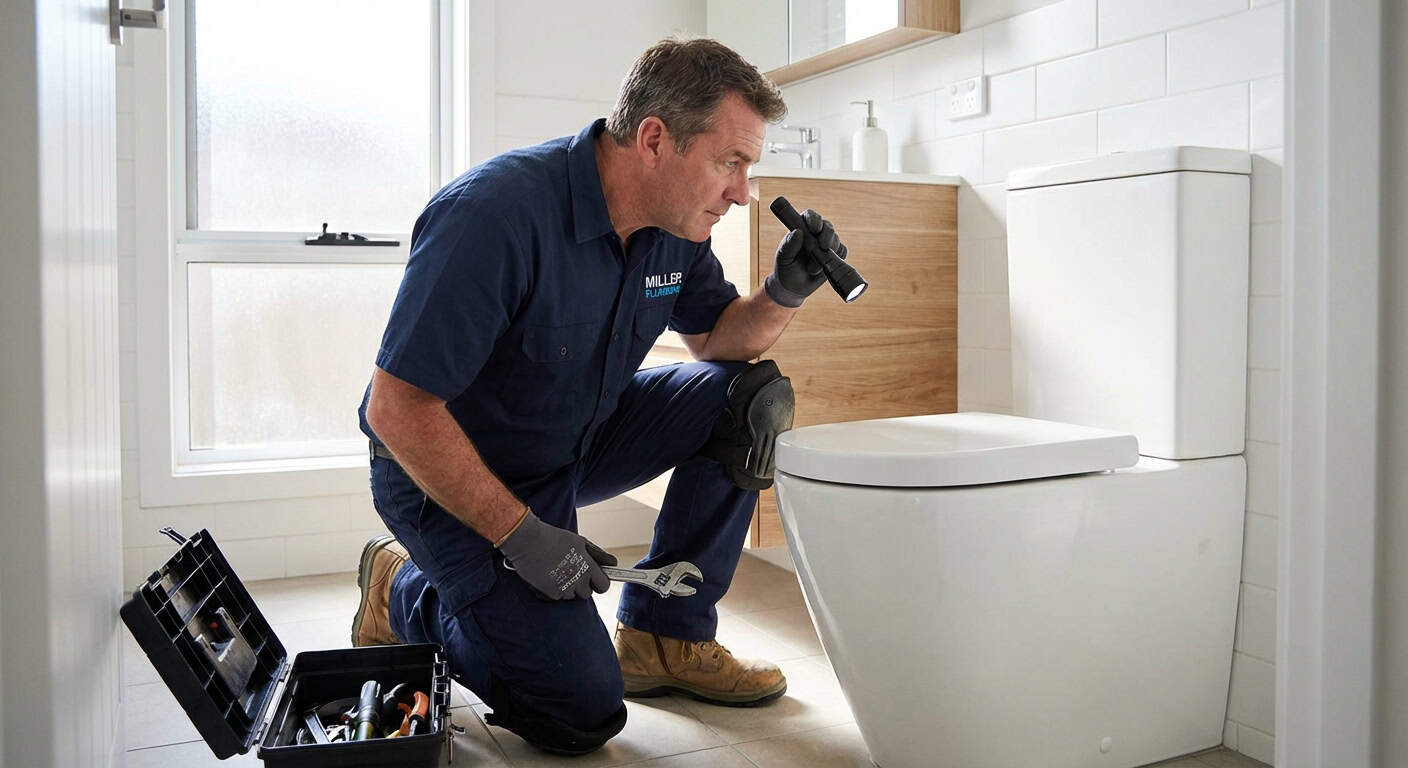
Structural issues requiring immediate professional help:
- Cracks in the tank or bowl (turn off water immediately; full replacement necessary)
- Corroded or damaged flush valve seats that prevent proper flapper sealing
- Water pooling around the base of the toilet
Pressure-assisted toilets: These commercial-grade systems, increasingly common in newer construction, have internal pressure vessels that require specialized tools and knowledge. They’re not covered in standard DIY guides and should always be serviced by professionals. Repeated failures indicate deeper problems: If you’ve replaced the flapper and fill valve but the problem persists, there may be issues with water pressure regulation, worn internal flush valve components, or mineral buildup in concealed areas. These scenarios require professional diagnostic equipment to identify and resolve.
Can’t identify the issue or need a professional opinion? Sarkinen Plumbing serves Portland and Vancouver with fast, reliable diagnostics and repairs. We’ll identify the problem, explain your options clearly, and get your toilet running efficiently—often same-day. Call (360) 369-3586 or schedule online at sarkinenplumbing.com.
Why Fixing Your Running Toilet Matters Beyond Your Water Bill
Individual action creates collective impact. An EPA WaterSense study showed that simple plumbing retrofits—primarily toilet flapper replacements and fill valve adjustments—saved an average of 14,000 gallons per unit, per year in multi-family housing. When you scale that to community level, the numbers become remarkable.
The Pacific Northwest has experienced growing summer drought conditions in recent years. Every gallon conserved during wet seasons builds resilience for dry periods. Oregon and Washington both have state-level water conservation goals, and homeowners who proactively maintain their plumbing align with these important environmental initiatives. Water conservation isn’t just an environmental talking point—it’s a practical response to changing climate patterns. By addressing a running toilet promptly, you’re participating in something larger than reducing your utility bill. You’re contributing to the sustainability of our region’s water resources.
Key Takeaways
A running toilet is rarely a catastrophic emergency, but ignoring it costs Portland and Vancouver homeowners hundreds of dollars per year in wasted water and sewer charges. The three most common causes—degraded flappers, worn fill valves, and misadjusted floats—are all diagnosable using the step-by-step process outlined above. Essential points to remember:
- Pacific Northwest water chemistry, specifically the use of chloramines, accelerates rubber component degradation
- The EPA dye test provides definitive proof of leaks in just 10 minutes
- Most running toilet issues can be resolved with $10-$50 in parts and 20-30 minutes of time
- Always specify chloramine-resistant materials when replacing components
- Structural issues, pressure-assisted systems, and persistent problems require professional help
- Fixing running toilets contributes to regional water conservation and sustainability goals
Ready to Fix Your Running Toilet?
Still hearing that hiss or seeing water bills climb? Don’t let a simple fix turn into a costly problem. Contact Sarkinen Plumbing today for professional diagnostics, honest assessments, and same-day service in Portland and Vancouver.
Or call (360) 369-3586
References:
- U.S. Environmental Protection Agency (EPA) WaterSense. (2024). Fix a Leak Week: Fix Your Running Toilet. https://www.epa.gov/watersense/fix-leak-week
- Portland Water Bureau. (2024). Water and Sewer Rates and Fees. City of Portland, Oregon. https://www.portland.gov/water/about-your-water/rates-and-fees
- Colorado State University Extension. (2014). Water Conservation In and Around the Home. https://extension.colostate.edu/topic-areas/family-home-consumer/water-conservation-in-and-around-the-home-9-952/
- Portland Water Bureau. (2024). Ammonia and Chlorine (Chloramine) in Portland’s Water. City of Portland, Oregon. https://www.portland.gov/water/water-quality/water-treatment/ammonia-and-chlorine
- American Water Works Association (AWWA). (2018). Impact of Chloramines on Plumbing Materials. https://www.awwa.org/Portals/0/AWWA/Government/ImpactofChloramines.pdf
- U.S. Environmental Protection Agency (EPA) WaterSense. (2021). Case Study: Multi-Family Housing Water Efficiency. https://www.epa.gov/watersense/watersense-case-studies
- Vancouver 360-369-3586
- Portland 503-925-3504




Vancouver Location
Proudly Serving
Portland and Vancouver
from Wilsonville to Longview &
Hillsboro to Gresham
UBI # 602-521-027
OR Contractor Lic# 170052 (CCB)
WA Contractor Lic# SARKIPI946MF
OR Plumber Lic# PB115
Customer Satisfaction
4.6 stars - Based on 227 Reviews







Quick Links
Plumbing Services
SW Washington Service Areas
Oregon Service Areas
Contact Information
Sarkinen PlumbingVancouver
9502 NE 72nd Ave
Vancouver, WA 98665
Phone: 360-369-3586
Portland
Phone: 503-925-3504
Hours of Operation
Monday - Sunday 24-hours