- Vancouver 360-369-3586
- Portland 503-925-3504

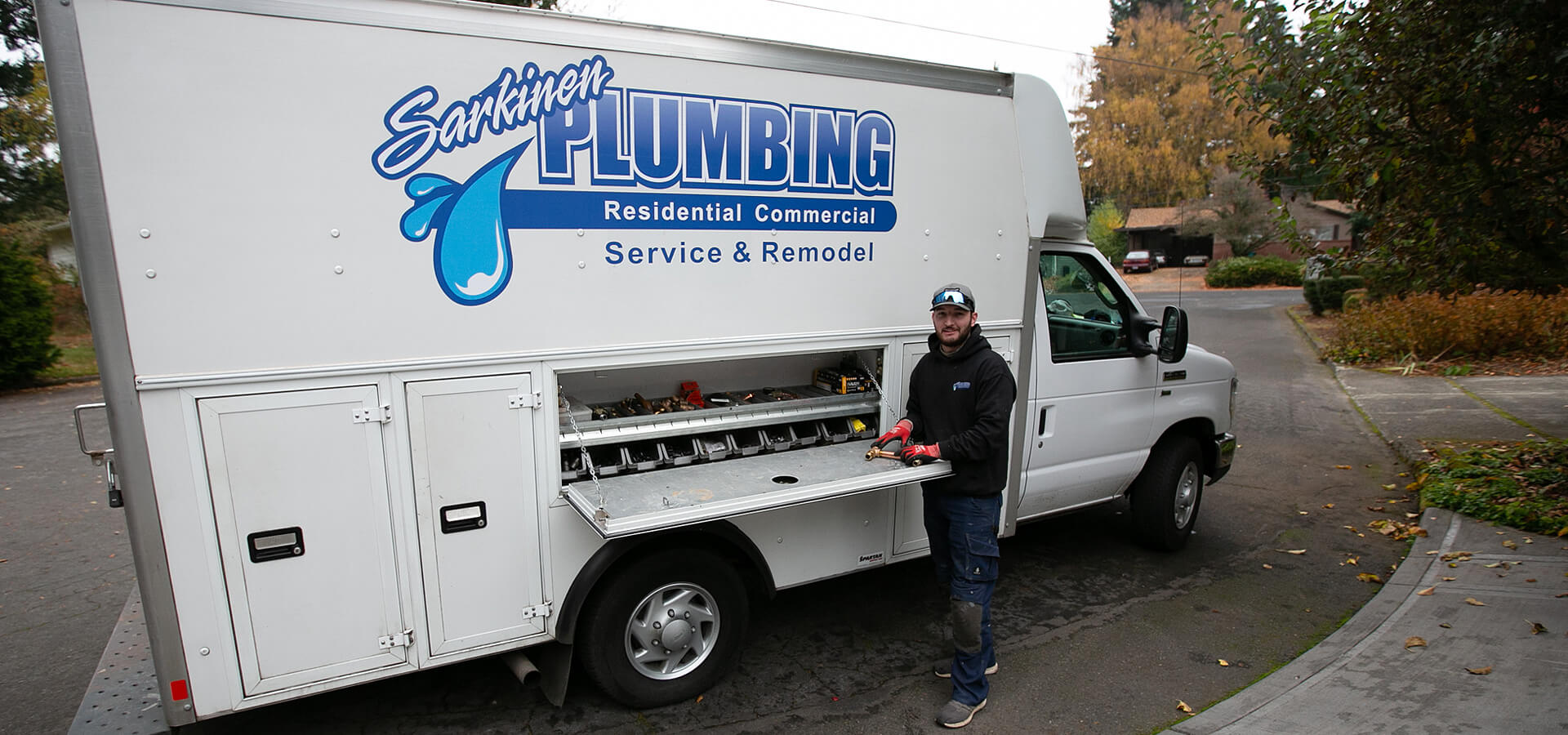
Repiping Services Vancouver WA
Galvanized & Poly-B Replacement with PEX — Most Homes Done in One Day
- Fast Same Day Service
- No Obligation Estimate
- Commercial & Residential Plumbing




Check out our
coupons!
We Offer
*0%
Financing
-
 off
off
Any service for new customers!
(*Minimum Purchase Required)
EXPIRES 10/26 -
 off
off
Main Water Service Replacement
Call now for details!
EXPIRES 10/26 -
 off
off
Water Heater Replacement
Call now to schedule!
EXPIRES 10/26 -
 off
off
Rain Drain Clearings
(*Minimum Purchase Required)
EXPIRES 10/26 -
 off
off
Seniors & Military
(*Minimum Purchase Required)
EXPIRES 10/26



How It Works
Call Us
Call anytime, 24/7. A real person answers and schedules your appointment.
We Diagnose
Our plumber inspects, identifies the problem, and explains what is needed.
Upfront Quote
You get options with prices before any work begins. Your choice.
Expert Repair
Licensed plumber completes the work, cleans up, and walks you through it.
Repiping — Vancouver & Portland
Why Whole-House Repiping Transforms Your Daily Water Experience
If you have lived with low water pressure, rusty water, or the anxiety of wondering which pipe will spring the next leak, a whole-house repipe is the definitive solution. Repiping replaces every water supply pipe in your home — from the main water entry to every faucet, toilet, shower, and appliance connection — with modern PEX or copper pipe. The difference is immediate and dramatic. Showers go from a trickle to full pressure. Water runs clear instead of brown. The persistent worry about the next pinhole leak or burst pipe disappears entirely.
Sarkinen Plumbing has repiped hundreds of homes across the Portland-Vancouver metro area, from early 1900s Craftsman bungalows with original galvanized steel pipes to 1990s-era homes with failing polybutylene. Our repiping crews have refined the process to minimize disruption to your daily life — water is restored at the end of each work day, and most projects are completed in two to four days. The investment in repiping pays immediate dividends in water quality, water pressure, reduced leak risk, and increased home value.
Get a repiping assessment
Signs Your Portland-Vancouver Home Needs Repiping
Homes in the Portland-Vancouver metro that were built before the 1970s very likely have galvanized steel water supply pipes that are now 50 to 70 years old. Galvanized pipes corrode from the inside out — the zinc coating that was meant to prevent rust gradually wears away, exposing bare steel that rusts, flakes, and narrows the pipe interior. A half-inch pipe that originally delivered 10 gallons per minute may now be restricted to 3 or 4 gallons per minute. The rust contaminates your drinking water with iron particles that give it a brown or orange tint, particularly noticeable first thing in the morning.
Homes built from the late 1970s through the mid-1990s may have polybutylene (poly-B) supply pipes — a gray or blue flexible plastic that was later found to deteriorate when exposed to chlorine in municipal water. Poly-B pipes degrade from the inside without warning and can split open catastrophically, flooding the home. Multiple pinhole leaks in copper pipes in different locations throughout the home is another sign of systemic pipe failure. If any of these conditions describe your home, a professional repiping assessment can tell you how urgent the situation is and what the solution will cost.
Schedule assessment
PEX vs. Copper Repiping — Making the Right Material Choice
The two modern pipe materials used for whole-house repiping each have distinct advantages. PEX (cross-linked polyethylene) has become the dominant residential repiping material because of its flexibility, corrosion resistance, freeze tolerance, and lower cost. PEX can be routed through walls and floors with fewer fittings — and fewer fittings means fewer potential leak points. It is color-coded (red for hot, blue for cold) for easy identification and comes in long rolls that minimize joints throughout the system.
Copper has been the gold standard of plumbing pipe for over a century, with a proven track record exceeding 50 years. It is naturally antimicrobial, does not leach chemicals into water, and is required by some building codes for the first section of pipe from the water heater. Copper costs more than PEX in both material and labor due to the soldering required at each joint. We use both materials and recommend the best option based on your home, your local code requirements, your water chemistry, and your budget. Many repiping projects use a combination — copper for the first few feet from the water heater and PEX for everything else.
Material options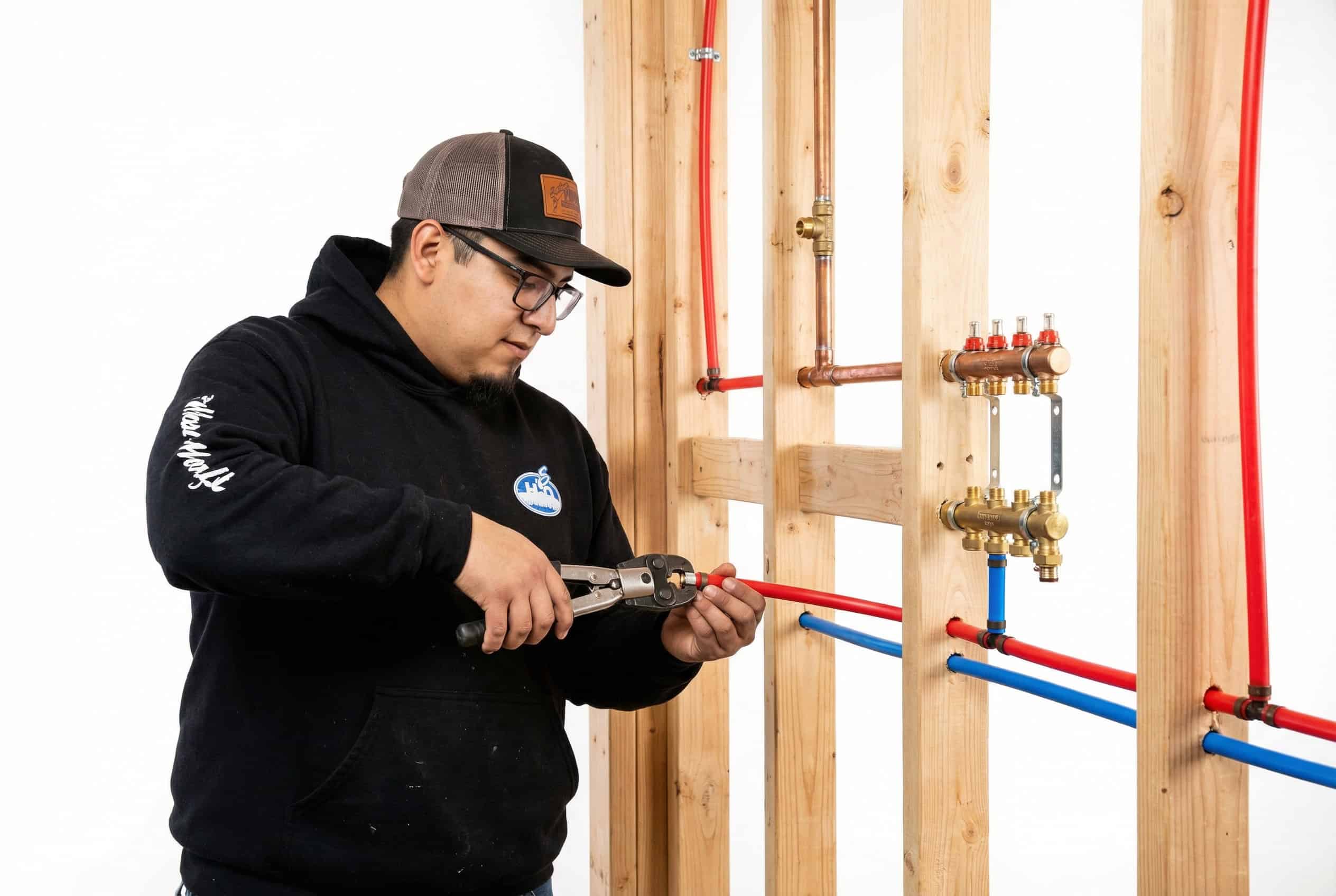
Our Repiping Services
Galvanized Steel Pipe Replacement
Galvanized steel was the standard residential water supply pipe from the early 1900s through the 1960s. The interior zinc coating was designed to prevent corrosion, but it wears away over decades of contact with water. Once the zinc is gone, the bare steel corrodes aggressively, producing iron oxide (rust) that builds up inside the pipe and progressively restricts water flow. The corrosion is worst at threaded joints where the galvanizing was disrupted during manufacturing, and these joints are often the first points of failure.
Replacing galvanized pipes with PEX typically transforms the home’s water experience overnight. Water pressure doubles or triples as the corroded restrictions are eliminated. Water runs clear instead of brown. The risk of burst pipes drops dramatically. Our galvanized replacement projects begin with an assessment of the entire plumbing system, including mapping the pipe routing, counting fixtures, and planning the new pipe layout. We install the new PEX system, pressure test every connection, patch drywall access points, and leave you with a plumbing system that will last decades.
Replace galvanized pipes
Polybutylene Pipe Replacement — Before It Fails
Polybutylene pipe was marketed as the pipe of the future when it was widely installed in homes from the late 1970s through the mid-1990s. It was inexpensive, flexible, and easy to install. It was also fundamentally flawed. The plastic deteriorates when exposed to chlorine and other oxidants found in virtually all municipal water systems. The degradation occurs from the inside of the pipe outward, invisible until the pipe suddenly splits open and floods the home. There is no way to predict when a poly-B pipe will fail — some last 20 years, others fail at 15.
If your home was built between 1978 and 1995 and has gray or blue flexible plastic supply pipes, we strongly recommend proactive replacement before a failure occurs. The damage from a poly-B pipe burst can include flooded rooms, destroyed flooring, water-damaged walls and ceilings, mold growth, and displacement from your home during remediation. The cost of repiping is a fraction of what a catastrophic poly-B failure costs after factoring in water damage, mold remediation, and temporary housing. We offer competitive repiping pricing and can typically complete a poly-B replacement in two to three days.
Replace poly-B pipes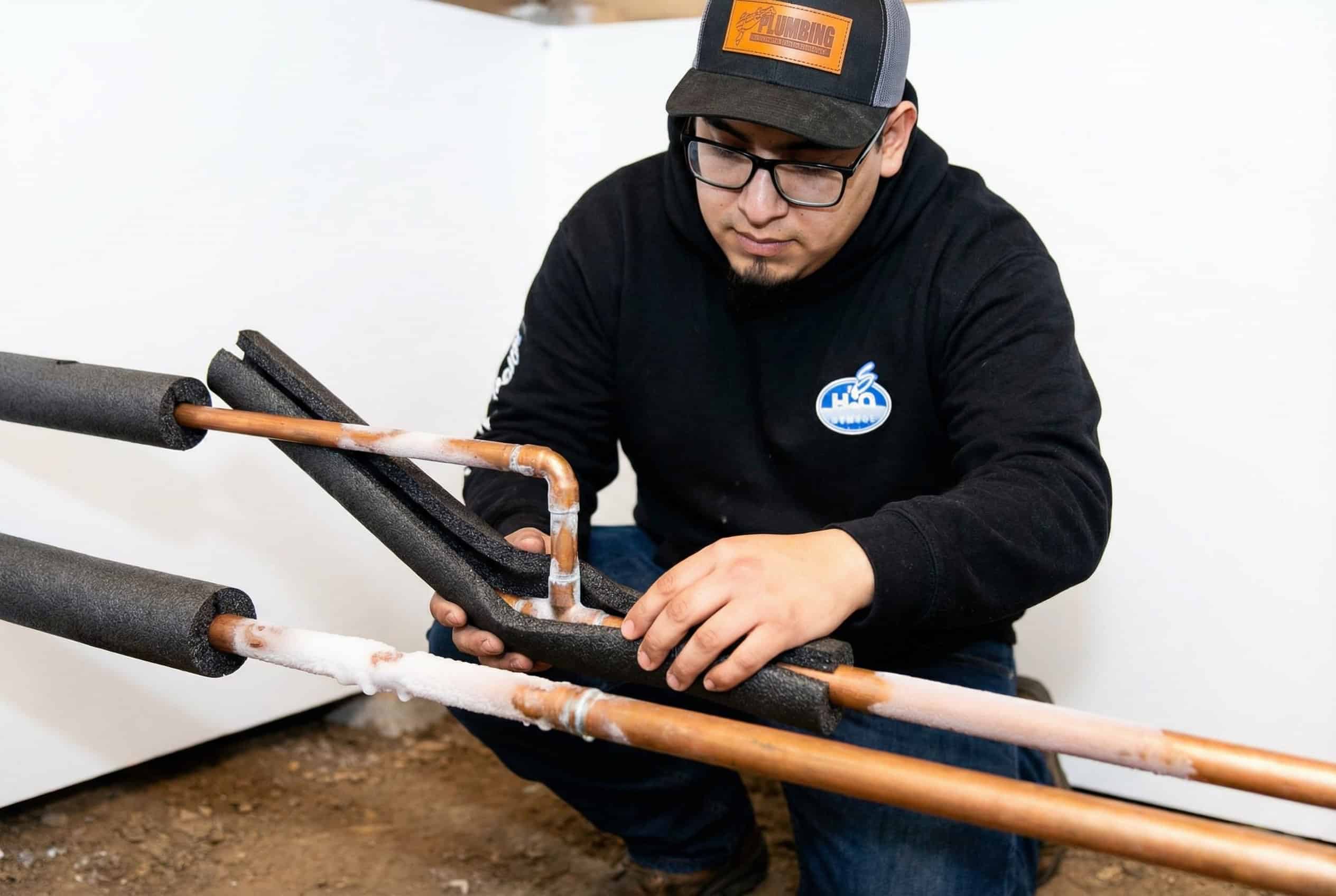
Copper Pinhole Leak Repiping
Copper pipes are durable, but they are not indestructible. Aggressive water chemistry, electrolysis from contact with dissimilar metals, and certain soil conditions cause copper to develop pinhole leaks — tiny perforations that start as weeping drips and gradually worsen. One pinhole leak is a localized problem that can be repaired with a small section of new pipe. But when pinhole leaks appear in multiple locations throughout the house, the copper itself is failing systemically, and repiping with PEX is the most cost-effective long-term solution.
We see copper pinhole leak patterns in specific neighborhoods throughout the Portland-Vancouver metro where soil conditions or water chemistry accelerate copper corrosion. Homes in these areas may develop their first pinhole leaks at 15 to 20 years, well short of copper’s expected 50-year lifespan. Our repiping assessment identifies whether your pinhole leak is an isolated failure or part of a pattern, and we provide clear recommendations based on the overall condition of your copper system.
Pinhole leak assessment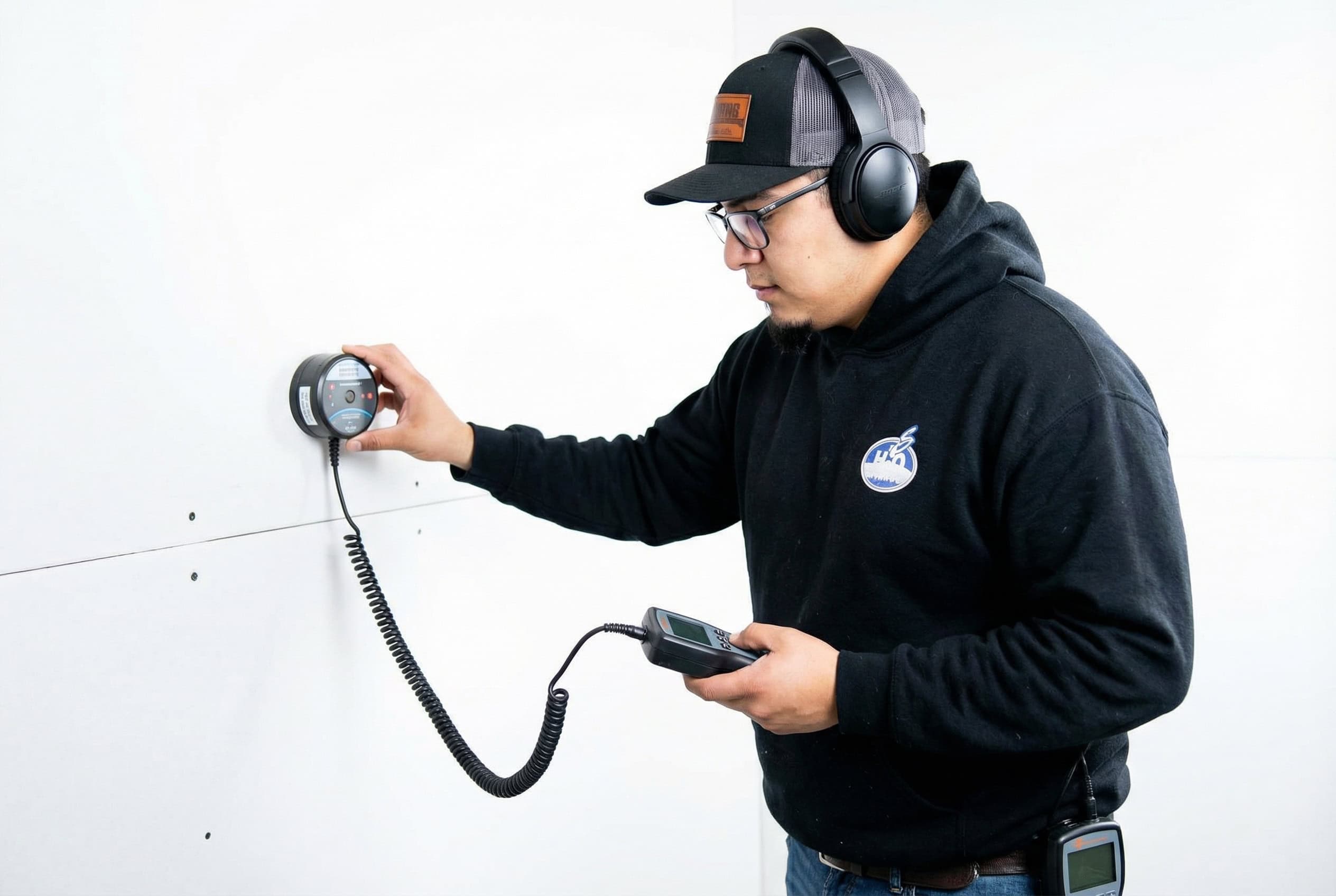
What to Expect During a Whole-House Repipe
A whole-house repipe is a multi-day project that involves working inside your walls, ceilings, and crawl space. Understanding what to expect helps you plan around the disruption. On day one, our crew protects floors and furniture with drop cloths, maps out the new pipe routing, and begins cutting small access points in drywall where pipes need to cross between stud bays. Water is typically shut off during work hours, with service restored at the end of each day so you can use your bathrooms and kitchen in the evening.
The work progresses room by room as new PEX or copper lines are run from a central manifold (for PEX) or the main supply trunk (for copper) to each fixture in the house. Each new connection is pressure tested as it is completed. Once all new piping is installed and pressure tested, we schedule the building inspection. After the inspection passes, we patch the drywall access points with joint compound — you may need to arrange painting or texture matching depending on your wall finish. Most homes are fully repiped in two to four days.
Plan your repipe
Repiping Older Homes in the Portland-Vancouver Metro
The Portland-Vancouver metro has a rich housing stock that spans every era of American residential construction. Portland’s inner eastside and Sellwood neighborhoods feature homes from the 1900s through the 1930s with original galvanized steel and even lead water supply pipes. Vancouver’s Hough and Carter Park neighborhoods have mid-century homes with galvanized and early copper systems. The suburban developments of the 1980s and 1990s in East Vancouver, Salmon Creek, and Beaverton may have polybutylene pipes that are now at risk of failure.
Each era and construction style presents unique repiping challenges. Older homes with plaster walls require more careful access planning than homes with drywall. Multi-story homes need vertical pipe runs that connect floors through shared wall cavities. Homes on slab foundations may have supply pipes embedded in or under the concrete that need to be rerouted above the slab. Our repiping crews have experience with every home type in the metro area and plan each project to address the specific challenges of your home’s construction.
Repipe your older home
What Our Customers Say About Repiping
Portland & Vancouver’s Best Local Plumber
-
“I am beyond happy with the work I have had to had done. My house was completely repiped in two days, Bert and Mike or Matt? Gosh I suck with names were really great to work with. They were respectful, let me know everything they were doing, informed of the crazy things the original owners and builders did and fixed them. I also had them put a…”
 Tiffany Via
“2020- So thankful for the responsiveness!!!! Pipe broke in crawlspace and they came out and fixed the issue until I am ready to do a pipe replacement. Appreciate the great customer service and knowledge. Thank you! 2021-Did a full pipe replacement with PEX of whole house. Did an awesome job! Also replaced shut off valve in pump house…”
K A“I needed a copper pipe replaced after it blew in the ice storm. Easy to set up appointment. Plumbers found a second pipe rupture and fixed it. Great service!”
Marcia Kerensky“i had sarkinen plumbing out to repipe my home, Austin.L and Jade.k did a great a job!! would highly recommend to anybody!”
lang christiansen -
“Ciro is awesome. He goes above and beyond. He knows I’m doing a lot of the remodeling work myself and has been so willing to help guide me in the right direction. We got a whole house repipe done, which turned out great, so I called Sarkinen again for a tub to shower conversion. Ciro came out today and took a look and gave me an honest price…”
Holly J.“We have loved working with Sarkinen! We had an emergency link and they came out very fast to stop the water and start mitigation. They replaced our galvanized steel pipes and installed a water heater in 2 days. They are quick and knowledgeable. We’ll be telling everyone we know to use Sarkinen!”
Jenny Wallace“Carlson plumbing showed up on time . Jade Showed up at 9 AM on Monday started work right away.repiping all pipes under the house out side Faucets the bathroom laundry room new hot water heater kitchen sink refrigerator jades helpers Berry and nate showed up at 10 30AM and got right to work Berry and nate wasted no time getting things done…”
Sharon Grammar“Great plumbing service! Professional and on time.”
Satisfied Customer -
“Great plumbing service! Professional and on time.”
Satisfied Customer“Great plumbing service! Professional and on time.”
Satisfied Customer“Great plumbing service! Professional and on time.”
Satisfied Customer“Great plumbing service! Professional and on time.”
Satisfied Customer
Why Vancouver & Portland Homeowners Choose Sarkinen
Upfront, Fair Pricing
No hidden fees, no overtime charges. You get a clear, written price before any work begins. Same rate day or night.
Licensed in WA & OR
Dual-state licensing (WA #SARKIPI946MF, OR #170052) means we serve the entire Portland-Vancouver metro.
24/7 Emergency Service
We answer the phone day and night. A licensed plumber is dispatched immediately — at your door within 60-90 minutes.
Satisfaction Guaranteed
Every repair backed by our workmanship guarantee. Background-checked, drug-tested plumbers who treat your home with care.
Cities We Serve for Repiping
Washington
Repiping Questions & Answers
Most residential repiping projects take two to four days to complete, depending on the size of the home, the number of fixtures, and the accessibility of the existing plumbing. A typical three-bedroom, two-bathroom home usually takes two to three days. Larger homes or homes with complex plumbing layouts may take up to a week. Your water will be off during portions of the work, but we plan the project to minimize disruption and typically restore water service at the end of each work day.
Both PEX and copper are excellent modern piping materials. PEX is more affordable, faster to install, flexible (which means fewer fittings and joints), resistant to corrosion and freezing, and quieter. Copper is extremely durable, has a proven track record of 50+ years, does not leach chemicals, and is required by some jurisdictions for certain applications. We use both materials and will recommend the best option based on your home, local code requirements, and budget.
Signs that your home may need repiping include consistently low water pressure, discolored or rusty water (especially from the hot side), frequent pinhole leaks in different locations, visible corrosion on exposed pipes, and pipes made of galvanized steel or polybutylene. If your home was built before the 1970s and has never been repiped, there is a good chance the original galvanized pipes are restricting flow and contaminating your water.
Repiping does require access to the pipes inside your walls, which means small openings need to be cut in drywall at strategic points. Our plumbers are experienced at minimizing the number and size of these openings. We patch the drywall access points as part of the project, though you may need to arrange for painting or texture matching afterward. The openings are typically small and located in inconspicuous areas.
Polybutylene (poly-B) is a gray or blue flexible plastic pipe that was widely used in residential construction from the late 1970s through the mid-1990s. It was promoted as the pipe of the future but was later found to deteriorate from the inside when exposed to chlorine and other oxidants in municipal water supplies. Poly-B pipes can fail suddenly and catastrophically, causing flooding with no warning. If your home has polybutylene supply pipes, we strongly recommend replacing them before a failure occurs.
Schedule Repiping Today
Call now or schedule online. Same-day service available.
- Vancouver 360-369-3586
- Portland 503-925-3504
Vancouver Location
Proudly Serving
Portland and Vancouver
from Wilsonville to Longview &
Hillsboro to Gresham
UBI # 602-521-027
OR Contractor Lic# 170052 (CCB)
WA Contractor Lic# SARKIPI946MF
OR Plumber Lic# PB115
Customer Satisfaction
4.6 stars - Based on 227 Reviews







Quick Links
Plumbing Services
SW Washington Service Areas
Oregon Service Areas
Contact Information
Sarkinen PlumbingVancouver
9502 NE 72nd Ave
Vancouver, WA 98665
Phone: 360-369-3586
Portland
Phone: 503-925-3504
Hours of Operation
Monday - Sunday 24-hours