- Vancouver 360-369-3586
- Portland 503-925-3504

What Is Water Hammer? Diagnosing Banging Pipes in Your Home
by writer | Apr 28, 2026
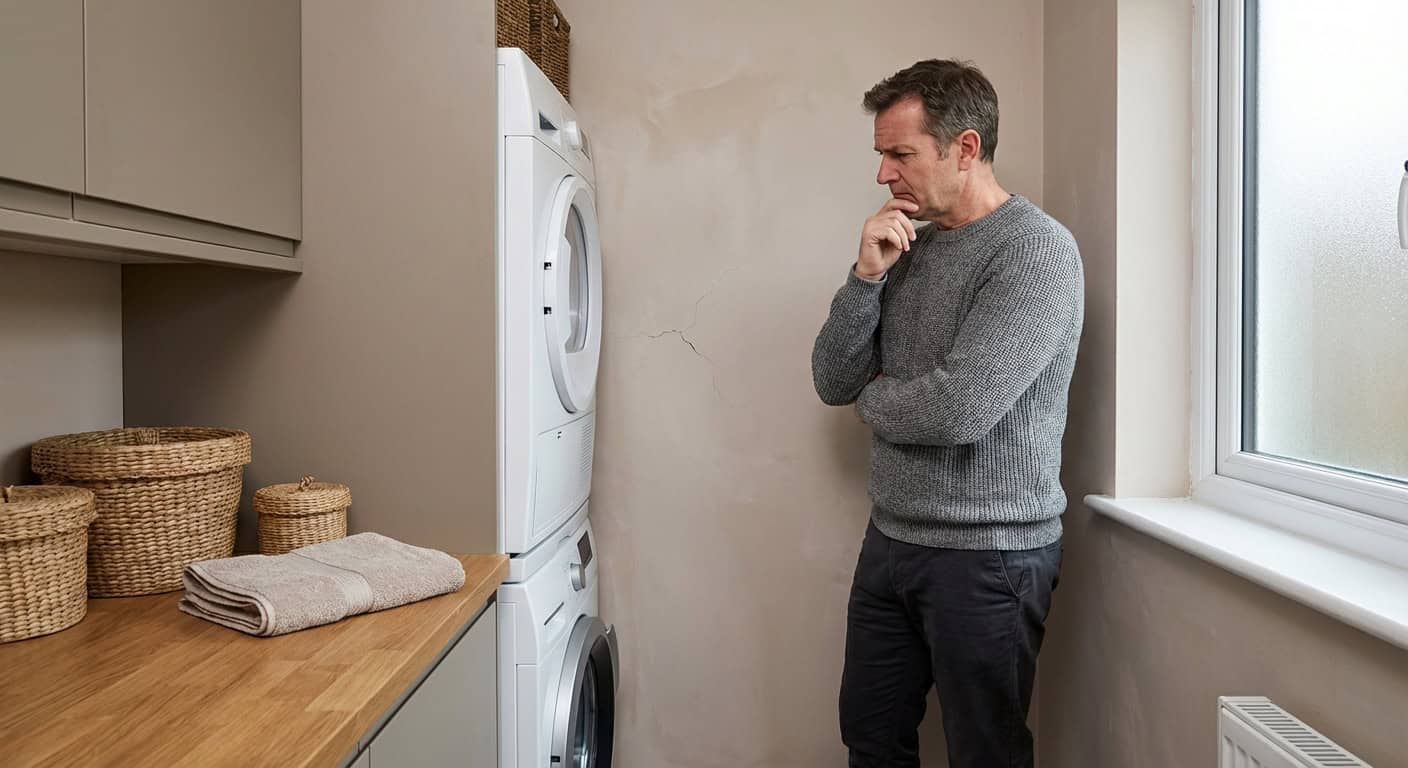
Table of Contents
- What Causes Water Hammer in Your Plumbing System?
- Is Your Pacific Northwest Home at Risk for Water Hammer?
- Beyond the Noise: The Real Risks of Ignoring Water Hammer
- The Modern Fix: How Professional Water Hammer Arrestors Protect Your Home
- How Sarkinen Plumbing Diagnoses and Fixes Water Hammer in Portland and Vancouver Homes
- Final Thoughts
You’re folding laundry when suddenly—BANG! A loud thud echoes from inside your walls every time the washing machine’s water valve snaps shut. It’s jarring, unsettling, and you can’t help but wonder: Is something seriously wrong with my plumbing? The short answer is yes. This phenomenon, called “water hammer” or hydraulic shock, affects thousands of homes across the Portland and Vancouver metro areas—particularly older properties with outdated plumbing systems. And while it might seem like just an annoying noise, water hammer is actually your plumbing system’s way of crying out for help. Here’s the reality: Water hammer creates pressure spikes that can exceed 200-300 PSI—far beyond what your pipes were designed to handle. These repeated shockwaves gradually weaken pipe joints, loosen fittings, and create hidden leaks that can lead to catastrophic failures. The financial stakes are significant: water damage claims average $12,514, and water-related issues account for 24% of all homeowner insurance claims. In this guide, we’ll explain exactly what causes water hammer, why it poses a genuine threat to your home, and how professional solutions from Sarkinen Plumbing can protect your property and give you peace of mind.
What Causes Water Hammer in Your Plumbing System?
Water hammer occurs when rapidly closing valves—like those in your washing machine, dishwasher, or even a toilet—cause moving water to stop suddenly. Because water is nearly incompressible, that abrupt halt converts the water’s kinetic energy into a high-pressure shockwave that travels backward through your pipes like a sonic boom. Think of it this way: Imagine a freight train moving at full speed that suddenly hits a wall. All that forward momentum has to go somewhere, and the same principle applies to the water flowing through your plumbing. When a fast-acting solenoid valve slams shut in milliseconds, the water’s energy transforms into a pressure wave that races through your copper or PEX pipes at speeds exceeding 1,000 meters per second. Engineers calculate these pressure spikes using fluid dynamics formulas like the Joukowsky Equation. While that might sound technical, the takeaway is simple: these shockwaves are powerful and destructive. Normal municipal water pressure in the Portland area ranges from 40-80 PSI. During a water hammer event, pressure can spike to 200-400 PSI in an instant—several times higher than what your plumbing system is designed to withstand.
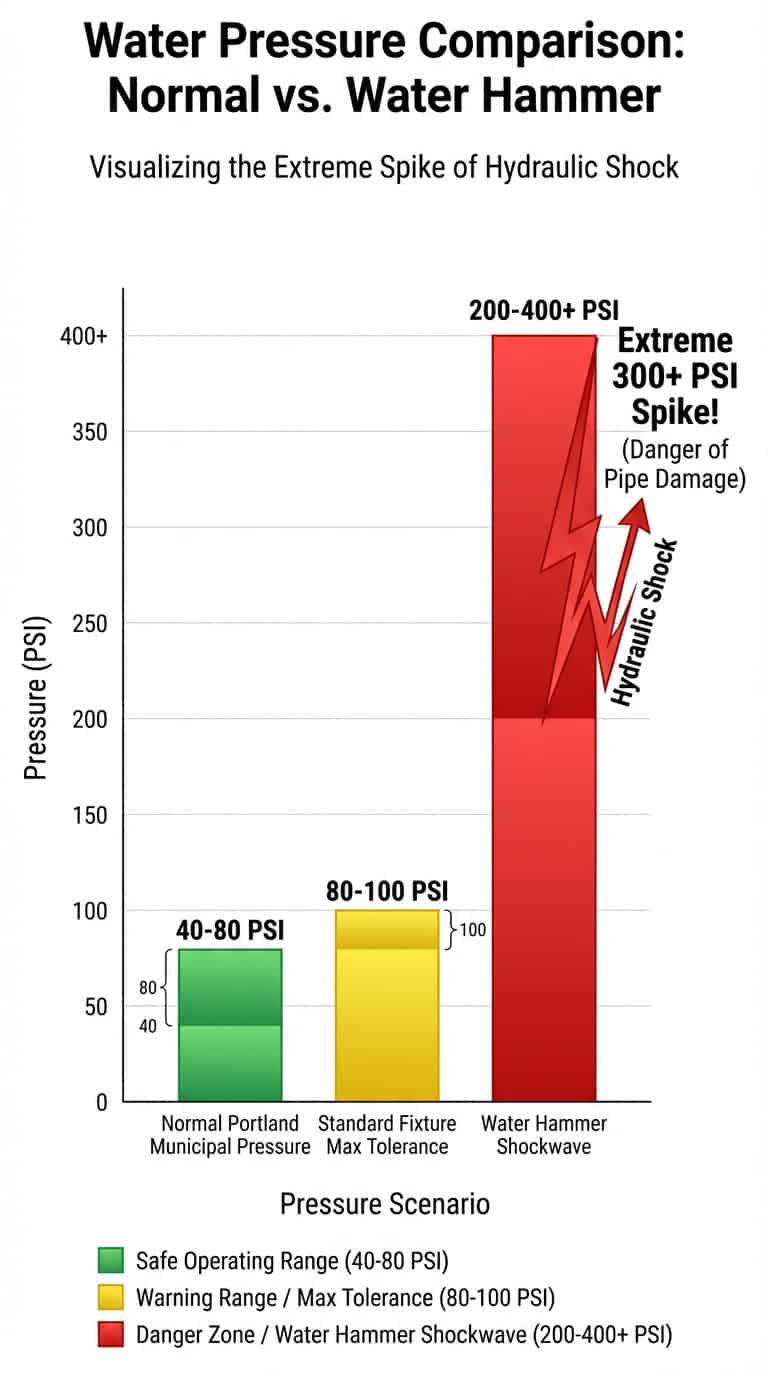
Your pipes might look perfectly fine from the outside, but these repeated 300+ PSI hammer blows are gradually weakening joints, loosening fittings, and creating micro-fissures—especially at vulnerable points like 90-degree elbows and threaded connections. It’s damage you can’t see, but it’s happening every single time you hear that bang.
Is Your Pacific Northwest Home at Risk for Water Hammer?
If you live in the Portland or Vancouver metro area, there’s a good chance your home is more vulnerable to water hammer than you might think. A significant percentage of homes in this region were built before 1980, when plumbing codes were less stringent and modern water hammer protection simply wasn’t standard practice.
The Air Chamber Problem
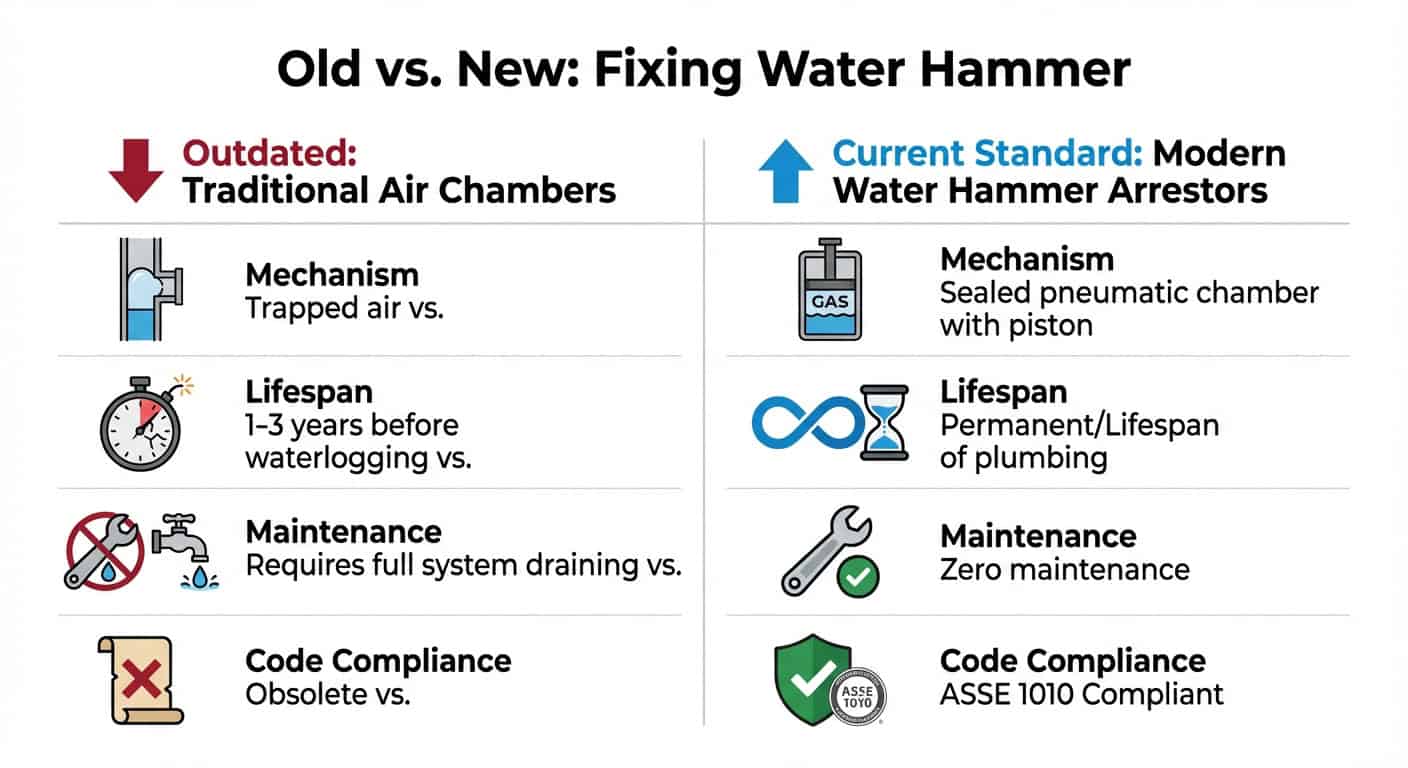
Older homes typically relied on simple vertical pipe segments called “air chambers” to absorb hydraulic shock. These were essentially dead-end pipes installed near fixtures, with the idea that trapped air would act as a cushion when water suddenly stopped flowing. The problem? These air chambers become “waterlogged” over time. As turbulent water flows through your plumbing system, it gradually absorbs the trapped air, rendering these chambers completely ineffective. Restoring them requires draining your entire plumbing system—and even then, it’s only a temporary fix. Within months or a year, they’ll become waterlogged again.
Modern Appliances Meet Aging Infrastructure
Here’s where things get even more complicated. Today’s high-efficiency washing machines and dishwashers use fast-acting solenoid valves that close in milliseconds. These electronically controlled valves were designed to minimize water usage and improve efficiency—which is great for the environment and your water bill. But when paired with an older plumbing system, they dramatically increase the frequency and severity of water hammer. Many homeowners upgrade to energy-efficient appliances without upgrading their plumbing systems to match. The result? Those 60-year-old pipes start taking a beating they were never designed to withstand, accelerating degradation by as much as 30%.
The Closed-Loop System Factor
Portland and many surrounding municipalities often require backflow preventers or check valves to protect the public water supply. While these devices serve an important safety function, they create what’s called a “closed-loop” plumbing system—meaning pressure generated inside your home has nowhere to escape back into the municipal grid. In closed-loop systems, water hammer pressure compounds. There’s no relief valve for that sudden spike of 300 PSI, so it reverberates through your pipes with even greater force. This leads to louder banging and significantly higher rates of hidden leaks, including the dreaded slab leak underneath your home’s concrete foundation.
Beyond the Noise: The Real Risks of Ignoring Water Hammer
Let’s be clear: water hammer isn’t just annoying. It’s actively damaging your home’s plumbing infrastructure right now, and the longer you wait to address it, the worse—and more expensive—the consequences become.
The Progressive Damage Timeline
Water hammer doesn’t cause immediate catastrophic failure. Instead, it works like metal fatigue, weakening your plumbing system with each pressure spike: Months 1-6: You hear the banging, but everything seems to be working fine. Behind the scenes, however, pipe joints are beginning to loosen, and threaded connections are gradually weakening. Solder joints in copper piping are experiencing stress they weren’t designed for. Months 6-18: Micro-fissures start forming at stress points—especially at 90-degree elbows and where pipes transition from horizontal to vertical runs. Slow leaks begin, often hidden behind walls or under floors. You might notice water stains on ceilings below bathrooms or increased humidity in your basement, but you haven’t connected these issues to that banging noise yet. 18+ Months: Catastrophic failures occur. A pipe bursts in your wall. Your basement floods. Drywall gets soaked and needs replacement. Mold begins growing in hidden spaces. What started as an irritating noise has now become a five-figure repair bill.
The Numbers Don’t Lie
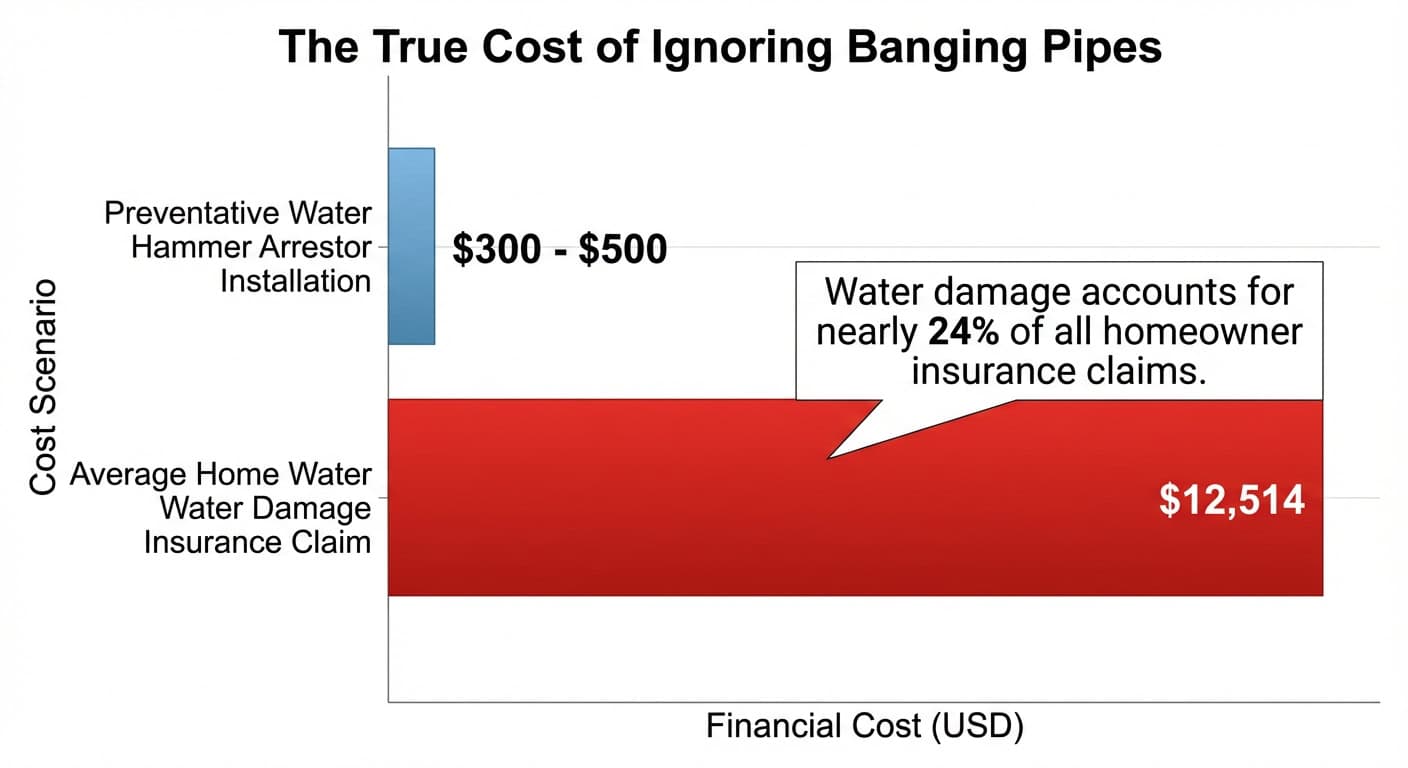
Water damage claims account for 24% of all homeowner insurance claims, and the average claim costs $12,514—far more than the cost of preventative plumbing services. Think about it: you can address water hammer with a professional solution that costs a few hundred dollars, or you can roll the dice and potentially face repair bills exceeding $10,000.
Specific Vulnerabilities
Certain components in your plumbing system are particularly vulnerable to water hammer damage: Flexible supply hoses: Those braided stainless steel hoses connecting your washing machine, dishwasher, and toilets to your water supply? They fail 30% faster when exposed to repeated water hammer. And when they fail, they fail spectacularly—often flooding an entire room in minutes. PEX systems: While PEX piping is more flexible than copper, it’s not immune to water hammer. The crimp rings that connect PEX sections can loosen over time, and the fittings themselves can crack under repeated stress. Slab leaks: In homes with concrete slab foundations, water hammer significantly increases the risk of leaks in pipes running underneath the slab. These leaks are among the most expensive to repair because they require breaking through concrete to access the damaged pipe.
Real-World Warning
One Vancouver homeowner ignored the banging in their laundry room for two years. “It’s just noise,” they thought. When they finally called us for leak detection after noticing a damp spot on their wall, we found three pinhole leaks behind the drywall. Water had been slowly seeping into the wall cavity for months, damaging insulation, studs, and drywall. The repair bill exceeded $8,000—all preventable with a $300-500 water hammer arrestor installation performed years earlier.
The Modern Fix: How Professional Water Hammer Arrestors Protect Your Home
The good news? Modern plumbing technology has solved the water hammer problem permanently. The solution is called a water hammer arrestor, and it’s specifically engineered to absorb hydraulic shocks without the limitations of old-fashioned air chambers.
How Water Hammer Arrestors Work
Professional-grade water hammer arrestors meet ASSE 1010 standards and use a completely different mechanism than outdated air chambers. Inside each arrestor is a sealed pneumatic chamber filled with pressurized argon or air. This chamber is separated from the water supply by a watertight mechanical piston or diaphragm. Here’s what happens when a water hammer shockwave hits the arrestor:
- The pressure spike pushes against the piston or diaphragm
- The piston compresses the pressurized gas in the sealed chamber
- The gas absorbs the shock energy harmlessly
- The piston returns to its original position, ready for the next event
Because the air and water never mix—they’re separated by a mechanical barrier—the arrestor can never become waterlogged. It provides permanent, maintenance-free protection for the life of your plumbing system.
Why Professional Installation Matters
While water hammer arrestors are relatively simple devices, proper installation requires expertise. Here’s why DIY installation often fails: Sizing matters: Arrestors must be correctly sized for the fixture they’re protecting. A washing machine requires a different arrestor capacity than a dishwasher or a whole-house application. Placement is critical: Arrestors must be installed at strategic points in your plumbing system—typically as close as possible to the fast-acting valves causing the problem. Installing them in the wrong location provides little to no protection. Code compliance: Professional installations ensure compliance with local plumbing codes and ASSE 1010 standards, protecting both your home and your insurance coverage. At Sarkinen Plumbing, we always install water hammer arrestors during repiping projects. It’s a small upfront investment that prevents massive headaches—and repair bills—down the road. When we replace old pipes, we’re not just fixing today’s problems; we’re preventing tomorrow’s disasters.
How Sarkinen Plumbing Diagnoses and Fixes Water Hammer in Portland and Vancouver Homes
When you call Sarkinen Plumbing about banging pipes, you’re not just getting a quick fix—you’re getting a comprehensive diagnostic that addresses the root cause and protects your entire plumbing system.
Our Diagnostic Process
Step 1: Pressure Testing
Our technicians measure both static and dynamic water pressure in your home to identify abnormal spikes. We use specialized equipment to capture those millisecond pressure surges that occur during water hammer events—something you can’t detect with standard pressure gauges. Step 2: Closed-Loop Assessment
We check for backflow preventers, check valves, or other devices that might have created a closed plumbing system. If your home has a closed-loop configuration, we’ll identify the best locations for both water hammer arrestors and thermal expansion tanks. Step 3: PRV Inspection
A failing Pressure Reducing Valve can actually compound water hammer effects. We test your PRV to ensure it’s functioning properly and maintaining consistent pressure throughout your home. Step 4: Leak Detection
Water hammer often causes micro-leaks that go unnoticed until significant damage occurs. We use acoustic listening equipment and thermal imaging to find hidden damage caused by past water hammer events—catching problems before they become emergencies.
Connecting the Dots: Related Services
Water hammer rarely exists in isolation. Our diagnostic often reveals related issues that need attention: Leak Detection: Those hidden micro-fissures caused by years of water hammer? We find them before they become full-blown floods with our leak detection services. Repiping: If your pipes are severely damaged from years of hydraulic shock, we may recommend partial or full repiping. And yes, we always pair repiping with professional water hammer arrestor installation to protect your new investment. Appliance Upgrades: When you’re ready to install that new high-efficiency washing machine or dishwasher, we recommend proactive arrestor installation. It’s far easier and less expensive to prevent water hammer than to repair the damage it causes.
Local Expertise You Can Trust
We understand Pacific Northwest homes—from century-old Craftsmans in Portland’s historic Sellwood and Irvington neighborhoods to modern Vancouver subdivisions. Our team knows which plumbing systems are vulnerable and exactly how to protect them.
We’ve seen it all: galvanized pipes from the 1940s that are long overdue for replacement, copper systems from the 1970s showing signs of joint fatigue, and modern PEX installations that need arrestors to handle today’s fast-closing appliance valves.
Hearing banging pipes? Don’t wait for a costly leak. Call Sarkinen Plumbing today for a comprehensive plumbing diagnostic. We’ll identify the source of your water hammer and provide a transparent, no-pressure quote for permanent solutions. Visit our contact page to schedule your appointment or call 360-369-3586 for Vancouver or 503-925-3504 for Portland.
Final Thoughts
Water hammer is one of those plumbing problems that’s easy to ignore—until it’s impossible to ignore. That banging noise is your home’s early warning system, telling you that something needs attention before minor stress becomes major damage. The core message here is simple: water hammer is common, especially in older Portland and Vancouver homes, but it’s also serious. Every pressure spike weakens your plumbing system a little more. Every joint that loosens brings you one step closer to a leak. Every day you wait increases the risk of that $12,000+ water damage claim. But here’s the empowering part: you don’t have to live with banging pipes or worry about hidden leaks. Modern water hammer arrestors provide a permanent, maintenance-free solution that will outlast your plumbing system. And with Sarkinen Plumbing, you’re getting the expertise needed to install them correctly the first time. A $300-500 investment in professional water hammer arrestor installation today prevents thousands of dollars in water damage tomorrow. It’s that straightforward. You don’t have to be a plumbing expert to protect your home. You just need to recognize the warning signs and take action before those pressure spikes turn into burst pipes.
Ready to Protect Your Home?
Don’t let water hammer damage your plumbing system and your peace of mind. Contact Sarkinen Plumbing today for professional diagnostics and permanent solutions.
References:
- U.S. Census Bureau. (2023). American Housing Survey (AHS) – Portland Metropolitan Area Data. https://www.census.gov/programs-surveys/ahs.html
- Portland Water Bureau. (2024). Water Pressure in Portland: Managing Your Home’s Water System. https://www.portland.gov/water/water-system/water-pressure
- National Center for Biotechnology Information (NCBI). (2019). High-Frequency Pressure Transient Monitoring in Water Distribution Systems. https://www.ncbi.nlm.nih.gov/pmc/articles/PMC6427546/
- ASSE International. (2021). ASSE 1010-2004: Performance Requirements for Water Hammer Arrestors. https://www.asse-plumbing.org/asse/standards/product/1010
- Insurance Information Institute (III). (2023). Facts + Statistics: Homeowners and Renters Insurance (Water Damage Claims). https://www.iii.org/fact-statistic/facts-statistics-homeowners-and-renters-insurance
- Vancouver 360-369-3586
- Portland 503-925-3504




Vancouver Location
Proudly Serving
Portland and Vancouver
from Wilsonville to Longview &
Hillsboro to Gresham
UBI # 602-521-027
OR Contractor Lic# 170052 (CCB)
WA Contractor Lic# SARKIPI946MF
OR Plumber Lic# PB115
Customer Satisfaction
4.6 stars - Based on 227 Reviews







Quick Links
Plumbing Services
SW Washington Service Areas
Oregon Service Areas
Contact Information
Sarkinen PlumbingVancouver
9502 NE 72nd Ave
Vancouver, WA 98665
Phone: 360-369-3586
Portland
Phone: 503-925-3504
Hours of Operation
Monday - Sunday 24-hours