- Vancouver 360-369-3586
- Portland 503-925-3504

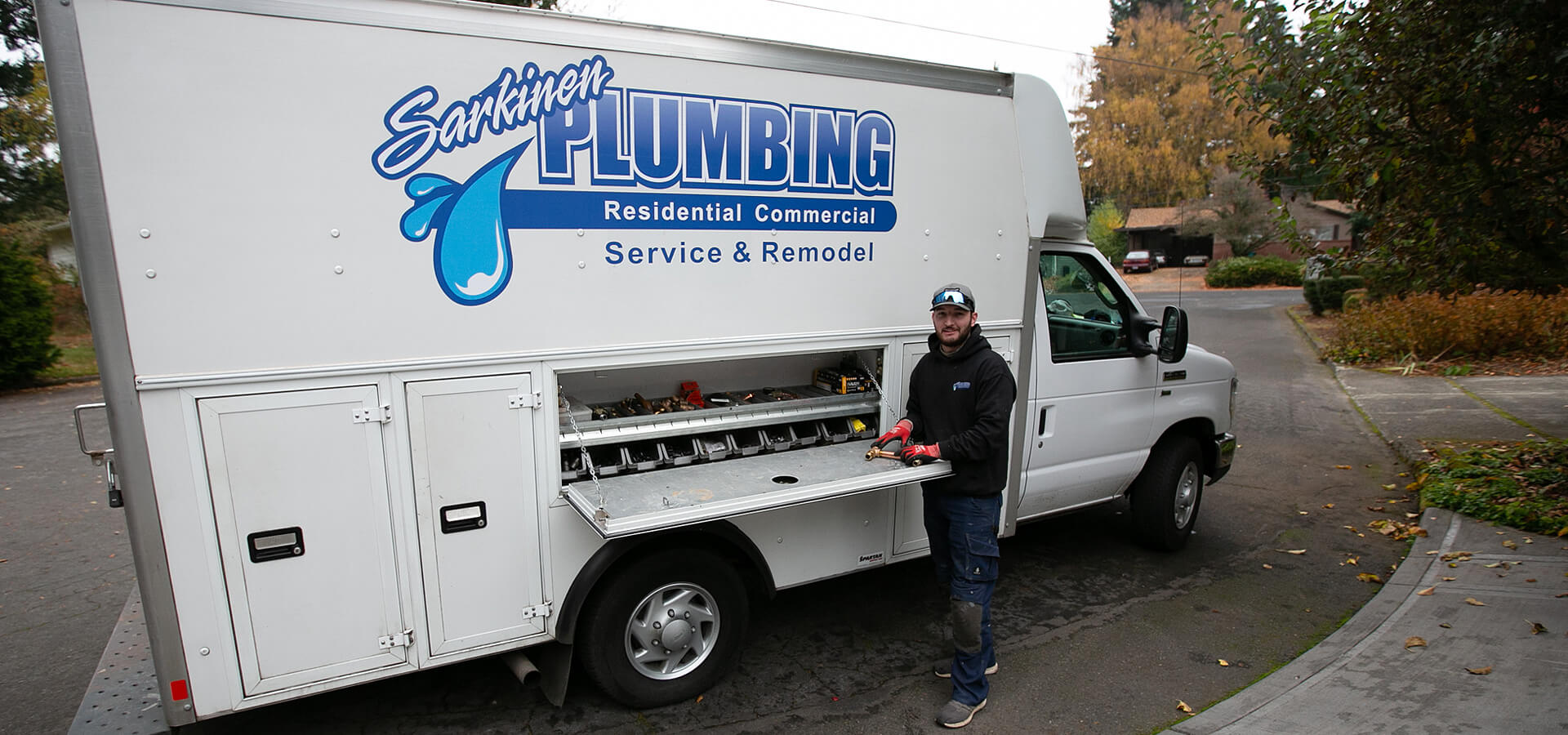
Sewer Line Repair in Forest Grove
Trenchless sewer repair and root removal for Forest Grove homeowners
- Fast Same Day Service
- No Obligation Estimate
- Commercial & Residential Plumbing



Check out our
coupons!
We Offer
*0%
Financing
-
 off
off
Any service for new customers!
(*Minimum Purchase Required)
EXPIRES 9/26 -
 off
off
Main Water Service Replacement
Call now for details!
EXPIRES 9/26 -
 off
off
Water Heater Replacement
Call now to schedule!
EXPIRES 9/26 -
 off
off
Rain Drain Clearings
(*Minimum Purchase Required)
EXPIRES 9/26 -
 off
off
Seniors & Military
(*Minimum Purchase Required)
EXPIRES 9/26


How It Works
Call Us
Call anytime, 24/7. A real person answers and schedules your appointment.
We Diagnose
Our plumber inspects, identifies the problem, and explains what is needed.
Upfront Quote
You get options with prices before any work begins. Your choice.
Expert Repair
Licensed plumber completes the work, cleans up, and walks you through it.
Sewer Line Repair in Forest Grove
Century-Old Clay Laterals Beneath Forest Grove’s Historic Core
The sewer laterals beneath Forest Grove’s oldest neighborhoods — the tree-lined streets surrounding Pacific University and the downtown commercial district — were installed when these homes were built between the early 1900s and the 1940s. The material is vitrified clay tile connected with mortar joints, the same technology the Romans used for their aqueducts but without the Roman commitment to engineering permanence. After 80 to 120 years in the ground, these clay laterals have been subjected to forces their installers never anticipated: the root systems of 100-foot Douglas firs pressing against the pipe walls, decades of ground settling beneath the clay-and-loam soils of the Tualatin Valley, and the constant moisture cycling of Forest Grove’s wet winters and dry summers.
The mortar joints connecting clay pipe sections are the weak point. Mortar is not flexible — it cracks under ground movement and disintegrates over decades of exposure to soil moisture and root acids. Once a joint opens, roots enter and the deterioration accelerates. Sarkinen’s sewer camera inspections in Forest Grove’s historic core routinely reveal laterals with root intrusion at every joint, sections where the pipe has sheared at offset joints, and locations where the clay has cracked longitudinally from the weight of soil above. For laterals that are structurally intact but root-compromised at the joints, trenchless CIPP lining creates a new seamless pipe inside the old clay. For laterals with structural failure, pipe bursting or targeted excavation replaces the damaged sections with modern PVC.
Schedule a sewer camera inspection
Trenchless Sewer Repair Preserves Forest Grove’s Historic Properties
The homeowners who choose to live in Forest Grove’s historic neighborhoods do so in part because of the mature landscaping, established gardens, and century-old trees that give these streets their distinctive character. A traditional excavation sewer repair — trenching across the front yard, uprooting decades-old rhododendrons and ornamental plantings, and tearing up the walkway that has welcomed visitors since the house was built — is profoundly disruptive in a way that goes beyond the immediate repair cost. The landscaping restoration alone can exceed the cost of the pipe work.
Trenchless pipe lining eliminates this disruption almost entirely. The process begins with camera inspection to map the pipe condition, followed by hydro-jetting and mechanical cleaning to prepare the interior surface. A flexible tube saturated with structural epoxy resin is pulled through the cleaned pipe, inflated against the interior walls, and cured in place with steam or ambient heat. The result is a seamless new pipe inside the old one — no joints for roots to exploit, a smooth interior that flows better than the original, and structural integrity that is independent of the deteriorated host pipe. The only surface disturbance is a small access pit at each end of the repair section. For Forest Grove homeowners who have been quoted traditional excavation-and-replace prices, trenchless lining is worth comparing — it often costs less and preserves the property.
Learn about trenchless repair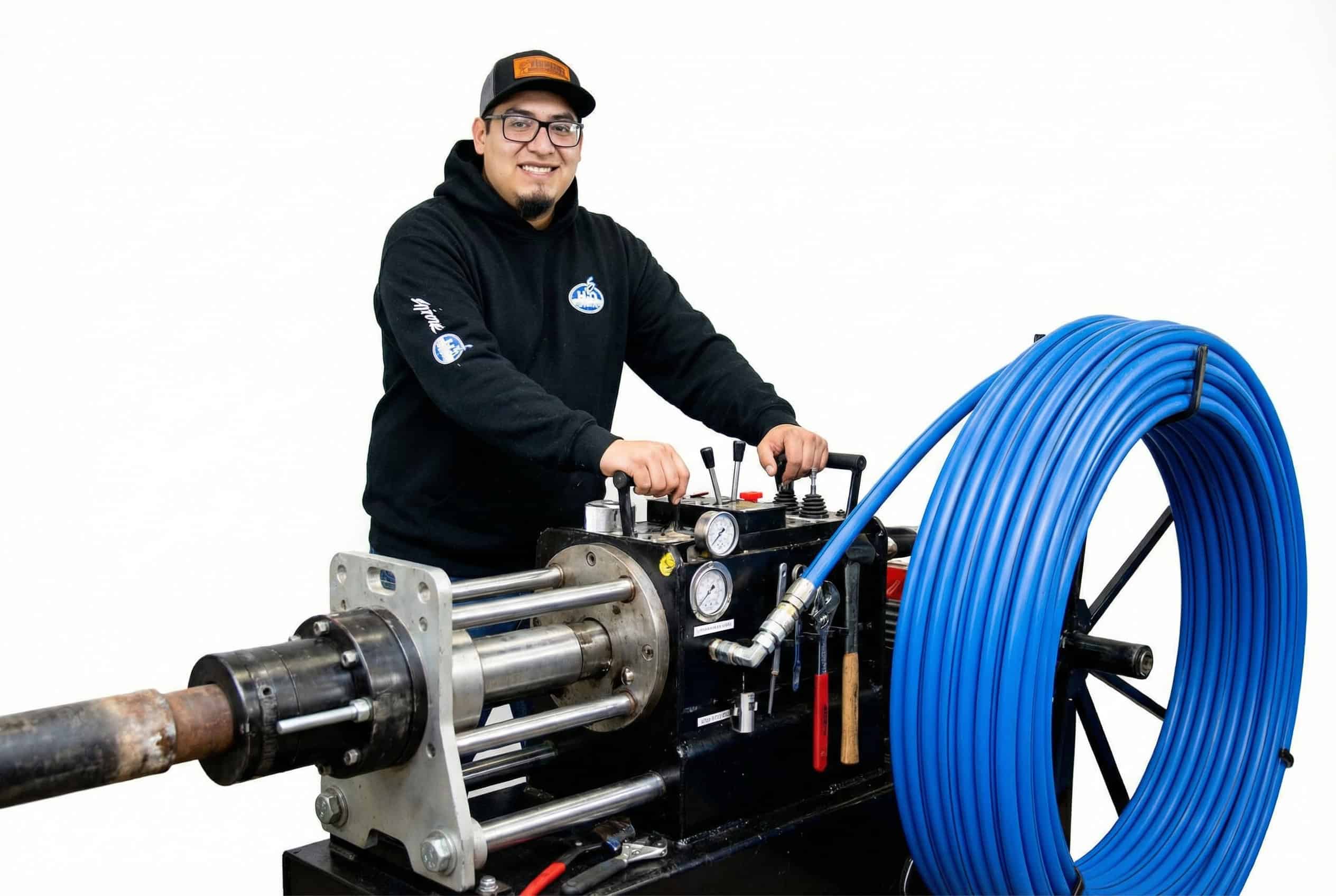
Orangeburg Pipe Replacement in Mid-Century Forest Grove Homes
A subset of Forest Grove homes built between the 1940s and early 1960s may still have Orangeburg sewer laterals — a pipe material made from layers of compressed wood pulp bonded with coal tar pitch. Orangeburg was marketed as a modern, lightweight alternative to clay and was widely installed during the postwar construction boom. It was inexpensive, easy to cut and join, and worked adequately for its first decade or two. The problem is that Orangeburg is not a permanent material. The wood pulp absorbs moisture over time, softens, and gradually collapses under the weight of the soil above it.
A camera inspection of an Orangeburg lateral in a Forest Grove home reveals the characteristic oval cross-section of a pipe that has been slowly flattened by soil pressure over 60 to 80 years. The interior may show delamination where the tar-bonded layers are separating, and the worst sections may have collapsed to less than half their original diameter. Unlike clay pipe, Orangeburg cannot be rehabilitated with trenchless lining — the material is too soft and deteriorated to serve as a structural host for a liner. The only solution is full replacement, either through traditional excavation or through pipe bursting, which fractures the Orangeburg outward while pulling a new HDPE or PVC pipe through the same path. Sarkinen identifies Orangeburg during camera inspections and provides honest guidance on the replacement timeline and options.
Get your lateral inspected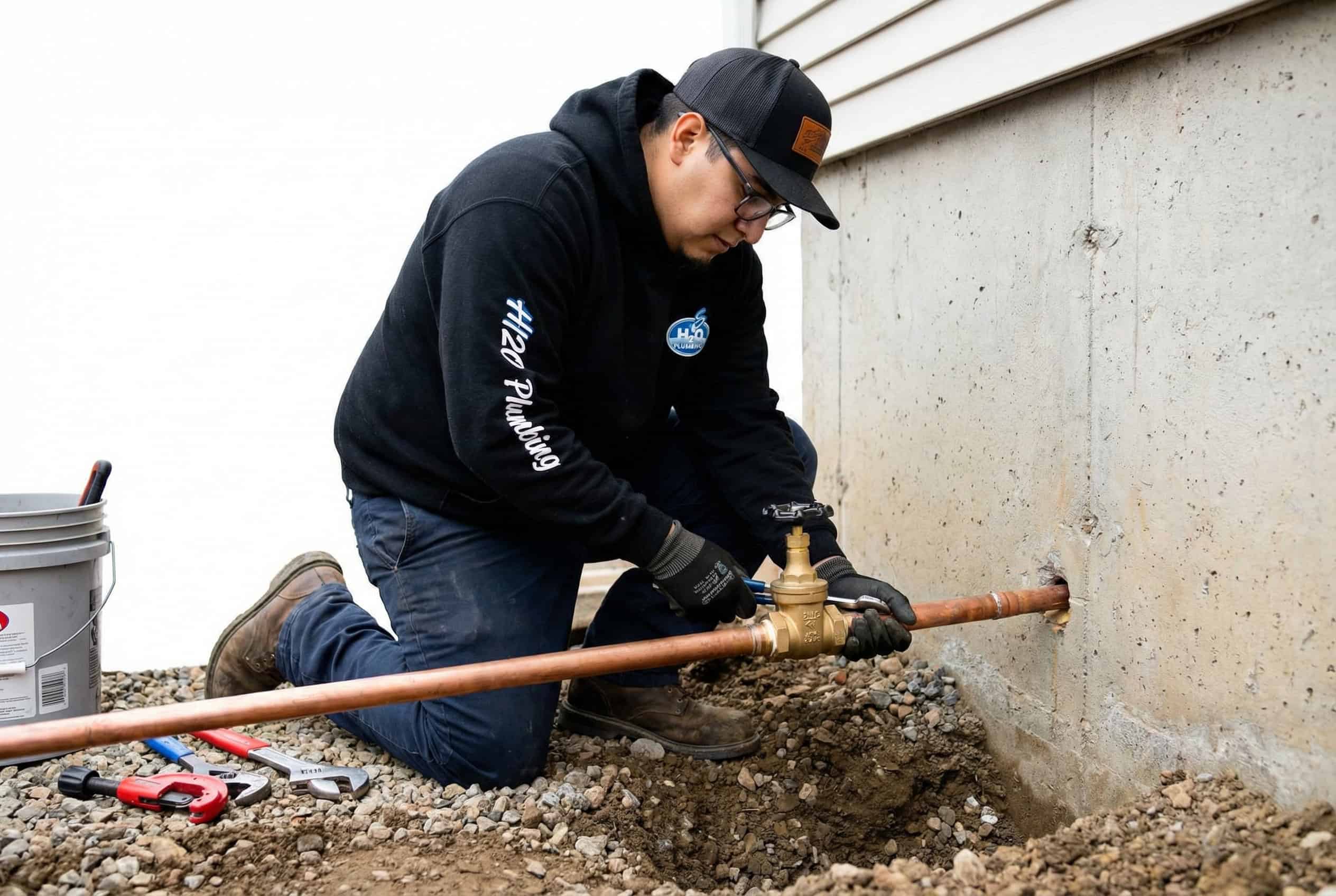
Clean Water Services and Your Forest Grove Sewer Responsibility
Clean Water Services (CWS) is the regional wastewater utility that manages the public sewer collection system for Forest Grove and the rest of urban Washington County. CWS maintains the sewer mains in the street, operates the treatment facilities, and manages the collection system infrastructure. What CWS does not maintain is the private sewer lateral that connects your Forest Grove home to the public main. That lateral — running from your foundation to the connection point at the main in the street or easement — is entirely your responsibility to maintain, repair, and replace when it fails.
Many Forest Grove homeowners are unaware of this responsibility division until a problem develops. A sewer backup in your home is almost always a problem in your private lateral, not in the CWS main. The repair cost falls on you, and CWS is not responsible for damage caused by a lateral that you own. Sarkinen Plumbing handles every aspect of private sewer lateral repair in Forest Grove — camera inspection, root removal, trenchless lining, pipe bursting, and traditional excavation when necessary. We also coordinate with CWS when repairs intersect with the public main connection, pull all required permits through the City of Forest Grove, and schedule inspections to ensure the work meets current plumbing code.
Schedule your sewer repair
What Forest Grove Customers Say About Sewer Line Repair
Portland & Vancouver’s Best Local Plumber
-
“Alex came out and jetted one of our main sewer lines. He did a great job and was quick. Used camera to show me everything and was informative thru the whole process.”
 Mark Kalakian
“I would like to leave a review on work which was done today by Mike. I would like to say "Thank you very much, Mike!" for his nice work. Mike quickly fixed all problems with my clogged sewer, tested the drain system and gave me suggestions on how to avoid these situations in the future. He provided a lot of useful information about your…”
Sergey Nikishin“Sewer Line Repair with Minimal Yard Damage – Great Experience with Sarkinen Home Services During a house inspection, I was informed that a section of my sewer line leading to the street was broken and needed replacement. Unfortunately, the break was located in a beautifully landscaped area of our yard, and I was very concerned about the…”
Lori Johnson“First off they are very polite and helpful on the phone. They scheduled a guy to come out quickly. The guy that came out was very polite and professional. He explained everything he was going to do and how much it would cost. We had different options and agreed on one of them. He went to work immediately and solved the problem. He…”
Daryl Sandberg -
“Used for Water Main Line Repair: The estimate from Sarkinen was $2000 (!!) less than the 2 other estimates that I received for the repair of my main line. This is due to the fact that Sarkinen owns their own boring machine. Beyond this, they were extremely nice and helpful throughout the process and 0% financing is a no-brainer. I can’t see…”
Neil Medeiros“Alex was very professional and knowledgeable.”
Michael Tolnai“Very good and very reliable”
Marge Makinster“Very informative, they did a fantastic job!”
Hannah Bug -
“Amazing service and Mick and Alex are wonderfully competent and kind. Definitely a five star in my book!”
Rosanne Ponzetti“Prompt courteous and fixed my problem”
Sonny Flink“I, of course, had plumbing issues on a holiday! Probably like many others as they were BUSY. But Sarkinen got me in ASAP and got the problem fixed at a VERY reasonable cost. But more than that, EVERYONE who works there is super friendly and polite and appreciative of you as their customer. I highly recommend Sarkinen Plumbing!”
Kathy Douglas“I’ve been very pleased with my experiences with Sarkinen Plumbing. Consistent high quality work and clever fixes to a variety of my problems. I’m definitely a satisfied customer.”
Tom Gustafson
Why Forest Grove Homeowners Choose Sarkinen
Upfront, Fair Pricing
No hidden fees, no overtime charges. You get a clear, written price before any work begins. Same rate day or night.
Licensed in WA & OR
Dual-state licensing (WA #SARKIPI946MF, OR #170052) means we serve the entire Portland-Vancouver metro.
24/7 Emergency Service
We answer the phone day and night. A licensed plumber is dispatched immediately — at your door within 60-90 minutes.
Satisfaction Guaranteed
Every repair backed by our workmanship guarantee. Background-checked, drug-tested plumbers who treat your home with care.
Serving Every Forest Grove Neighborhood
Other Plumbing Services in Forest Grove
Sewer Line Repair in Forest Grove — Common Questions
Common signs include slow drains throughout the house, gurgling sounds from drains or toilets, sewage odors inside or outside the home, wet spots in the yard above the sewer line, and recurring backups. If you notice any of these in your Forest Grove home, a sewer camera inspection will reveal the exact condition of the pipe.
In most cases, yes. Trenchless pipe lining and pipe bursting require only small access points at each end of the repair section. Your landscaping, walkways, and garden beds remain largely intact. We evaluate trenchless eligibility during the camera inspection and recommend it whenever the pipe condition allows.
The primary cause is tree root intrusion through deteriorated joints in aging clay, Orangeburg, or early PVC sewer laterals. Forest Grove’s mature tree canopy sends roots toward sewer moisture, and pipes that have been in the ground for 60 to 100 years have numerous entry points. Heavy rain compounds the problem by adding groundwater infiltration to existing root blockages.
Homes built in Forest Grove between the 1940s and 1960s may have Orangeburg (fiber-based) sewer laterals. Orangeburg deteriorates by collapsing inward over time. A camera inspection is the only reliable way to confirm the pipe material. If Orangeburg is found, replacement is strongly recommended because it cannot be lined — the material is too deteriorated to serve as a structural host.
Schedule Sewer Line Repair in Forest Grove
Call now or schedule online.
- Vancouver 360-369-3586
- Portland 503-925-3504
Vancouver Location
Proudly Serving
Portland and Vancouver
from Wilsonville to Longview &
Hillsboro to Gresham
UBI # 602-521-027
OR Contractor Lic# 170052 (CCB)
WA Contractor Lic# SARKIPI946MF
OR Plumber Lic# PB115
Customer Satisfaction
4.6 stars - Based on 227 Reviews





Quick Links
Plumbing Services
SW Washington Service Areas
Oregon Service Areas
Contact Information
Sarkinen PlumbingVancouver
9502 NE 72nd Ave
Vancouver, WA 98665
Phone: 360-369-3586
Portland
Phone: 503-925-3504
Hours of Operation
Monday - Sunday 24-hours