- Vancouver 360-369-3586
- Portland 503-925-3504

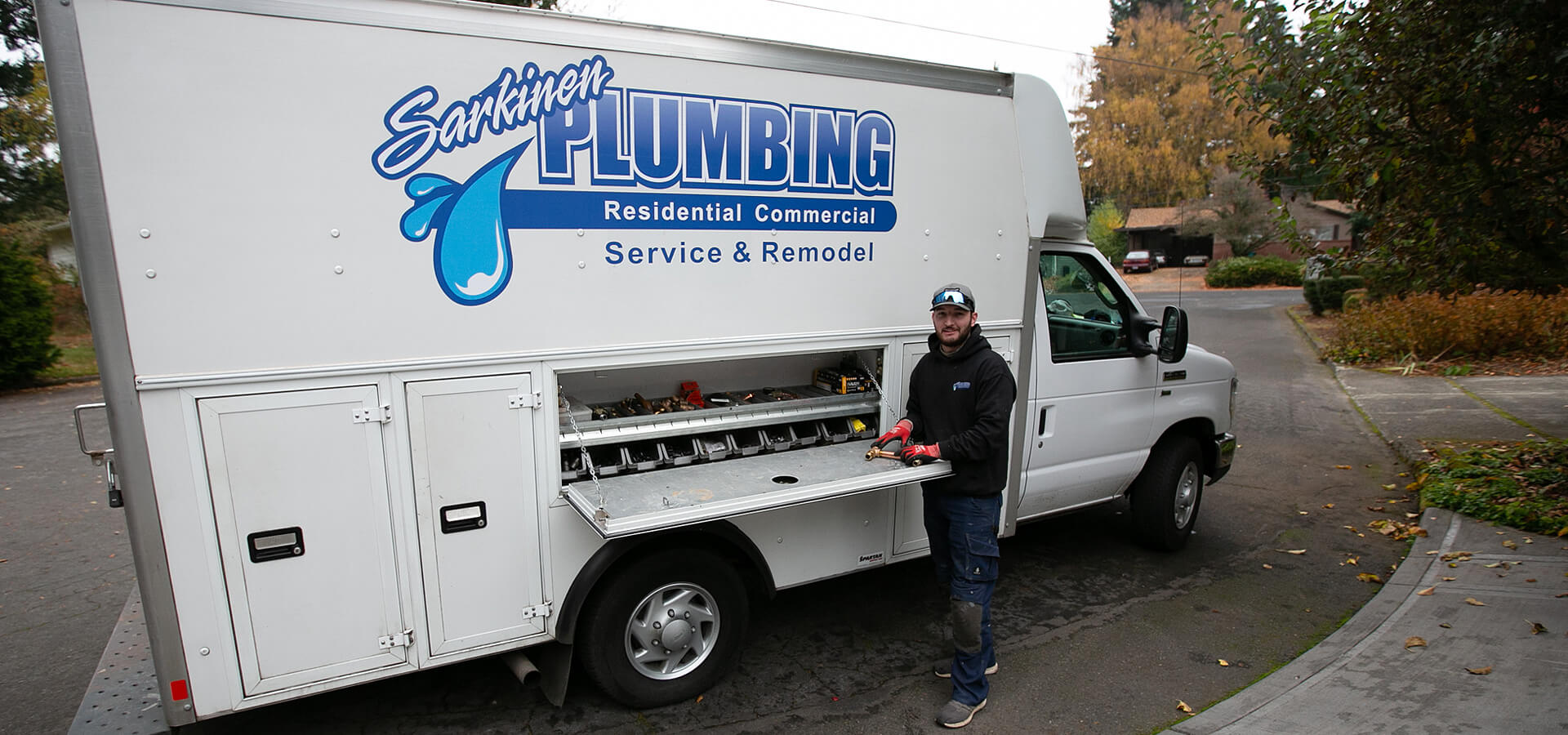
Oregon City Sewer Line Repair
Full video inspection plus trenchless repair — no digging up your yard
- Fast Same Day Service
- No Obligation Estimate
- Commercial & Residential Plumbing




Check out our
coupons!
We Offer
*0%
Financing
-
 off
off
Any service for new customers!
(*Minimum Purchase Required)
EXPIRES 10/26 -
 off
off
Main Water Service Replacement
Call now for details!
EXPIRES 10/26 -
 off
off
Water Heater Replacement
Call now to schedule!
EXPIRES 10/26 -
 off
off
Rain Drain Clearings
(*Minimum Purchase Required)
EXPIRES 10/26 -
 off
off
Seniors & Military
(*Minimum Purchase Required)
EXPIRES 10/26


How It Works
Call Us
Call anytime, 24/7. A real person answers and schedules your appointment.
We Diagnose
Our plumber inspects, identifies the problem, and explains what is needed.
Upfront Quote
You get options with prices before any work begins. Your choice.
Expert Repair
Licensed plumber completes the work, cleans up, and walks you through it.
Sewer Line Repair in Oregon City
Bluff Terrain and Soil Creep on Oregon City’s Historic Sewer Lines
Oregon City’s basalt bluff, which dramatically separates the upper and lower sections of the city, creates sewer line conditions unlike anywhere else in the metro area. Homes perched above Willamette Falls and along the bluff in the McLoughlin Historic District have sewer laterals that navigate steep terrain, running downhill through soil that is constantly, imperceptibly shifting. This process, called soil creep, is the slow, gravity-driven movement of surface material on a slope. Over decades, soil creep displaces sewer pipe joints incrementally, creating offsets and separations that allow root intrusion, groundwater infiltration, and eventually pipe failure.
Our camera inspections in Oregon City’s bluff neighborhoods routinely reveal joint displacement patterns that correlate directly with terrain slope. Pipes running across the slope show lateral offset at joints. Pipes running down the slope show telescoping separations where the lower section has pulled away from the upper. These findings are critical for determining the right repair approach. For joints that have displaced but not separated beyond repair, trenchless pipe lining bridges the offset and restores a continuous interior flow surface. For severe separations or collapsed sections, excavation and replacement with new PVC at proper bedding specifications provides the structural stability that the terrain demands.
Inspect your bluff-area sewer
Century-Old Clay Pipe in Oregon City’s Historic Core
As the oldest incorporated city west of the Rocky Mountains, Oregon City has sewer infrastructure that predates most of the metro area by decades. Homes in the McLoughlin Historic District, along the bluff, and in the Canemah neighborhood have clay sewer laterals that may have been in continuous service for 80 years or more. Vitrified clay was a remarkably durable material for its era, and some of these original pipes have outlasted every other system in the home. But clay pipe was installed with mortar joints that deteriorate over time, and after most of a century, those joints have opened enough to admit both tree roots and groundwater in significant quantities.
The mature trees in Oregon City’s historic neighborhoods, including large Douglas firs, oaks, and ornamental species, have root systems that have been exploiting these deteriorating joints for decades. Root intrusion in century-old clay pipe is often extensive, with masses at every joint along the lateral’s length. For these heavily compromised laterals, trenchless pipe lining is the most effective rehabilitation method because it seals every joint simultaneously and creates a continuous flow path that is independent of the clay pipe’s structural condition. The liner effectively retires the old clay pipe as a structural shell while the new pipe-within-a-pipe handles all sewer function going forward.
Rehabilitate old clay pipe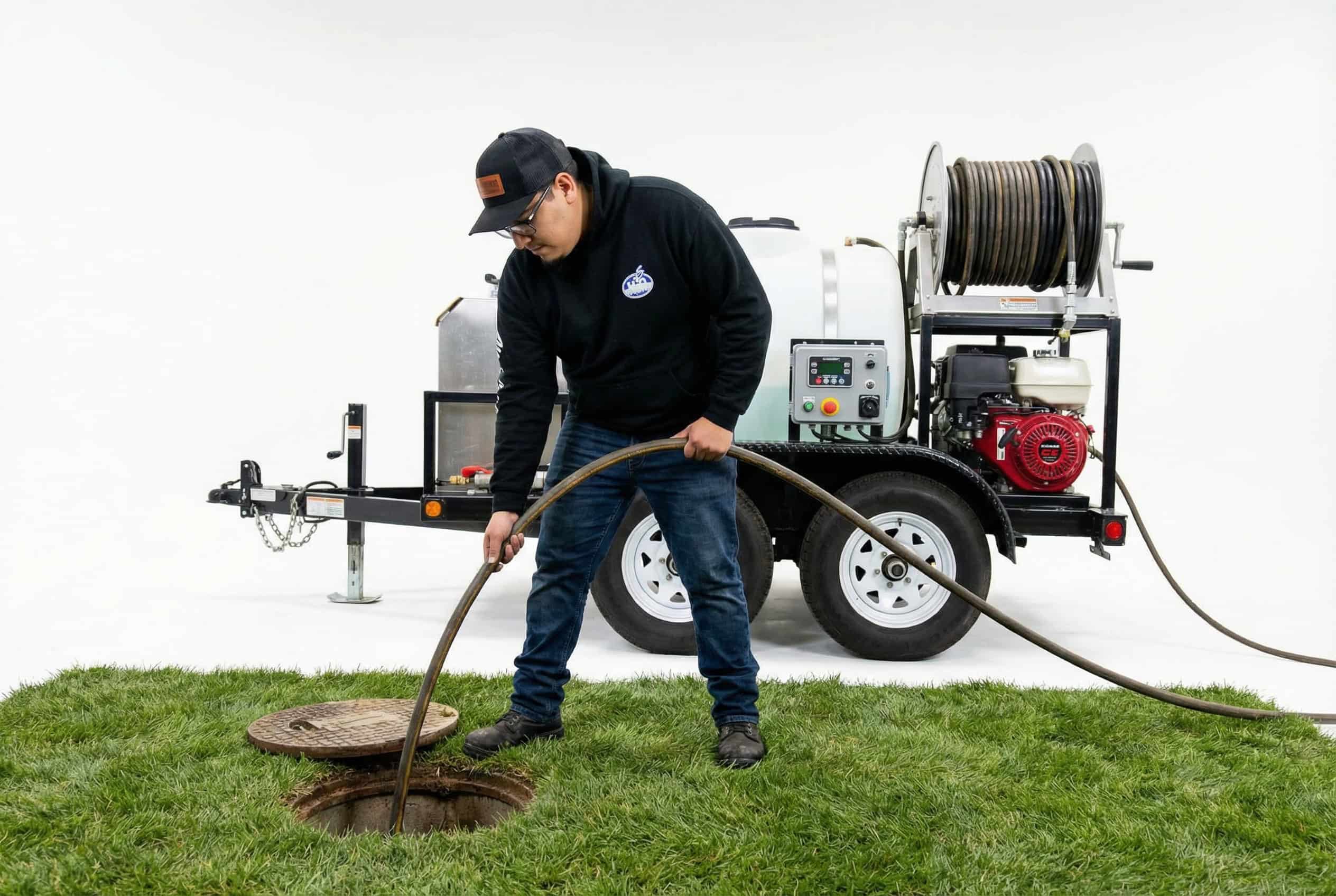
Modern Developments on the Beavercreek Plateau in Oregon City
Oregon City’s residential expansion along Beavercreek Road, in Park Place, and near Clackamas Community College has brought modern PVC sewer systems to the city’s newer neighborhoods. These installations are generally more resilient than the clay and cast iron found in the historic core, but they are not immune to problems. Improper backfill compaction during construction can create voids beneath the pipe that lead to settling and bellying. Tree roots from the fast-growing landscape plantings in these subdivisions are already probing sewer pipe joints. And construction activity on adjacent lots, which is ongoing in Oregon City’s expanding perimeter, can damage existing laterals through vibration and soil disturbance.
For homeowners in Park Place and the Beavercreek plateau developments, proactive sewer camera inspections are the most effective way to catch construction-era issues and early root activity before they escalate. A camera inspection at the five-year mark after construction verifies that the lateral has settled properly and that no early problems have developed. Subsequent inspections every three to five years monitor for root intrusion and joint condition as landscape plantings mature. This preventive approach costs a fraction of emergency repair and protects both the home’s sewer function and its resale value.
Schedule preventive inspection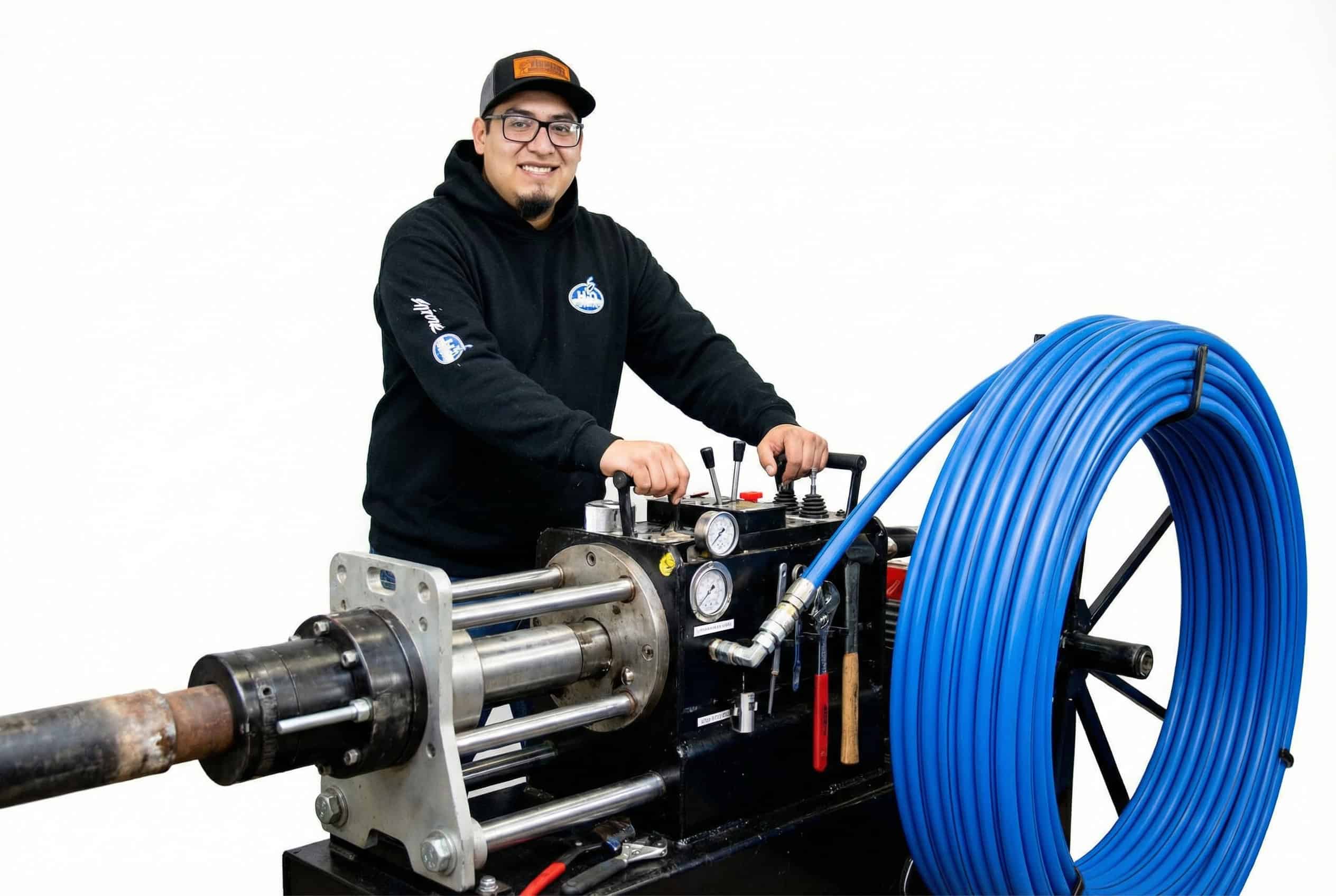
Sewer Repair Permits and Clackamas County Coordination in Oregon City
Sewer line repairs in Oregon City require permits from Clackamas County, and repairs that affect the connection to the public sewer main involve coordination with the city’s Public Works department. The permitting requirements scale with the scope of work: a trenchless liner installation requires a standard plumbing permit, while full lateral replacements that include new main connections may require right-of-way encroachment permits and traffic control plans for work within the public right-of-way. In Oregon City’s bluff neighborhoods, where terrain and access constraints add complexity, proper planning and permitting are especially important.
Sarkinen Plumbing manages all permitting for Oregon City sewer repairs, from application through final inspection. Our familiarity with Clackamas County’s process and Oregon City’s specific requirements means permits are submitted correctly the first time, avoiding delays that extend the project timeline. For homeowners, this translates to a sewer repair that proceeds on schedule from camera inspection through completed work, with all required documentation in place for your records and any future real estate transactions. Call 503-925-3504 to start the process.
Start your sewer repair
Sewer Camera Inspections for Oregon City Real Estate Transactions
Oregon City’s diverse housing stock, ranging from historic bluff-area homes to modern Beavercreek plateau developments, makes sewer scope inspections an essential component of real estate due diligence. A buyer purchasing a historic home in the McLoughlin District may be inheriting an 80-year-old clay sewer lateral with extensive root intrusion, while a buyer in Park Place may find a relatively new PVC installation with minor settling. The camera inspection reveals the truth beneath the surface, providing clear information for negotiation and planning before the transaction closes.
Sarkinen Plumbing provides professional sewer scope reports for Oregon City home transactions, including video documentation, pipe material identification, annotated images of significant findings, and repair cost estimates. Our reports are formatted for use by buyers, sellers, and real estate agents. For sellers of older Oregon City homes, a pre-listing scope demonstrates transparency and builds buyer confidence. For buyers in any Oregon City neighborhood, the inspection is one of the most cost-effective due diligence steps available. Call 503-925-3504 to schedule your Oregon City sewer scope.
Book a sewer scope
What Oregon City Customers Say About Sewer Line Repair
Portland & Vancouver’s Best Local Plumber
-
“Sewer Line Repair with Minimal Yard Damage – Great Experience with Sarkinen Home Services During a house inspection, I was informed that a section of my sewer line leading to the street was broken and needed replacement. Unfortunately, the break was located in a beautifully landscaped area of our yard, and I was very concerned about the…”
 Lori Johnson
“First off they are very polite and helpful on the phone. They scheduled a guy to come out quickly. The guy that came out was very polite and professional. He explained everything he was going to do and how much it would cost. We had different options and agreed on one of them. He went to work immediately and solved the problem. He…”
Daryl Sandberg“Alex came out and jetted one of our main sewer lines. He did a great job and was quick. Used camera to show me everything and was informative thru the whole process.”
Mark Kalakian“I would like to leave a review on work which was done today by Mike. I would like to say "Thank you very much, Mike!" for his nice work. Mike quickly fixed all problems with my clogged sewer, tested the drain system and gave me suggestions on how to avoid these situations in the future. He provided a lot of useful information about your…”
Sergey Nikishin -
“Used for Water Main Line Repair: The estimate from Sarkinen was $2000 (!!) less than the 2 other estimates that I received for the repair of my main line. This is due to the fact that Sarkinen owns their own boring machine. Beyond this, they were extremely nice and helpful throughout the process and 0% financing is a no-brainer. I can’t see…”
Neil Medeiros“On time and for the price quoted! The tech was very good and worked quickly. Would highly recommend!”
Mike Kuffner“Professional courteous Tech did a awesome job. Thank you very much.”
Artis Alvin“The Techs. were really courteous and fast.”
Debbie Akers -
“Ryan and James did a great job to fix the broken water pipe. They are very nice and professional. They came on a very cold day. We really appreciated. I will use Sarkinen again and strongly recommend to my friends.”
Amber Sun“I got prompt, professional service on my backflow prevention system. Thanks for the good work.”
Maggie Dodson“Honest, professional, reasonably, priced & did the job right! Thank you!”
Cher Shepard“Fast, friendly service at a reasonable rate.”
Naola Conkey
Why Oregon City Homeowners Choose Sarkinen
Upfront, Fair Pricing
No hidden fees, no overtime charges. You get a clear, written price before any work begins. Same rate day or night.
Licensed in WA & OR
Dual-state licensing (WA #SARKIPI946MF, OR #170052) means we serve the entire Portland-Vancouver metro.
24/7 Emergency Service
We answer the phone day and night. A licensed plumber is dispatched immediately — at your door within 60-90 minutes.
Satisfaction Guaranteed
Every repair backed by our workmanship guarantee. Background-checked, drug-tested plumbers who treat your home with care.
Serving Every Oregon City Neighborhood
Other Plumbing Services in Oregon City
Sewer Line Repair in Oregon City — Common Questions
Yes. The historic McLoughlin District and bluff-area neighborhoods have some of the oldest sewer laterals in the region, many dating to the mid-1900s or earlier. These clay pipes with mortar joints are susceptible to root intrusion, joint deterioration, and displacement from the sloped terrain. A camera inspection reveals the current condition and helps you plan for proactive repair.
Trenchless pipe lining works well in most terrain conditions, including Oregon City’s hillsides. The liner follows the existing pipe path regardless of grade. However, if the pipe has collapsed or has sharp bends caused by ground movement, some excavation may be necessary for those specific sections.
Costs vary depending on the repair method and extent of damage. Spot repairs for localized problems typically range from $1,500 to $4,000. Full-line trenchless lining runs $4,000 to $10,000 depending on length. Excavation and replacement in challenging terrain can cost more due to the access and restoration requirements. We provide detailed estimates after camera inspection.
Schedule Sewer Line Repair in Oregon City
Call now or schedule online.
- Vancouver 360-369-3586
- Portland 503-925-3504
Vancouver Location
Proudly Serving
Portland and Vancouver
from Wilsonville to Longview &
Hillsboro to Gresham
UBI # 602-521-027
OR Contractor Lic# 170052 (CCB)
WA Contractor Lic# SARKIPI946MF
OR Plumber Lic# PB115
Customer Satisfaction
4.6 stars - Based on 227 Reviews







Quick Links
Plumbing Services
SW Washington Service Areas
Oregon Service Areas
Contact Information
Sarkinen PlumbingVancouver
9502 NE 72nd Ave
Vancouver, WA 98665
Phone: 360-369-3586
Portland
Phone: 503-925-3504
Hours of Operation
Monday - Sunday 24-hours