- Vancouver 360-369-3586
- Portland 503-925-3504

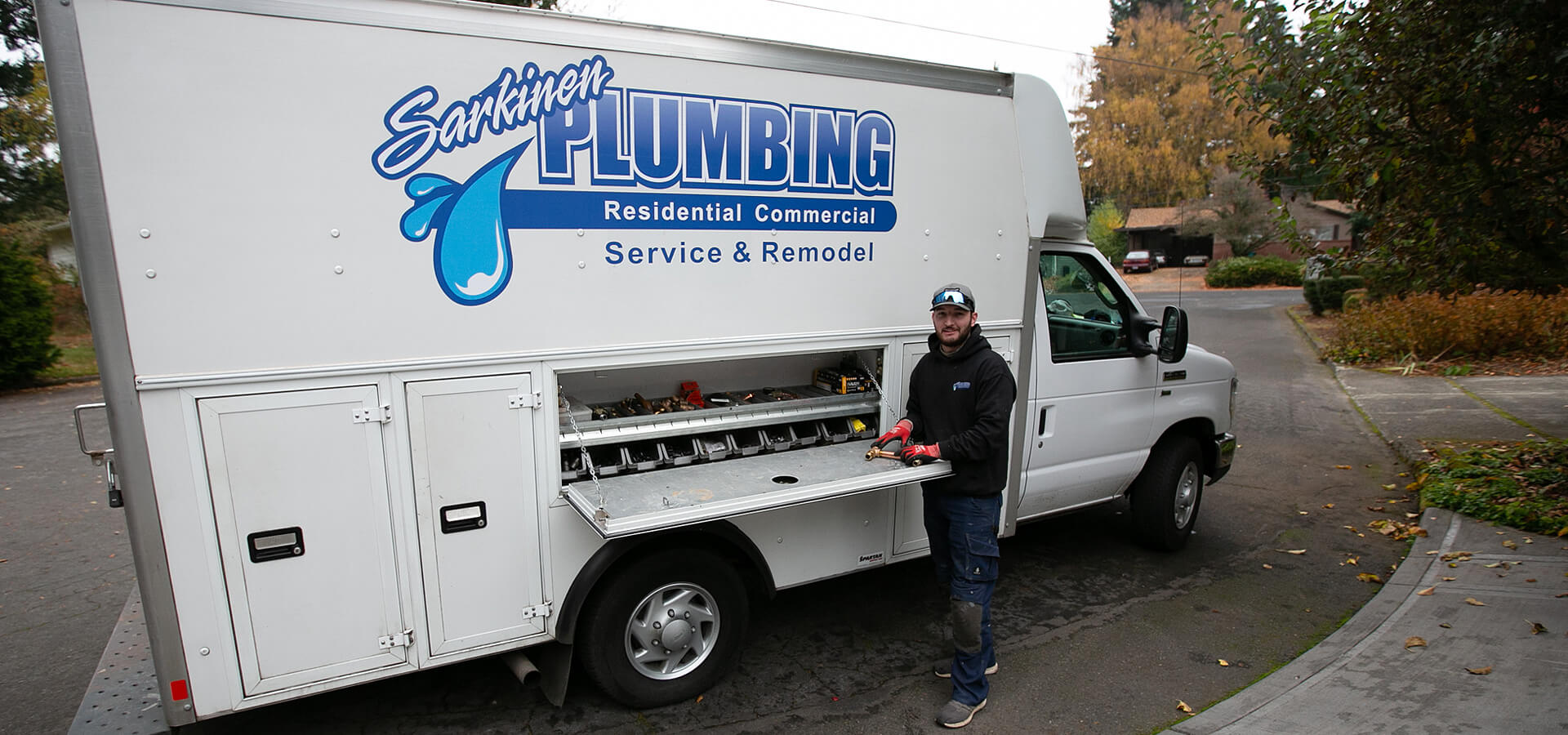
Oregon City Emergency Plumber
Sewer backups, water main breaks, and flooding — arrival within the hour
- Fast Same Day Service
- No Obligation Estimate
- Commercial & Residential Plumbing




Check out our
coupons!
We Offer
*0%
Financing
-
 off
off
Any service for new customers!
(*Minimum Purchase Required)
EXPIRES 6/26 -
 off
off
Main Water Service Replacement
Call now for details!
EXPIRES 6/26 -
 off
off
Water Heater Replacement
Call now to schedule!
EXPIRES 6/26 -
 off
off
Rain Drain Clearings
(*Minimum Purchase Required)
EXPIRES 6/26 -
 off
off
Seniors & Military
(*Minimum Purchase Required)
EXPIRES 6/26



How It Works
Call 24/7
A real person answers and dispatches a plumber immediately.
Fast Arrival
Licensed plumber at your door in 60-90 minutes, truck fully stocked.
Stop the Damage
We contain the emergency — shut off water, stop the leak, prevent further damage.
Permanent Fix
Diagnose the root cause, present options with prices, and make the repair right.
Emergency Plumber in Oregon City
Oregon City Emergency Plumber for Bluff-Top Sewer Lateral Failures
Oregon City’s dramatic geography splits the city between basalt bluffs above Willamette Falls and the flatlands along the river below. The bluff-top homes in McLoughlin and Canemah neighborhoods have sewer laterals that plunge steeply downhill through rocky soil, running 80 to 150 feet from the house to the city main. These steep-grade laterals experience hydraulic forces that flat-terrain laterals never face: high-velocity flow erodes joints and fittings over decades, and the rocky basalt substrate makes the pipe vulnerable to point-loading damage where it crosses rock outcrops beneath the surface. When one of these laterals develops a complete blockage — from root intrusion, joint offset, or pipe settlement — the sewage backup inside the home is immediate because the steep grade provides zero buffer capacity.
Sarkinen’s emergency sewer response to Oregon City bluff-top homes requires extended-reach equipment that standard residential plumbing trucks do not carry. Our cameras and cutting tools are rated for the 100-plus-foot lateral runs common on Canemah and McLoughlin hillside properties. The steep terrain also makes traditional excavation impractical for many repairs — trenching a lateral down a basalt hillside is expensive, disruptive, and sometimes physically impossible. Trenchless pipe lining and pipe bursting are the preferred repair methods for Oregon City bluff laterals, and our technicians have performed enough of these hillside repairs to understand the specific access challenges and equipment positioning required on steep residential lots.
Get emergency sewer help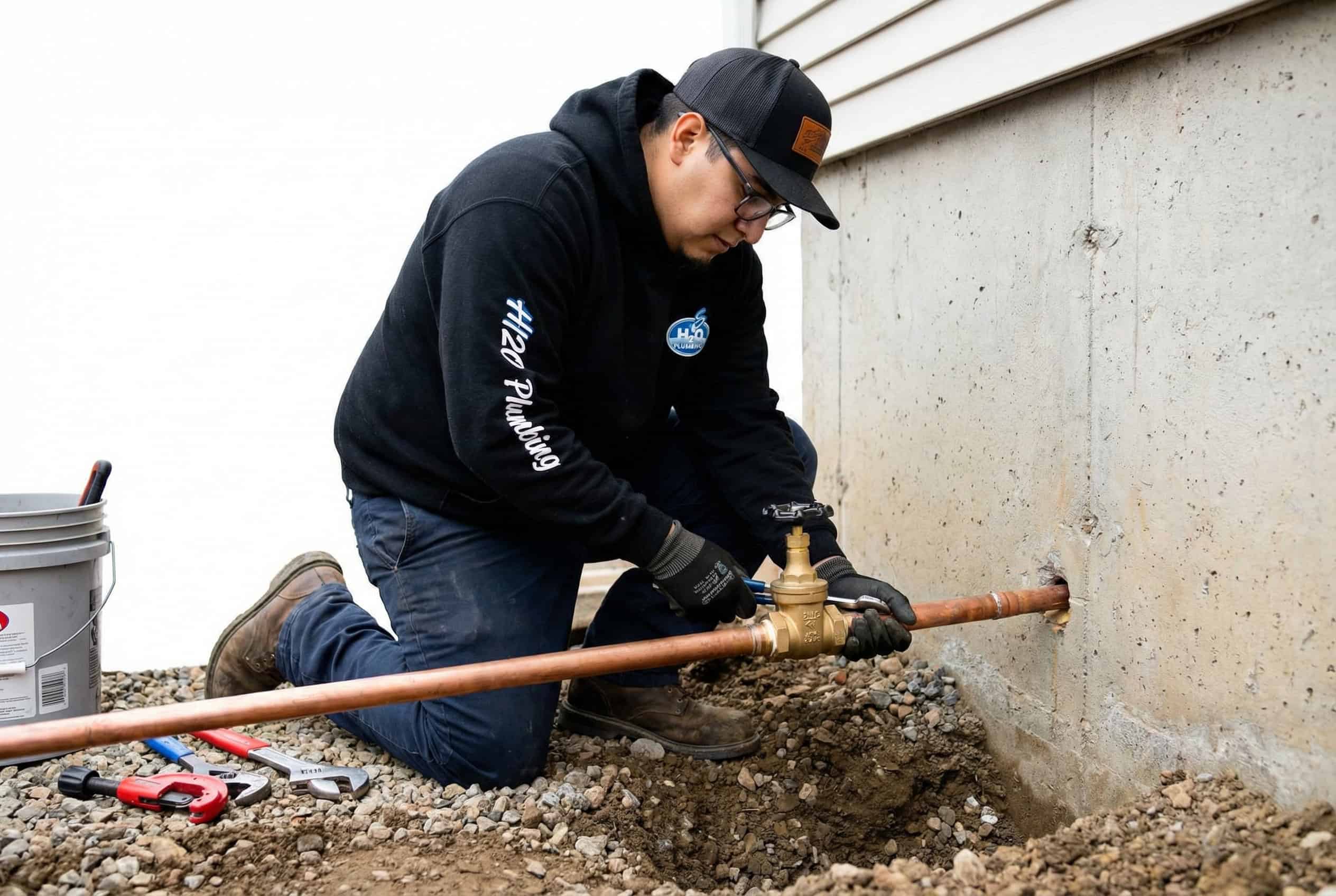
Orangeburg Pipe Collapse Emergencies in Oregon City
Homes built in Oregon City between 1945 and 1972 may have sewer laterals made of Orangeburg — a compressed tar paper pipe that was inexpensive and widely used during the postwar building boom. Orangeburg was never designed for permanent underground installation, and after 50 to 80 years in the ground, the material has softened, deformed under soil pressure, and begun to collapse. Unlike clay pipe that cracks and allows roots to enter gradually, Orangeburg failure is often sudden and complete: the pipe wall gives way, the pipe collapses flat, and sewage flow stops entirely. There is no clearing an Orangeburg collapse with a cable machine or hydro-jetter — the pipe itself has ceased to exist as a functional conduit.
When we respond to a sewer emergency in an Oregon City home and discover Orangeburg pipe via camera inspection, we know immediately that the repair is a full lateral replacement rather than a simple clearing. The collapsed section — and usually the entire lateral, since all of it is the same age and material — must be replaced with modern PVC. For Oregon City homeowners who have not yet experienced a collapse but suspect they may have Orangeburg, a proactive camera inspection answers the question definitively. If Orangeburg is confirmed, scheduled replacement on your timeline costs far less and causes far less disruption than emergency replacement after a complete failure sends sewage backing up through your lowest drain.
Schedule sewer inspection
Oregon City Emergency Plumber for Low-Elevation Flooding Near Park Place
The low-elevation neighborhoods near the Willamette River — Park Place, the areas along McLoughlin Boulevard, and the streets near the Clackamas River confluence — face a flooding dynamic driven by river hydrology rather than plumbing failure alone. When spring snowmelt from the Cascades raises river levels, and heavy rain saturates the valley floor simultaneously, the water table in these low-lying Oregon City neighborhoods rises close to foundation level. Sump pumps that cycle occasionally during normal weather begin running continuously, and any weakness in the system — an aging pump motor, a corroded float switch, a clogged intake screen — becomes a point of failure that allows water to accumulate in crawl spaces and basements.
Our emergency response to Oregon City flood-zone properties focuses on the dual threat of pump failure and sewer infiltration. When the water table rises, it does not just overwhelm sump pumps — it also pressurizes cracked sewer laterals, forcing groundwater into the sewer system and potentially causing sewage backups inside the home. We arrive at Park Place emergencies equipped with replacement sump pumps, battery-backup systems, and backwater valves that prevent sewer reversal. For Oregon City homeowners in flood-prone areas, we recommend annual pre-season pump testing and proactive pump replacement on a 5 to 7-year cycle — because the cost of a planned pump swap is a fraction of what water damage restoration runs when a pump fails during a high-water event.
Emergency flood protection
Historic Oregon City Home Emergency Pipe Failures
Oregon City was the first incorporated city west of the Rocky Mountains, and its oldest neighborhoods contain houses from the late 1800s and early 1900s with plumbing systems that have been in service for generations. These homes have been patched, repaired, and partially updated over decades, creating systems where galvanized steel connects to copper connects to PEX — with dissimilar metal corrosion accelerating deterioration at every transition point. The galvanized supply lines in these homes have corroded internally to the point where water pressure is a fraction of its original capacity, and the cast iron drain stacks have developed cracks and scale buildup that restrict flow to a trickle.
When these legacy systems fail in Oregon City’s historic homes, the failure is often dramatic. A galvanized joint that has been slowly corroding for 80 years does not develop a pinhole leak — it ruptures under pressure, flooding the home with water at full municipal volume. Our emergency plumbers carry the transition fittings, repair clamps, and diagnostic tools needed for every material combination found in Oregon City’s century-old homes. We understand how these homes were plumbed — from the original construction practices to the patchwork repairs that accumulated over generations — and that knowledge accelerates our diagnostic process when time is critical.
Call for emergency pipe repair
What Oregon City Customers Say About Emergency Plumber
Portland & Vancouver’s Best Local Plumber
-
“We had a pipe break during the Arctic Blast of January 2024. I’m sure Sarkinen had many service requests that day, but they managed to get one of their “super” technicians, Jordan, to make the repair same day and restore water to our home. Sarkinen is a great service company…friendly and neat techs, quality work and fair pricing. We’ve used…”
 Victor Latessa
“Repaired a leaking outdoor faucet. Repair was quick and the plumbers were professional and knowledgeable. Update 2025: Woke up to a pipe that was frozen. Contacted Sarkinen right away and they had a someone out as soon as possible. Dustin and Ricky were professional and explained what was needed. They were extremely helpful and eased a lot of…”
Evan Grawrock“Got a water heater replaced same day. Fantastic customer service.”
Dave Youtsey“Very responsive after the first call. A live person answered and made the appointment immediately. So refreshing!”
Robert Varner -
“You are a god send! I needed emergency help and was upset and panicked because my washer plumbing went out. Even though they were supposed to be off work in 20 minutes they came and spent an hour fixing my house for me and this meant so much to us thank you!!”
Amanda Nichols“They are very responsive and professional. Tenants clogging issue resolved immediately. Recommended!”
qizhi wang“I called. He came out right away to replace my outdoor faucet. Reasonably priced for the quick service I received.”
L Gervais“I have never used a plumber before and I am glad I went these guys. The service was outstanding, the guy that did the repair was kind and fast. I called them in the morning and they came out that same day. I will be referring them in the future to other people. Thank you so much.”
Dawn McInerney -
“I called Sarkinen Plumbing with a clog emergency that stopped me from using my kitchen sink just before Easter weekend. I had family members visiting from out of town with no way to prepare our Easter feast. Sarkinen Plumbing came through for me! Their plumber, Mick, arrived the same day I called, fixed the problem for a reasonable price,…”
Sean Williams“Very responsive to my emergency (mainline failed and flooded the yard). Had everything fixed within 24 hours of contacting them. Knowledgeable and professional! I highly recommend them if you’re looking for quality service. Can’t thank them enough!!”
Tina Massey“Called after hours, received a call back right at 8AM. Technician showed up early afternoon. The technician was great. Went through the issues with me, talked about the solutions. Had us back up and no leaks in about an hour. Rates were good. Overall very pleased with the service.”
Jeff Powell“I was able to get same day service (with 3 hours of my call), a very professional and efficient electrician arrived and fixed my issues in no time. Service was excellent, the price was reasonable, and I’d use them again if I have additional electrical needs in Vancouver.”
Cory Bronnenberg
Why Oregon City Homeowners Choose Sarkinen
Upfront, Fair Pricing
No hidden fees, no overtime charges. You get a clear, written price before any work begins. Same rate day or night.
Licensed in WA & OR
Dual-state licensing (WA #SARKIPI946MF, OR #170052) means we serve the entire Portland-Vancouver metro.
24/7 Emergency Service
We answer the phone day and night. A licensed plumber is dispatched immediately — at your door within 60-90 minutes.
Satisfaction Guaranteed
Every repair backed by our workmanship guarantee. Background-checked, drug-tested plumbers who treat your home with care.
Serving Every Oregon City Neighborhood
Other Plumbing Services in Oregon City
Emergency Plumber in Oregon City — Common Questions
They present unique access challenges but are absolutely within our service capability. The steep terrain means sewer laterals are longer and more complex, equipment access can be limited by narrow streets and steep driveways, and some homes require specialized trenchless techniques for sewer repair because traditional excavation on steep slopes is impractical. Our technicians who serve Oregon City carry the tools and have the training for these conditions.
Orangeburg pipe is a tar-impregnated fiber pipe that was used for sewer laterals primarily from the 1940s through the early 1970s. It was inexpensive and easy to install, but it degrades over time — the pipe softens, deforms under soil pressure, and eventually collapses entirely. If your Oregon City home was built between 1945 and 1972, there is a meaningful chance your sewer lateral is Orangeburg. A camera inspection can confirm this instantly. If you have Orangeburg pipe, proactive replacement before it collapses is significantly less expensive and disruptive than emergency replacement after a complete failure.
It can. When the Willamette or Clackamas rivers run high, groundwater levels rise throughout the lower-elevation parts of Oregon City. This elevated water table can overwhelm sump pumps, infiltrate cracked sewer laterals (adding volume that causes backups), and saturate the soil around foundation drains. While actual river flooding affecting homes is rare thanks to flood management, the indirect effects of high water on residential plumbing systems are real and recurrent.
Oregon City’s municipal water, sourced from the Clackamas River, has moderate mineral content that contributes to sediment buildup in water heater tanks. This sediment insulates the burner from the water, causing the tank bottom to overheat and corrode faster. We see water heaters fail earlier in Oregon City than in cities with softer water. Annual tank flushing extends life significantly, but if your water heater is over 10 years old and has never been flushed, it may be operating on borrowed time.
Schedule Emergency Plumber in Oregon City
Call now or schedule online.
- Vancouver 360-369-3586
- Portland 503-925-3504
Vancouver Location
Proudly Serving
Portland and Vancouver
from Wilsonville to Longview &
Hillsboro to Gresham
UBI # 602-521-027
OR Contractor Lic# 170052 (CCB)
WA Contractor Lic# SARKIPI946MF
OR Plumber Lic# PB115
Customer Satisfaction
4.6 stars - Based on 227 Reviews







Quick Links
Plumbing Services
SW Washington Service Areas
Oregon Service Areas
Contact Information
Sarkinen PlumbingVancouver
9502 NE 72nd Ave
Vancouver, WA 98665
Phone: 360-369-3586
Portland
Phone: 503-925-3504
Hours of Operation
Monday - Sunday 24-hours