- Vancouver 360-369-3586
- Portland 503-925-3504

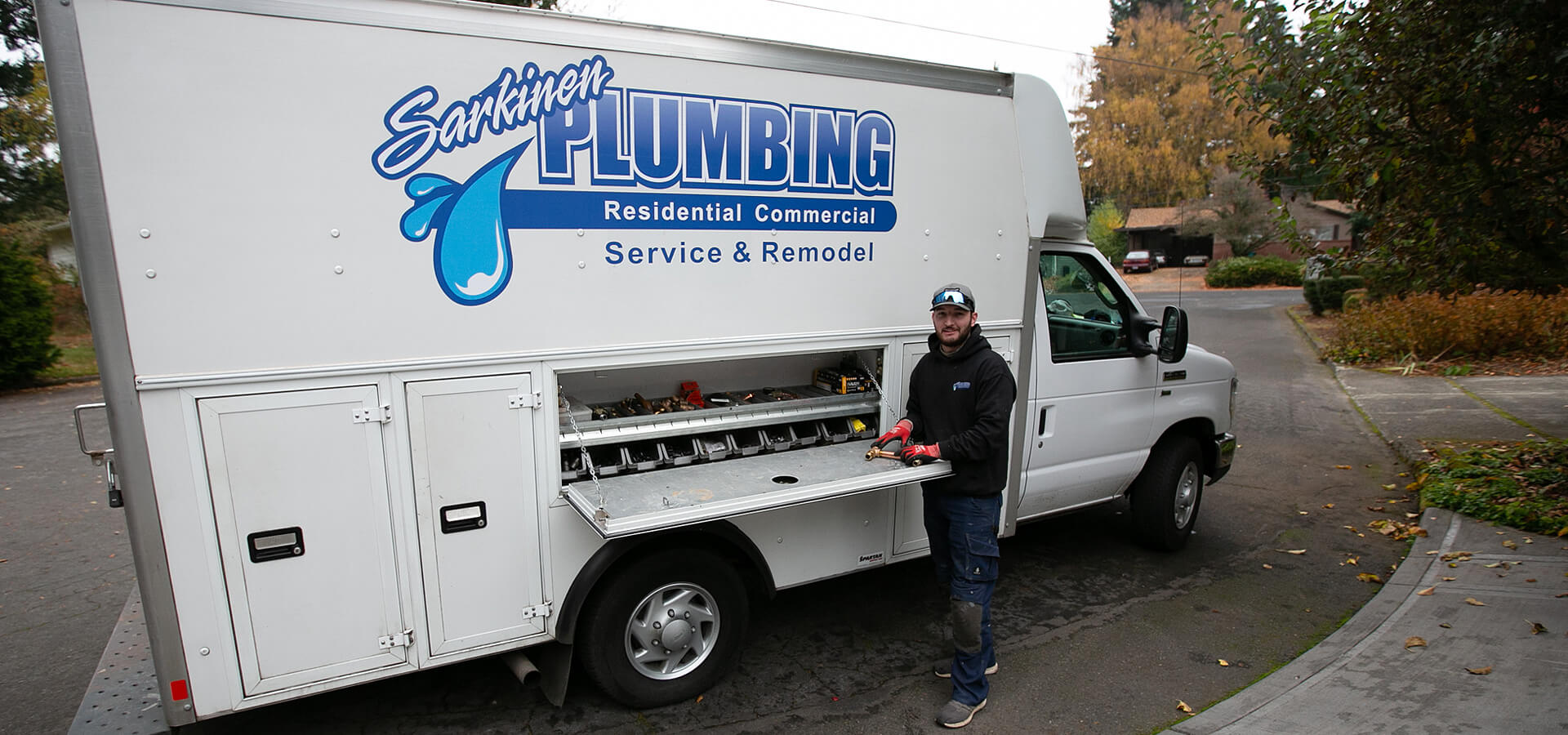
Troutdale Sewer Line Repair
Trenchless pipe bursting and CIPP lining — keep your landscaping intact
- Fast Same Day Service
- No Obligation Estimate
- Commercial & Residential Plumbing




Check out our
coupons!
We Offer
*0%
Financing
-
 off
off
Any service for new customers!
(*Minimum Purchase Required)
EXPIRES 10/26 -
 off
off
Main Water Service Replacement
Call now for details!
EXPIRES 10/26 -
 off
off
Water Heater Replacement
Call now to schedule!
EXPIRES 10/26 -
 off
off
Rain Drain Clearings
(*Minimum Purchase Required)
EXPIRES 10/26 -
 off
off
Seniors & Military
(*Minimum Purchase Required)
EXPIRES 10/26


How It Works
Call Us
Call anytime, 24/7. A real person answers and schedules your appointment.
We Diagnose
Our plumber inspects, identifies the problem, and explains what is needed.
Upfront Quote
You get options with prices before any work begins. Your choice.
Expert Repair
Licensed plumber completes the work, cleans up, and walks you through it.
Sewer Line Repair in Troutdale
Sandy River Alluvial Soils and Sewer Pipe Movement in Troutdale
Troutdale sits on alluvial deposits from the Sandy River, soils that are sandier and more prone to erosion and shifting than the clay-heavy material found in the western metro. These sandy soils can erode from around buried sewer pipes during periods of heavy rainfall or groundwater fluctuation, creating voids that allow the pipe to shift, sag, or develop bellied sections. When the soil support beneath a sewer lateral is undermined, the pipe’s grade changes in ways that impede proper drainage. Water and waste accumulate at low points, creating slow spots that worsen as sediment builds up in the belly. For homes near the Sandy River corridor and in Troutdale’s lower-elevation neighborhoods, soil-related pipe movement is a common finding during camera inspections.
Repairing a bellied sewer section in Troutdale’s sandy soils requires both pipe correction and bedding improvement. We excavate the affected section, remove the inadequate or eroded bedding material, replace it with properly compacted gravel that provides stable, long-term support, and install new PVC pipe at the correct grade. For Troutdale homeowners, understanding that the sandy soils beneath their property behave differently from the clay soils found in other parts of the metro helps explain why sewer problems can develop even in relatively new PVC pipe. Regular camera inspections every three to five years catch settling issues before they cause backup emergencies.
Fix settling sewer lines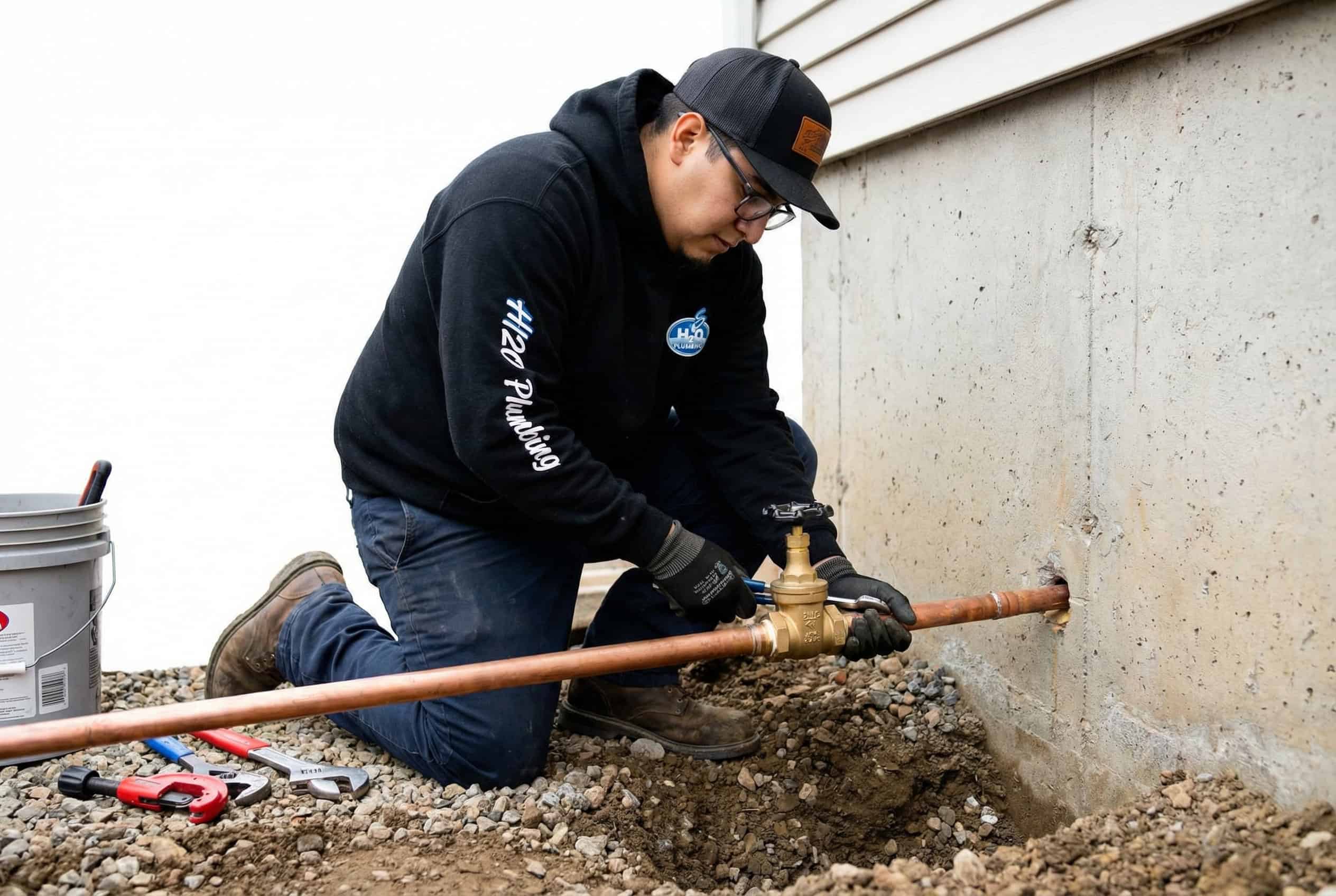
Aging ABS and Cast Iron Pipe in Cherry Park and Downtown Troutdale
Troutdale’s residential core was developed primarily during the 1960s through 1980s, with the Cherry Park and downtown neighborhoods representing the oldest sections of the city. Homes from this era have sewer laterals made of ABS plastic, cast iron, or in some of the oldest properties near downtown, clay pipe that was installed when Troutdale was still a small rural community. ABS pipe from the 1970s and 1980s has become brittle after four to five decades of service, developing cracks at joints and fittings that were once flexible and resilient. Cast iron develops internal corrosion that builds up as rough scale, gradually narrowing the pipe and catching debris. Mixed-material connections, where ABS was joined to cast iron or clay during piecemeal repairs over the decades, create additional vulnerability at every transition point.
A camera inspection through the main cleanout reveals the pipe material, the condition of joints and connections, and any root intrusion or structural damage along the lateral’s length. For Cherry Park homes with aging ABS, the inspection shows whether brittleness is localized at a few joints or systemic throughout the lateral. For downtown Troutdale properties with clay or mixed-material pipe, the footage documents the mortar joint condition and any root masses that have formed. Based on the findings, we recommend the most appropriate repair: trenchless lining for pipes with structural integrity that need joint sealing and surface restoration, or replacement for sections that have collapsed or deteriorated beyond rehabilitation.
Assess your Troutdale sewer
Root Intrusion in Troutdale’s Tree-Lined Residential Streets
Troutdale’s residential streets in Cherry Park and the neighborhoods along Cherry Park Road are lined with mature conifers, maples, and birch trees that have been growing for 40 to 50 years alongside the homes they shade. The root systems of these trees have had decades to extend beneath yards and streets, and they actively seek the moisture available at sewer pipe joints. In ABS pipe from the 1970s and 1980s, joints that have become brittle and cracked provide ready entry points. In cast iron pipe, corrosion at joint connections creates gaps that roots exploit. Once inside the pipe, roots grow rapidly in the nutrient-rich environment, building masses that reduce flow and eventually cause complete blockages.
Hydro-jetting is our preferred method for root clearing in Troutdale because the high-pressure water stream cuts through root masses more completely than mechanical cable machines, providing longer-lasting results. After jetting, a camera inspection confirms the pipe is clear and reveals the condition of the joints where roots entered. For Troutdale homeowners dealing with recurring root problems, trenchless pipe lining after jetting provides the permanent solution by sealing every compromised joint and creating a smooth interior surface that roots cannot penetrate. This combined approach breaks the cycle of annual root clearing that many Cherry Park homeowners have come to accept as routine.
Clear roots permanently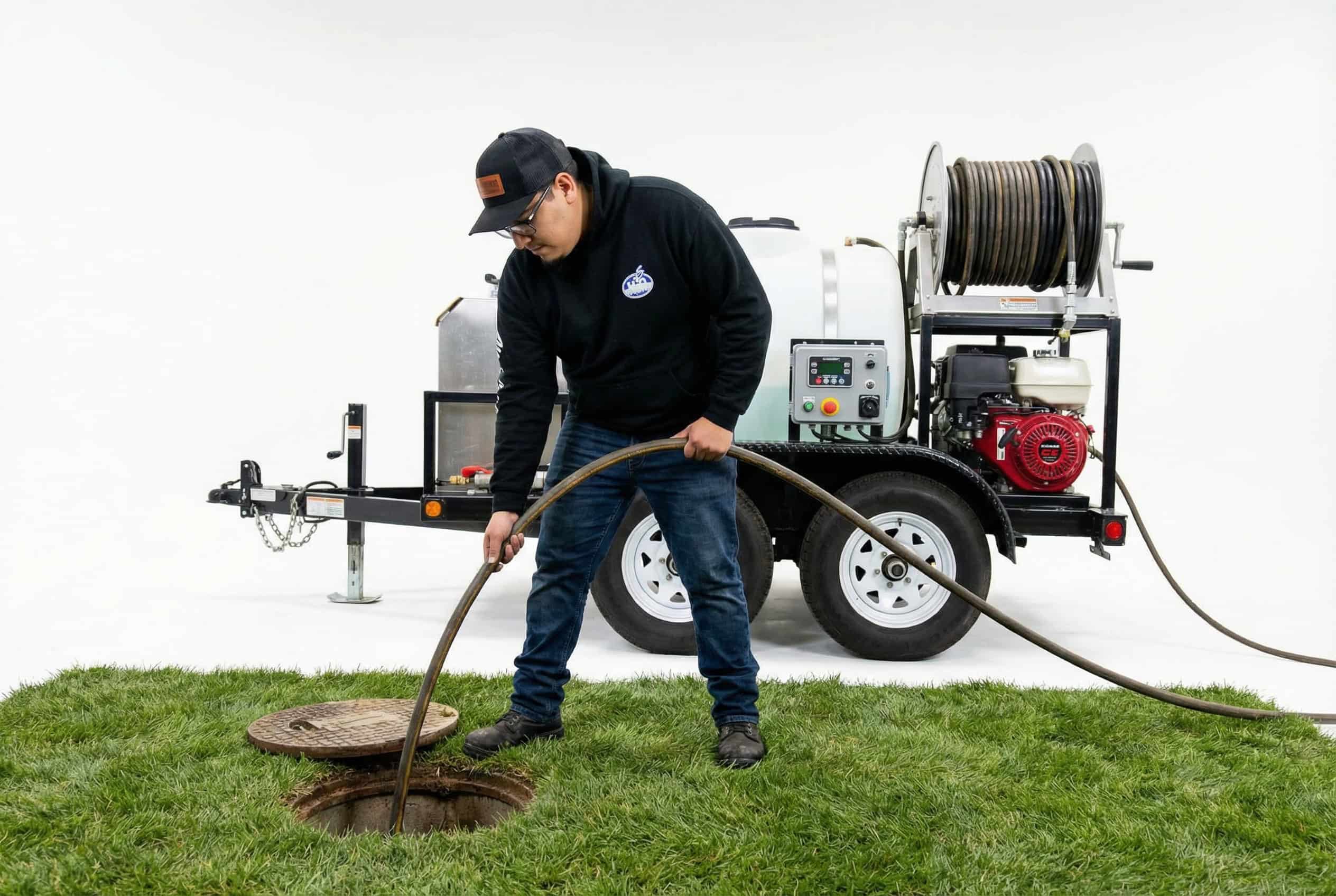
Trenchless Sewer Repair for Troutdale Properties
Troutdale homeowners who have invested in established landscaping, paved driveways, and well-maintained properties deserve sewer repair that does not leave their yard looking like a construction site. Trenchless pipe lining and pipe bursting provide repair and replacement options that preserve the surface while fully addressing the problem underground. Pipe lining is appropriate for laterals with cracking, root intrusion, or joint displacement that can be rehabilitated from the inside. Pipe bursting handles full replacement when the pipe is too deteriorated for lining. Both methods require only small access excavations rather than a continuous trench from the house to the street.
For Troutdale’s Sweetbriar neighborhood, where newer homes with manicured landscaping sit on properties with sewer laterals in the 20- to 30-year age range, trenchless methods provide a repair option that matches the neighborhood’s standards. For Cherry Park, where older homes with mature yards and established driveways would be significantly disrupted by traditional excavation, trenchless repair avoids the cascading costs of surface restoration. We evaluate both trenchless options during every Troutdale camera inspection and recommend the approach that best matches the pipe’s condition and the homeowner’s priorities. Call 503-925-3504 for an assessment.
Explore trenchless options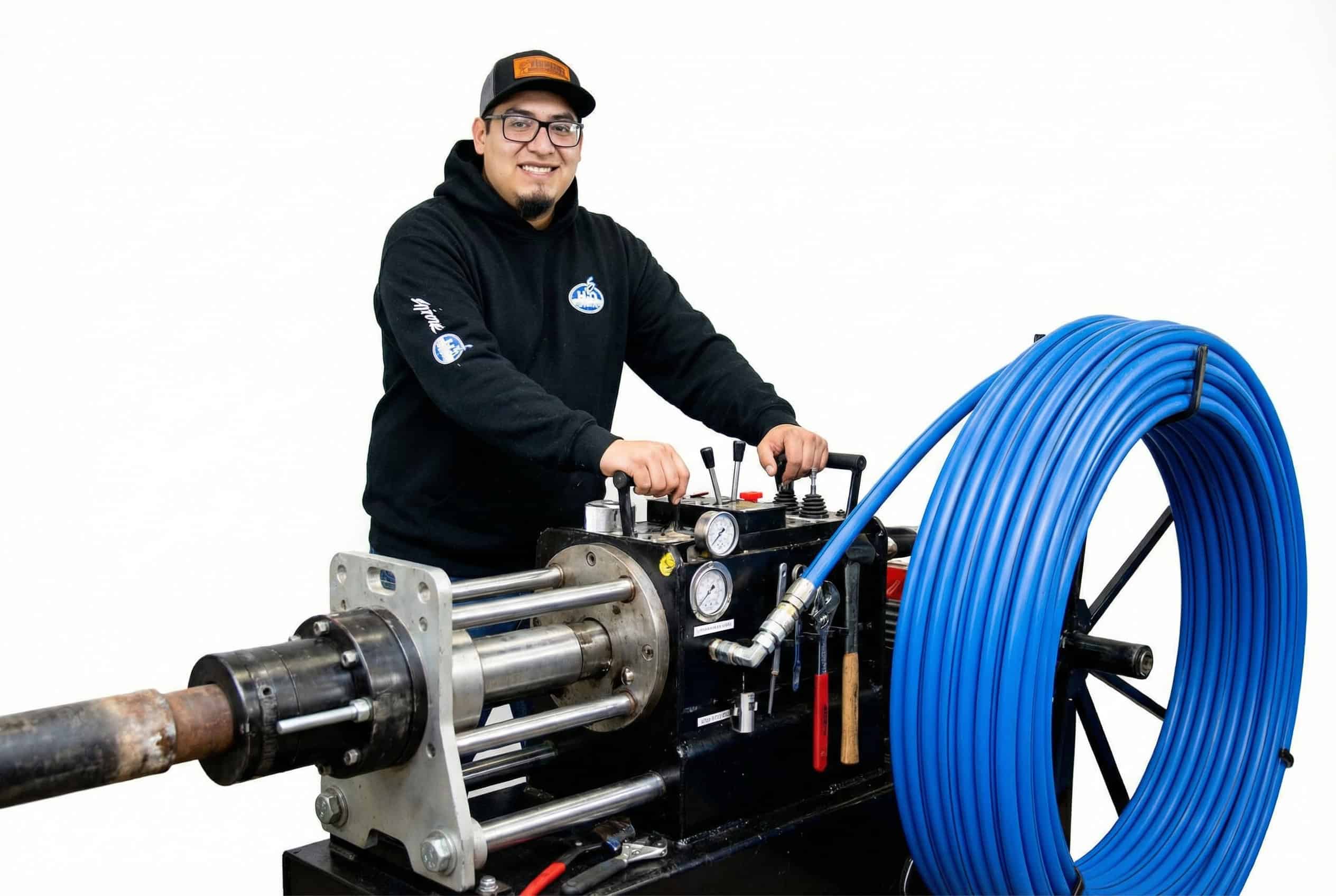
What Troutdale Customers Say About Sewer Line Repair
Portland & Vancouver’s Best Local Plumber
-
“I would like to leave a review on work which was done today by Mike. I would like to say "Thank you very much, Mike!" for his nice work. Mike quickly fixed all problems with my clogged sewer, tested the drain system and gave me suggestions on how to avoid these situations in the future. He provided a lot of useful information about your…”
 Sergey Nikishin
“Alex came out and jetted one of our main sewer lines. He did a great job and was quick. Used camera to show me everything and was informative thru the whole process.”
Mark Kalakian“First off they are very polite and helpful on the phone. They scheduled a guy to come out quickly. The guy that came out was very polite and professional. He explained everything he was going to do and how much it would cost. We had different options and agreed on one of them. He went to work immediately and solved the problem. He…”
Daryl Sandberg“Used for Water Main Line Repair: The estimate from Sarkinen was $2000 (!!) less than the 2 other estimates that I received for the repair of my main line. This is due to the fact that Sarkinen owns their own boring machine. Beyond this, they were extremely nice and helpful throughout the process and 0% financing is a no-brainer. I can’t see…”
Neil Medeiros -
“Sewer Line Repair with Minimal Yard Damage – Great Experience with Sarkinen Home Services During a house inspection, I was informed that a section of my sewer line leading to the street was broken and needed replacement. Unfortunately, the break was located in a beautifully landscaped area of our yard, and I was very concerned about the…”
Lori Johnson“Residential or commercial, they meet my needs and are highly professional!”
Cheryl Whitfield“Alex was really helpful and had great customer service. He gave me lots of pointers and advice on how to keep my system working best!”
angel ordaz“Great service, very professional and knowledgeable. Trusting. I’m so thankful I found this company!”
Brenda McKellar -
“Alex arrived on time, identified and fixed the problem, and cleaned up the space nicely after he finished. He was personable, professional and competent.”
Lawrence McClure“Mick was awesome. Had the job done and ready to go before I was even on-site. Would recommend and will use again!”
Nathan Sprenger“Mick and Chris arrived promptly and did a great job cleaning out the line from our downspout! Highly recommend!”
John Willey“Mick was wonderful and save the day very professional well done”
Jana Mcdonald
Why Troutdale Homeowners Choose Sarkinen
Upfront, Fair Pricing
No hidden fees, no overtime charges. You get a clear, written price before any work begins. Same rate day or night.
Licensed in WA & OR
Dual-state licensing (WA #SARKIPI946MF, OR #170052) means we serve the entire Portland-Vancouver metro.
24/7 Emergency Service
We answer the phone day and night. A licensed plumber is dispatched immediately — at your door within 60-90 minutes.
Satisfaction Guaranteed
Every repair backed by our workmanship guarantee. Background-checked, drug-tested plumbers who treat your home with care.
Serving Every Troutdale Neighborhood
Other Plumbing Services in Troutdale
Sewer Line Repair in Troutdale — Common Questions
Yes. Sandy alluvial soils near the Sandy River can erode around buried sewer pipes, creating voids that allow the pipe to shift or sag. This leads to bellied sections where waste accumulates and flow is reduced. A camera inspection reveals whether soil-related movement has affected your sewer line.
We recommend camera inspections every three to five years for Troutdale homes with older pipes, and every five to seven years for newer PVC systems. More frequent inspections are advisable if you have large trees near the sewer line or if previous inspections have revealed early-stage issues.
In most cases, yes. Trenchless pipe lining allows us to rehabilitate the sewer line under your driveway without excavation. The liner is inserted through an existing access point and cured in place inside the pipe. This preserves your driveway and eliminates the cost of surface restoration.
Schedule Sewer Line Repair in Troutdale
Call now or schedule online.
- Vancouver 360-369-3586
- Portland 503-925-3504
Vancouver Location
Proudly Serving
Portland and Vancouver
from Wilsonville to Longview &
Hillsboro to Gresham
UBI # 602-521-027
OR Contractor Lic# 170052 (CCB)
WA Contractor Lic# SARKIPI946MF
OR Plumber Lic# PB115
Customer Satisfaction
4.6 stars - Based on 227 Reviews







Quick Links
Plumbing Services
SW Washington Service Areas
Oregon Service Areas
Contact Information
Sarkinen PlumbingVancouver
9502 NE 72nd Ave
Vancouver, WA 98665
Phone: 360-369-3586
Portland
Phone: 503-925-3504
Hours of Operation
Monday - Sunday 24-hours