- Vancouver 360-369-3586
- Portland 503-925-3504

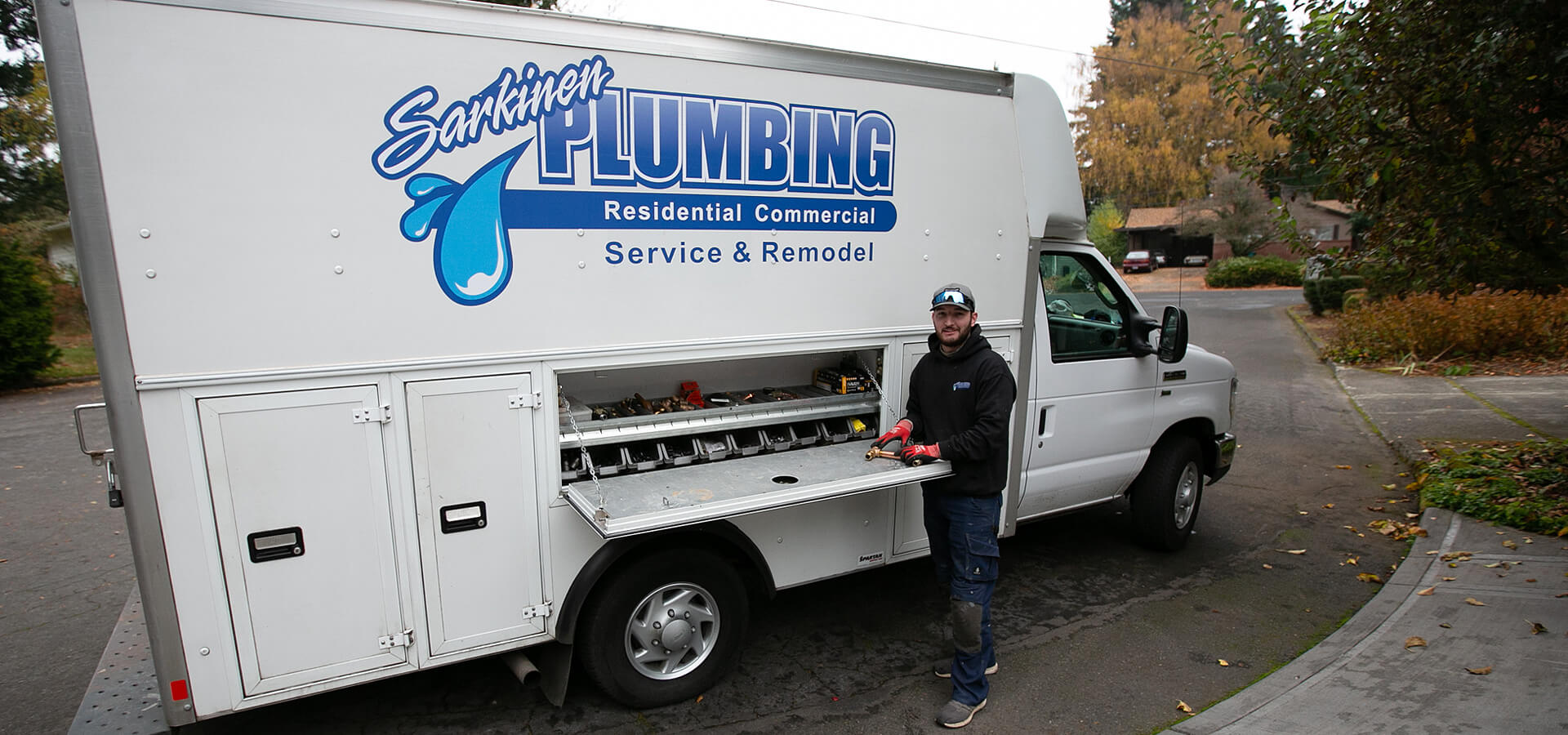
Water Heater Installation Vancouver WA
Tank & Tankless Systems from Bradford White, Rheem & Navien — Permits Included
- Fast Same Day Service
- No Obligation Estimate
- Commercial & Residential Plumbing




Check out our
coupons!
We Offer
*0%
Financing
-
 off
off
Any service for new customers!
(*Minimum Purchase Required)
EXPIRES 9/26 -
 off
off
Main Water Service Replacement
Call now for details!
EXPIRES 9/26 -
 off
off
Water Heater Replacement
Call now to schedule!
EXPIRES 9/26 -
 off
off
Rain Drain Clearings
(*Minimum Purchase Required)
EXPIRES 9/26 -
 off
off
Seniors & Military
(*Minimum Purchase Required)
EXPIRES 9/26



How It Works
Call Us
Call anytime, 24/7. A real person answers and schedules your appointment.
We Diagnose
Our plumber inspects, identifies the problem, and explains what is needed.
Upfront Quote
You get options with prices before any work begins. Your choice.
Expert Repair
Licensed plumber completes the work, cleans up, and walks you through it.
Water Heater Installation — Vancouver & Portland
Choosing the Right Water Heater for Your Portland-Vancouver Home
Selecting a new water heater involves more than picking a tank size off a shelf. The right unit for your home depends on your household size, daily hot water usage patterns, available fuel type, installation space, energy efficiency goals, and budget. A family of five with simultaneous morning showers has very different needs than a retired couple. A home with natural gas service has different options than an all-electric home. The installation location — garage, basement, closet, or exterior wall — affects which types and sizes will physically fit.
Sarkinen Plumbing starts every water heater installation with an in-home assessment where we evaluate all of these factors. We calculate your household’s peak demand, measure the installation space, check gas line capacity, evaluate electrical service, and assess venting requirements. Based on this assessment, we present you with two or three options at different price points and efficiency levels, explaining the trade-offs in plain language so you can make a confident choice. We do not push the most expensive unit — we recommend the one that fits your needs.
Get installation options
Tank vs. Tankless Water Heater Installation
The tank versus tankless decision is the most significant choice in water heater selection. Traditional tank water heaters store 40 to 75 gallons of heated water ready for immediate use. They have lower upfront costs, simpler installation requirements, and can deliver hot water to multiple fixtures simultaneously without flow rate limitations. Their drawback is standby heat loss — energy spent keeping stored water hot even when nobody is using it — and a finite supply that can run out during heavy use.
Tankless water heaters heat water on demand as it flows through a compact, wall-mounted unit. They eliminate standby loss, provide an essentially unlimited supply of hot water, take up far less space, and typically last 20 or more years compared to 10 to 12 for tank units. The trade-offs include higher upfront cost, potential need for gas line upsizing or electrical upgrades, and a maximum flow rate that may limit simultaneous hot water use in larger households. We help you weigh these factors against your specific situation and budget.
Compare your options
Permits, Code Compliance, and Professional Water Heater Installation
Water heater installation is regulated by plumbing and building codes in every jurisdiction across the Portland-Vancouver metro. Permits are required for both new installations and replacements, and the work must pass inspection before it is considered complete. Code requirements cover gas line sizing, venting configuration, earthquake strapping, expansion tanks, drain pans, T&P relief valve discharge routing, and clearance distances from combustible materials. These requirements vary between Washington and Oregon and between individual cities and counties.
Sarkinen Plumbing handles the entire permitting and inspection process as part of every water heater installation. We pull the permit, install the unit to current code requirements for your jurisdiction, schedule the inspection, and ensure everything passes. Our dual-state licensing means we know the specific requirements in Clark County, Multnomah County, and every city we serve. This code compliance protects you from liability, ensures your insurance coverage is valid, and gives you confidence that the installation is safe and properly executed.
Professional installation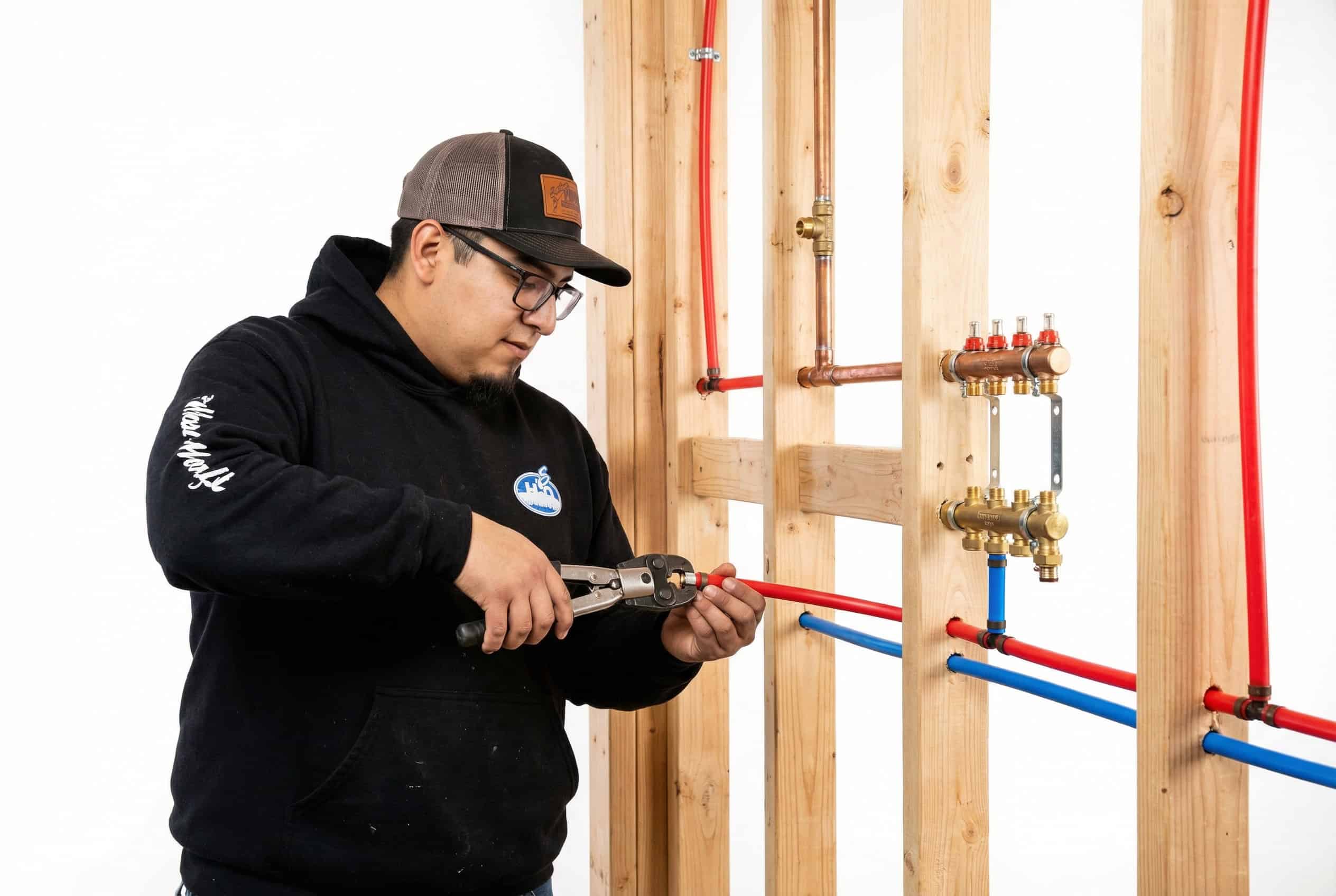
Our Water Heater Installation Services
Replacing a Failed Tank Water Heater
When a tank water heater fails — the tank is leaking, the unit is producing no hot water, or it has reached the end of its life after 10 to 15 years of service — replacement needs to happen quickly. A household without hot water cannot function normally, and a leaking tank poses ongoing water damage risk. Sarkinen Plumbing can often replace a failed tank water heater on the same day or next day, depending on the availability of the right unit for your home.
Our tank water heater replacement process includes draining and disconnecting the old unit, removing it from your home, installing the new unit with all required connections (gas or electric, water supply and outlet, T&P relief valve, drain pan, expansion tank, and venting), testing the system, setting the temperature, and scheduling the building inspection. We dispose of the old unit as part of the service. The entire process typically takes two to four hours for a like-for-like replacement.
Tank replacement
Upgrading from Tank to Tankless Water Heater
Converting from a tank water heater to a tankless system is a popular upgrade for homeowners seeking energy savings, unlimited hot water, and space recovery. However, the conversion involves more than simply swapping one unit for another. Tankless water heaters have different requirements for gas supply, venting, and condensate drainage that must be addressed during the installation. A tankless unit typically requires a larger gas line than the tank it replaces, a dedicated stainless steel or PVC vent through an exterior wall, and a condensate drain for high-efficiency condensing models.
We evaluate all of these requirements during the in-home assessment and include them in the installation quote so there are no surprises. Gas line upsizing, vent installation, condensate drain routing, and electrical connections for the control panel are all handled as part of the project. The wall-mounted tankless unit frees up the floor space previously occupied by the tank, which is a significant benefit in garages and utility closets where space is limited. We also install an isolation valve kit for easy annual maintenance descaling.
Tankless upgrade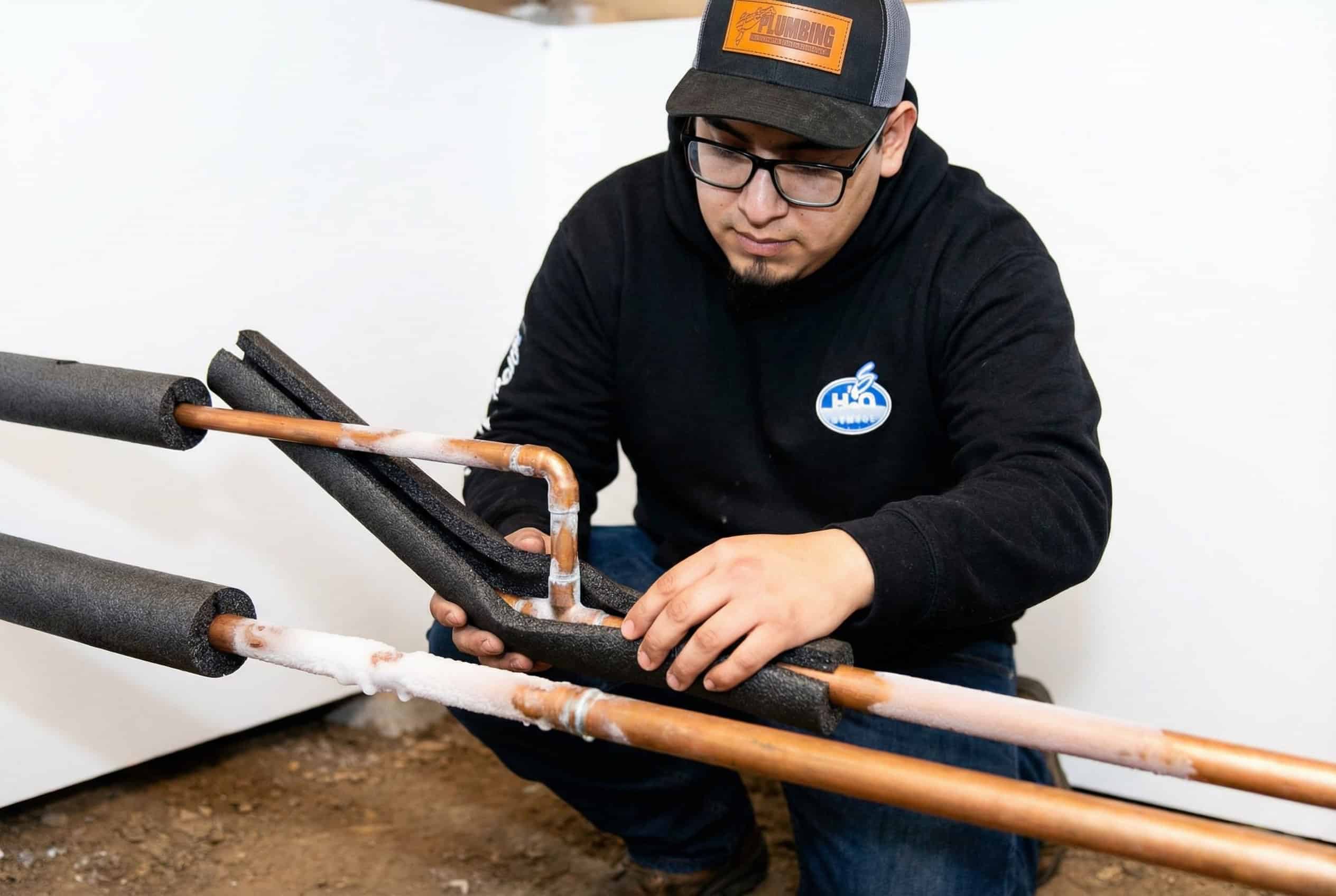
Heat Pump Water Heater Installation
Heat pump water heaters represent the most energy-efficient option for homes with electric water heating. Rather than generating heat directly through resistance elements, a heat pump moves existing heat from the surrounding air into the water tank using the same refrigeration cycle as an air conditioner running in reverse. This process uses two to three times less electricity than a conventional electric water heater, which can translate to $200 to $400 in annual energy savings for an average household.
Heat pump water heaters work best in spaces that maintain temperatures between 40 and 90 degrees Fahrenheit year-round — garages, basements, and utility rooms in the Portland-Vancouver climate are typically suitable. The unit is physically larger than a standard electric tank and requires clearance around it for air circulation, since it draws heat from the ambient air. It also produces cool, dehumidified air as a byproduct, which can be a bonus in damp basements. We assess your installation space and climate conditions to confirm that a heat pump model is appropriate before recommending one.
Heat pump installation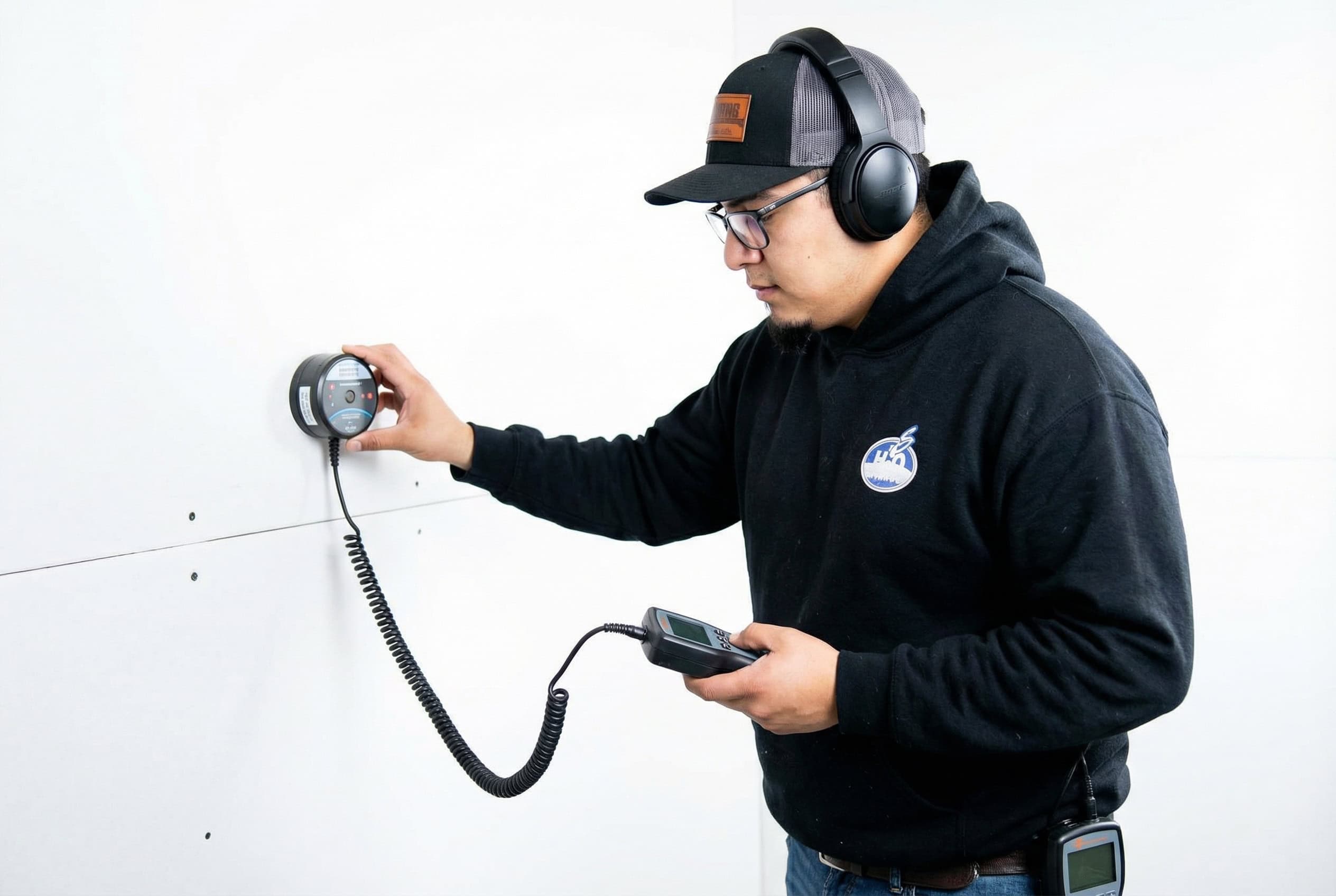
Commercial Water Heater Installation
Businesses have hot water demands that far exceed residential needs. A restaurant running a high-temperature commercial dishwasher can consume 100 gallons of hot water per hour during peak service. A multi-unit apartment building needs to supply hot water to dozens of units simultaneously. A medical facility requires precise temperature control for patient care and sterilization equipment. These demands require commercial-grade water heating systems designed for continuous, high-volume operation.
Sarkinen Plumbing installs commercial water heaters including high-capacity tank units (75 to 100 gallons and larger), commercial tankless systems with multiple units in parallel, recirculating systems that maintain instant hot water at every tap, and point-of-use units for remote fixtures. We work with property managers, restaurant owners, and facility maintenance teams to select and install equipment that matches the building’s hot water demand profile. Commercial installations include all code-required components, permitting, and inspection.
Commercial water heaters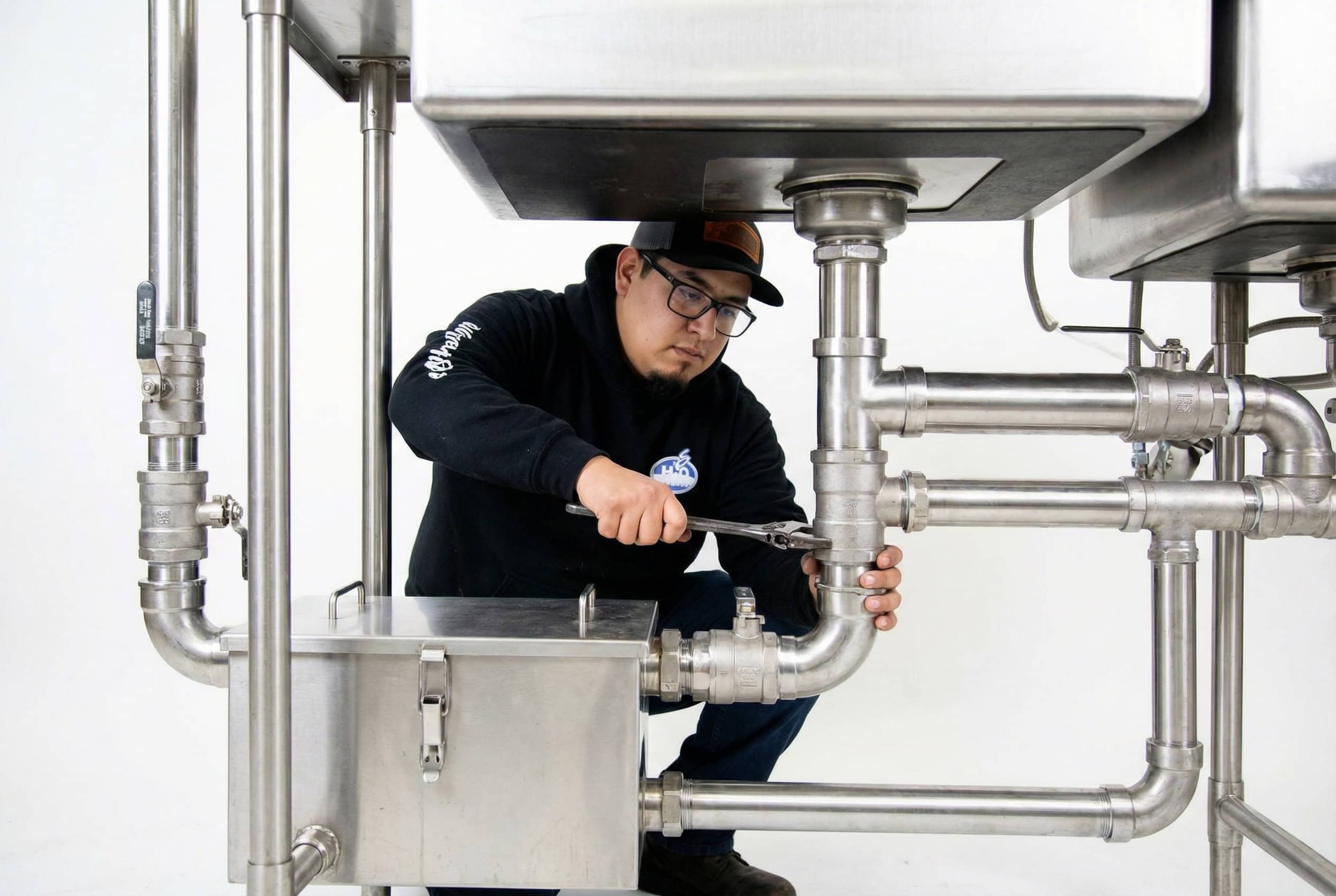
Water Heater Installation for New Construction
Installing a water heater in a new home or commercial building provides the opportunity to select the ideal unit without the constraints of an existing installation. There is no old unit to work around, no existing gas line to upsize, and no venting configuration that limits options. This is the time to consider tankless systems, heat pump water heaters, or high-efficiency condensing tank models that may not have been available or practical as retrofit options.
We work with builders, general contractors, and homeowners during the design phase of new construction to plan the water heater installation. This includes selecting the right unit type and capacity for the building’s needs, planning the rough-in location for gas, water, electrical, and venting, and coordinating with the HVAC contractor to avoid conflicts. Our new construction water heater installations are completed during the appropriate phase of construction, inspected along with the rest of the plumbing system, and ready for use when the building is completed.
New construction water heaters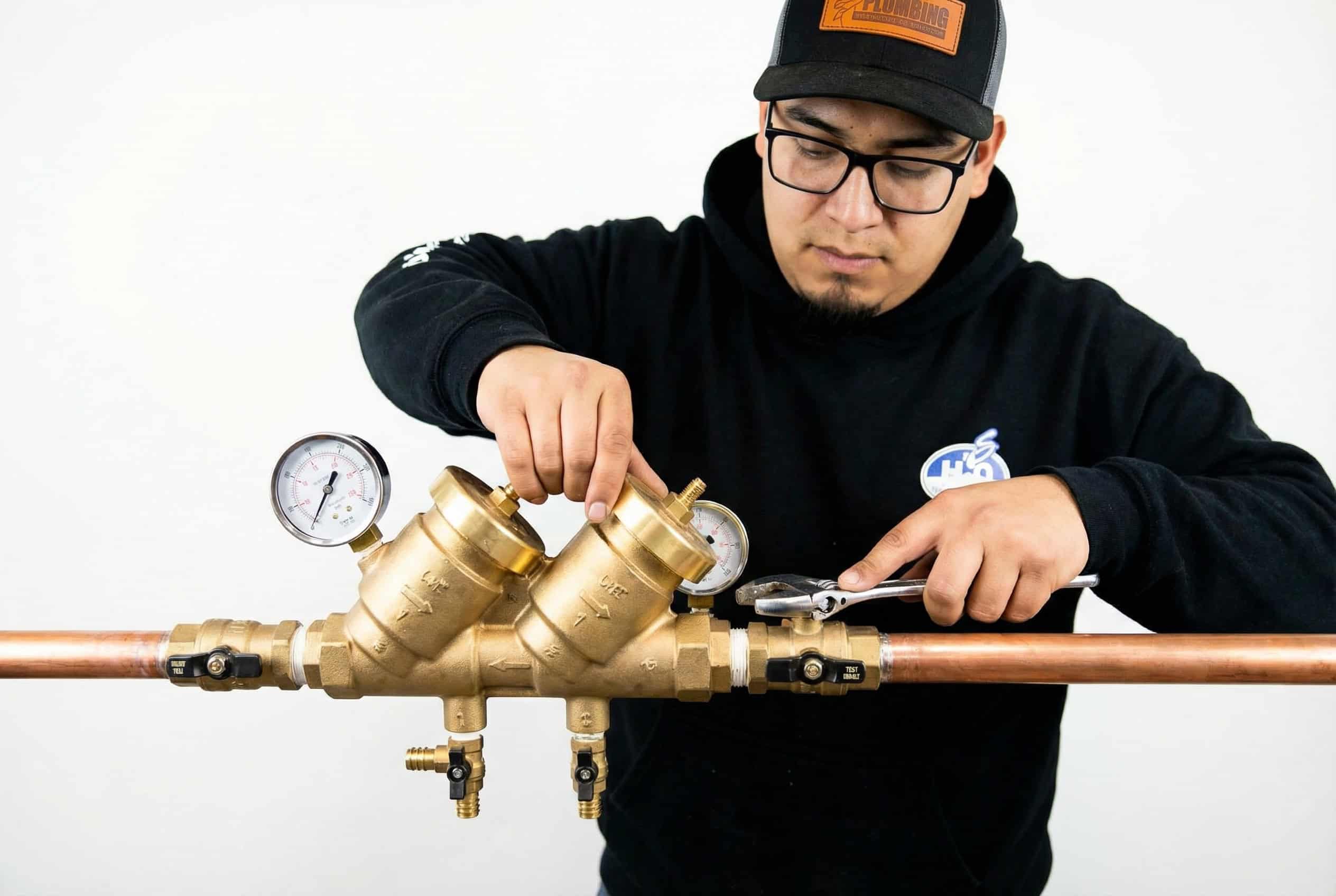
What Our Customers Say About Water Heater Installation
Portland & Vancouver’s Best Local Plumber
-
“Steve did an awesome and quick service to repair our outside faucet. He also gave helpful advice on our water pressure and water heater. Steve was courteous and helpful. Amazing service!”
 willis lyon
“It is hard to believe those extremely negative and scathing reviews!!! Dylan came almost immediately to give me a bid. He impressed me with how knowledgeable he was. I appreciated the way he spoke so highly of Sarkinen Plumbing and it’s employees! Two very young men showed up today to replace a 23 year old, leaking hot water heater and to stop…”
Ema Vangogh“They offered same day service and were very careful with my place. They have their rules they follow, and they also were efficient. I am so happy I have hot water again.”
Timisha Wilson (The-One-Tee-Dubb)“We were extremely impressed with the top-tier service we received this morning from Jordan and Connor. Our water heater stopped producing hot water a couple of days ago, and we’re so glad we found Sarkinen Plumbing through a quick Google search. We needed someone out ASAP, and Jordan and Connor delivered — arriving at our home by 10:36 a.m….”
Lynn Wendt -
“I am beyond happy with the work I have had to had done. My house was completely repiped in two days, Bert and Mike or Matt? Gosh I suck with names were really great to work with. They were respectful, let me know everything they were doing, informed of the crazy things the original owners and builders did and fixed them. I also had them put a…”
Tiffany Via“I recently had an issue with my water heater. One of Sarkinen’s plumbers came out on a Saturday (I think his name was Alex) to repair it. He saw that it was a simple repair and agreed with me that I could do it myself. He gave me some pointers and left me to it, not even charging me for the visit. This is the second time I have worked with…”
Jason LeMaster“Sarkinen was amazing, they came out and evaluated what the problem was and were able to get our 19yr old water heater replaced in a timely manner. They were respectful of us and our time. They went above and beyond. Thank you!”
Anne VanDeWege“We have loved working with Sarkinen! We had an emergency link and they came out very fast to stop the water and start mitigation. They replaced our galvanized steel pipes and installed a water heater in 2 days. They are quick and knowledgeable. We’ll be telling everyone we know to use Sarkinen!”
Jenny Wallace -
“Clear and open communication with staff with quick response times. My burst pipe was fixed in about 2 hours despite the difficult location. The plumbers made sure that there were no additional leaks to the area, were very professional and polite, and even turned my hot water heater for me before they left.”
Emily Weiss“2020- So thankful for the responsiveness!!!! Pipe broke in crawlspace and they came out and fixed the issue until I am ready to do a pipe replacement. Appreciate the great customer service and knowledge. Thank you! 2021-Did a full pipe replacement with PEX of whole house. Did an awesome job! Also replaced shut off valve in pump house…”
K A“I decided to change my water heater at 8am this morning. By 1pm, I had a brand new installed water heater! From the front office, to the estimator, to the plumbers, I had a great experience. Everyone was friendly and professional.”
John Loveridge“Within 24 hours of contacting Sarkinen I had a water heater replaced and installed . Everyone I dealt with were very professional. Highly recommend Sarkinen . Thank you”
Debbie Stein
Why Vancouver & Portland Homeowners Choose Sarkinen
Upfront, Fair Pricing
No hidden fees, no overtime charges. You get a clear, written price before any work begins. Same rate day or night.
Licensed in WA & OR
Dual-state licensing (WA #SARKIPI946MF, OR #170052) means we serve the entire Portland-Vancouver metro.
24/7 Emergency Service
We answer the phone day and night. A licensed plumber is dispatched immediately — at your door within 60-90 minutes.
Satisfaction Guaranteed
Every repair backed by our workmanship guarantee. Background-checked, drug-tested plumbers who treat your home with care.
Cities We Serve for Water Heater Installation
Washington
Water Heater Installation Questions & Answers
A standard tank water heater replacement typically takes two to four hours, depending on whether the new unit is the same type and in the same location as the old one. Upgrading from a tank to a tankless unit or relocating the water heater requires additional work for gas line modifications, venting changes, and electrical upgrades, which can extend the installation to a full day. We provide a time estimate with your installation quote.
Both have advantages. Tank water heaters have lower upfront costs, simpler installation, and can deliver hot water to multiple fixtures simultaneously. Tankless water heaters are more energy efficient, take up less space, last longer (20+ years vs 10-15 for tank), and provide unlimited hot water on demand. The best choice depends on your household size, hot water usage patterns, budget, and available space. We help you evaluate both options during the consultation.
For tank water heaters, the right size depends on the number of people in your household and peak hour demand. A household of two to three people typically needs a 40 to 50 gallon tank. Four or more people usually need a 50 to 75 gallon tank. For tankless units, sizing is based on flow rate (gallons per minute) and temperature rise. We calculate the right size during our in-home assessment to make sure you never run out of hot water.
Yes. Our installation includes draining the old unit, disconnecting it, removing it from your home, and disposing of it properly. You do not need to arrange separate removal. The old unit is taken away the same day the new one is installed.
In most jurisdictions in the Vancouver-Portland metro area, a permit is required for water heater installation or replacement. Sarkinen Plumbing handles the permitting process as part of the installation. We pull the permit, schedule the inspection, and make sure everything is done to code. This is included in our installation price.
We install Rheem, Bradford White, A.O. Smith, Navien, Rinnai, and Noritz. We can also install other brands by request. We recommend specific brands based on the type of unit, your budget, and the manufacturer warranty. We do not push one brand over another — we recommend what will perform best for your specific situation.
Schedule Water Heater Installation Today
Call now or schedule online. Same-day service available.
- Vancouver 360-369-3586
- Portland 503-925-3504
Vancouver Location
Proudly Serving
Portland and Vancouver
from Wilsonville to Longview &
Hillsboro to Gresham
UBI # 602-521-027
OR Contractor Lic# 170052 (CCB)
WA Contractor Lic# SARKIPI946MF
OR Plumber Lic# PB115
Customer Satisfaction
4.6 stars - Based on 227 Reviews







Quick Links
Plumbing Services
SW Washington Service Areas
Oregon Service Areas
Contact Information
Sarkinen PlumbingVancouver
9502 NE 72nd Ave
Vancouver, WA 98665
Phone: 360-369-3586
Portland
Phone: 503-925-3504
Hours of Operation
Monday - Sunday 24-hours